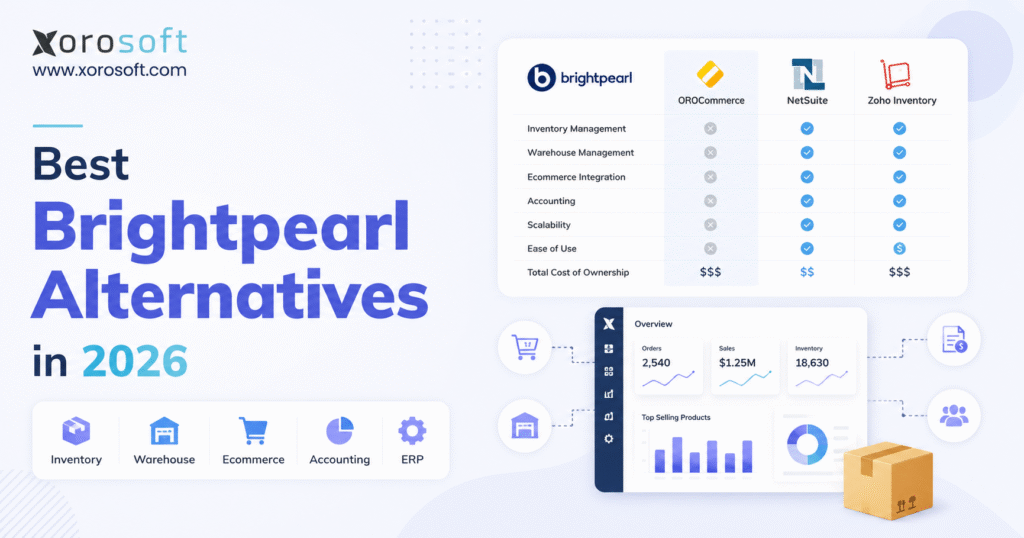
If you are searching for Brightpearl alternatives, this guide will help you explore your options.
1. A Practical Way to Compare Brightpearl Alternatives
Brightpearl alternatives matter when a growing product business needs more control over inventory, orders, accounting, warehouse workflows, purchasing, forecasting, ecommerce, and reporting.
At first, this may look like a simple software comparison. However, the real decision is operational. Your team is not only choosing another platform. Instead, it is choosing how inventory, finance, fulfillment, purchasing, and customer orders will work together as the company grows.
Because of that, the right Brightpearl alternative is not always the system with the longest feature list. A smaller ecommerce company may need a lighter inventory tool. Meanwhile, a growing Shopify brand may need a connected ERP system. In wholesale distribution, the priority may be EDI, customer-specific pricing, inventory allocation, and warehouse control.
Brightpearl is commonly evaluated by retailers, wholesalers, ecommerce brands, and multichannel operators. It focuses on retail operations, inventory, order management, warehouse workflows, shipping, purchasing, accounting, automation, and ecommerce integrations. As businesses scale, though, the software stack often becomes more complex. Consequently, teams begin comparing Brightpearl with ERP systems, warehouse management platforms, inventory software, order management tools, and finance-led systems.
This guide compares the best Brightpearl alternatives in 2026 by business fit, inventory depth, warehouse needs, accounting requirements, ecommerce operations, implementation effort, and long-term scalability.
2. What Are Brightpearl Alternatives?
Brightpearl alternatives are software platforms that can replace or compete with Brightpearl for inventory, order management, warehouse operations, purchasing, accounting, ecommerce, wholesale, reporting, or ERP workflows.
However, these platforms do not all belong in the same category.
Some systems are full ERP platforms. Others focus mainly on inventory management. A few are stronger for marketplace sellers. Several are built around finance. Therefore, the right option depends on what your business is really trying to fix.
For example, a small ecommerce brand may only need better stock visibility. On the other hand, a growing product business may need inventory, accounting, WMS, purchasing, manufacturing, Shopify, Amazon, EDI, and reporting in one system.
That difference matters because software categories overlap. Still, they do not replace each other perfectly.
2.1 Why Companies Search for Brightpearl Alternatives
Companies usually search for Brightpearl alternatives when their operations become harder to manage.
For example, the business may add more sales channels. Then, inventory accuracy becomes harder to protect. A second warehouse may open. As a result, transfers, receiving, picking, and allocation need tighter controls. Wholesale may grow as well. Therefore, EDI, pricing, and customer-specific workflows become more important.
Common reasons include:
- Inventory counts no longer match across warehouses or sales channels
- Purchasing teams rely too much on spreadsheets
- Warehouse processes depend on manual checks
- Month-end accounting takes longer than it should
- Shopify, Amazon, wholesale, and EDI workflows feel disconnected
- Forecasting issues create stockouts or overstock
- Reporting arrives too late for operators
- Too many apps are required to complete one order cycle
In many cases, the software is not the only issue. Instead, the business has outgrown the way its workflows are connected.
2.2 Retail Operations Software vs Inventory Software vs ERP
Retail operations software usually focuses on ecommerce orders, inventory, fulfillment, purchasing, automation, and retail reporting.
Inventory software usually focuses on stock control, product movement, reorder points, and sometimes light warehouse workflows.
ERP software goes further. It connects inventory with accounting, purchasing, warehouse activity, manufacturing, ecommerce, reporting, and financial controls.
Therefore, the difference is not just size. It is scope.
If your team only needs better inventory tracking, an inventory system may work. However, if inventory affects finance, purchasing, warehouse operations, manufacturing, and customer fulfillment, ERP may be the better fit.
2.3 When Brightpearl May Still Be a Good Fit
Brightpearl may still fit retailers, wholesalers, and multichannel merchants that want retail operations software with inventory, order management, automation, purchasing, warehouse workflows, ecommerce integrations, and operational reporting.
Additionally, companies already comfortable with Brightpearl workflows may not need to replace it unless there is a clear business reason.
A replacement project should not happen only because another platform looks newer. Instead, the decision should be based on workflow gaps, reporting limitations, implementation needs, total cost, and long-term fit.
2.4 When a Business Should Consider Another System
A business should consider another system when daily operations start depending on workarounds.
For example, if warehouse teams use spreadsheets outside the system, the platform is no longer the full source of truth. Similarly, if finance cannot trust inventory valuation without manual reconciliation, the system may not support accounting well enough. Also, when purchasing decisions happen outside the platform, demand planning becomes harder.
In short, a Brightpearl replacement makes sense when the current system no longer supports the way the business actually runs.
3. Quick Comparison: Best Brightpearl Alternatives in 2026
The best Brightpearl alternatives should be compared by business model first. After that, features, pricing, and implementation become easier to evaluate.
| Platform | Best For | Main Strength | Consider Carefully |
|---|---|---|---|
| Xorosoft | Inventory-driven ecommerce, wholesale, and manufacturing businesses | Cloud ERP with inventory, accounting, WMS, purchasing, manufacturing, forecasting, Shopify, Amazon, and EDI | Best for companies with real operational complexity |
| NetSuite | Larger ERP needs | Broad ERP and financial management | Cost, implementation, and customization scope |
| Acumatica | Mid-market ERP buyers | Flexible ERP structure | Partner-led implementation model |
| Cin7 | Product sellers and commerce teams | Inventory and order workflows | Accounting and ERP depth |
| Fishbowl | QuickBooks users | Inventory and light manufacturing | Long-term ERP scalability |
| Odoo | Modular software buyers | Flexible app ecosystem | Configuration and maintenance effort |
| Business Central | Microsoft-centric companies | Finance and ERP foundation | Add-ons and partner customization |
| Sage Intacct | Finance-led teams | Accounting and financial reporting | Operational modules may require extra tools |
| Sellercloud | Marketplace sellers | Channel and order operations | ERP and accounting depth |
| Zoho Inventory | Smaller teams | Simplicity and affordability | Advanced warehouse and ERP needs |
3.1 Best Overall Brightpearl Alternatives by Business Type
| Business Type | Best-Fit Alternatives | Why |
| Shopify brand | Xorosoft, Cin7, NetSuite, Sellercloud | Inventory sync, fulfillment, purchasing, accounting |
| Wholesale distributor | Xorosoft, NetSuite, Acumatica, Business Central | EDI, pricing, allocation, warehouse workflows |
| Apparel brand | Xorosoft, Cin7, NetSuite | Variants, channels, seasonal demand |
| Furniture business | Xorosoft, Acumatica, NetSuite | Large SKUs, warehouse control, purchasing |
| Sporting goods company | Xorosoft, Cin7, NetSuite | SKU depth, seasonality, multi-channel demand |
| Food and beverage brand | Xorosoft, Acumatica, NetSuite | Lot tracking, purchasing, controls |
| Manufacturer | Xorosoft, Fishbowl, Acumatica, Odoo | BOMs, work orders, production planning |
| Smaller ecommerce team | Zoho Inventory, Sellercloud, Cin7 | Simpler operations and lower complexity |
4. How to Choose the Right Brightpearl Alternative
A Brightpearl alternative should be chosen around workflow fit, not software popularity.
Before comparing demos, document how your business actually runs. Then, compare each platform against those workflows. This approach prevents the team from buying a system that looks good in a sales call but fails inside daily operations.
4.1 Inventory Complexity
Inventory is usually where system problems appear first.
At lower volume, teams can often fix mistakes manually. As order volume grows, however, small inventory errors become expensive. A wrong available-to-sell number can create oversells. Missed transfers can delay fulfillment. Poor reorder points can cause stockouts. Meanwhile, inaccurate inventory valuation can create accounting issues.
A strong system should show what is available, committed, allocated, on order, in transit, damaged, returned, and ready to sell.
4.2 Single Warehouse vs Multi-Warehouse Operations
A single warehouse business may need basic stock tracking. By contrast, a multi-warehouse business needs more control.
For example, teams need transfers, replenishment logic, location-level inventory, bin visibility, fulfillment routing, and warehouse-specific reporting. Additionally, leadership needs to know which warehouse can fulfill which orders and which location needs stock.
Therefore, if you operate multiple warehouses, choose a system that treats warehouse operations as a core workflow, not an afterthought.
4.3 Ecommerce and Marketplace Operations
Ecommerce operations require more than order imports.
A useful system should connect products, orders, inventory, payments, refunds, fulfillment status, returns, and reporting. Otherwise, the business may still need manual checks between Shopify, Amazon, warehouse tools, accounting software, and spreadsheets.
For Shopify merchants, Xorosoft is also listed on the Shopify App Store, which makes it relevant for brands that want ERP workflows connected to Shopify operations.
4.4 Accounting Requirements
Accounting is one of the biggest differences between inventory tools and ERP systems.
Inventory affects COGS, margin, landed cost, purchase accruals, inventory valuation, and month-end close. Therefore, if inventory and accounting live in separate systems, finance may spend too much time reconciling data.
A good Brightpearl alternative should support clean financial visibility. In some cases, that means native accounting. In other cases, it means a reliable accounting integration. Either way, operations and finance need one version of the truth.
4.5 Warehouse Management Requirements
Warehouse operations become more important as order volume grows.
At first, a simple pick list may work. Eventually, the team may need barcode scanning, bin locations, receiving controls, putaway, picking, packing, transfers, cycle counts, and shipping workflows.
Because warehouse activity changes inventory, the WMS should connect directly to inventory, orders, purchasing, and reporting. If warehouse work happens outside the main system, inventory accuracy will eventually suffer.
4.6 Purchasing and Forecasting Requirements
Purchasing should not depend only on spreadsheets.
A better system should help teams answer what to buy, when to buy it, how much to buy, which supplier to use, and which warehouse needs stock. Moreover, forecasting should consider sales history, seasonality, lead times, open orders, and channel demand.
Since purchasing affects cash flow, forecasting is not only an operations issue. It is also a finance issue.
4.7 Implementation and Internal Resources
Implementation should be part of the buying decision from the beginning.
Even strong software can fail if the business has poor data, unclear workflows, or no internal owner. Therefore, assign responsibility for data cleanup, process mapping, integrations, testing, training, and go-live decisions before the project begins.
Also, compare vendors by implementation approach. A good implementation should make the business cleaner, not just move messy workflows into a new system.
4.8 Total Cost of Ownership
Subscription price is only one part of cost.
Total cost also includes implementation, integrations, custom work, support, training, internal labor, add-ons, and manual work that remains after go-live.
As a result, a cheaper tool can become expensive if the team still needs spreadsheets to finish daily work. Likewise, a more complete system may cost more upfront but reduce hidden operational costs over time.
4.9 ERP Readiness Checkpoint
Before shortlisting vendors, map your current workflows across inventory, warehouse management, purchasing, accounting, ecommerce, wholesale, EDI, manufacturing, and reporting.
If those workflows are still simple, a lighter tool may be enough. However, if they are connected and complex, ERP should be part of the conversation.
5. Best Brightpearl Alternatives in 2026
This section compares the main Brightpearl alternatives by fit. Xorosoft is listed first because this article is written for inventory-driven ecommerce, wholesale, and manufacturing businesses that need ERP depth. However, the comparison remains practical and workflow-focused.
5.1 Xorosoft
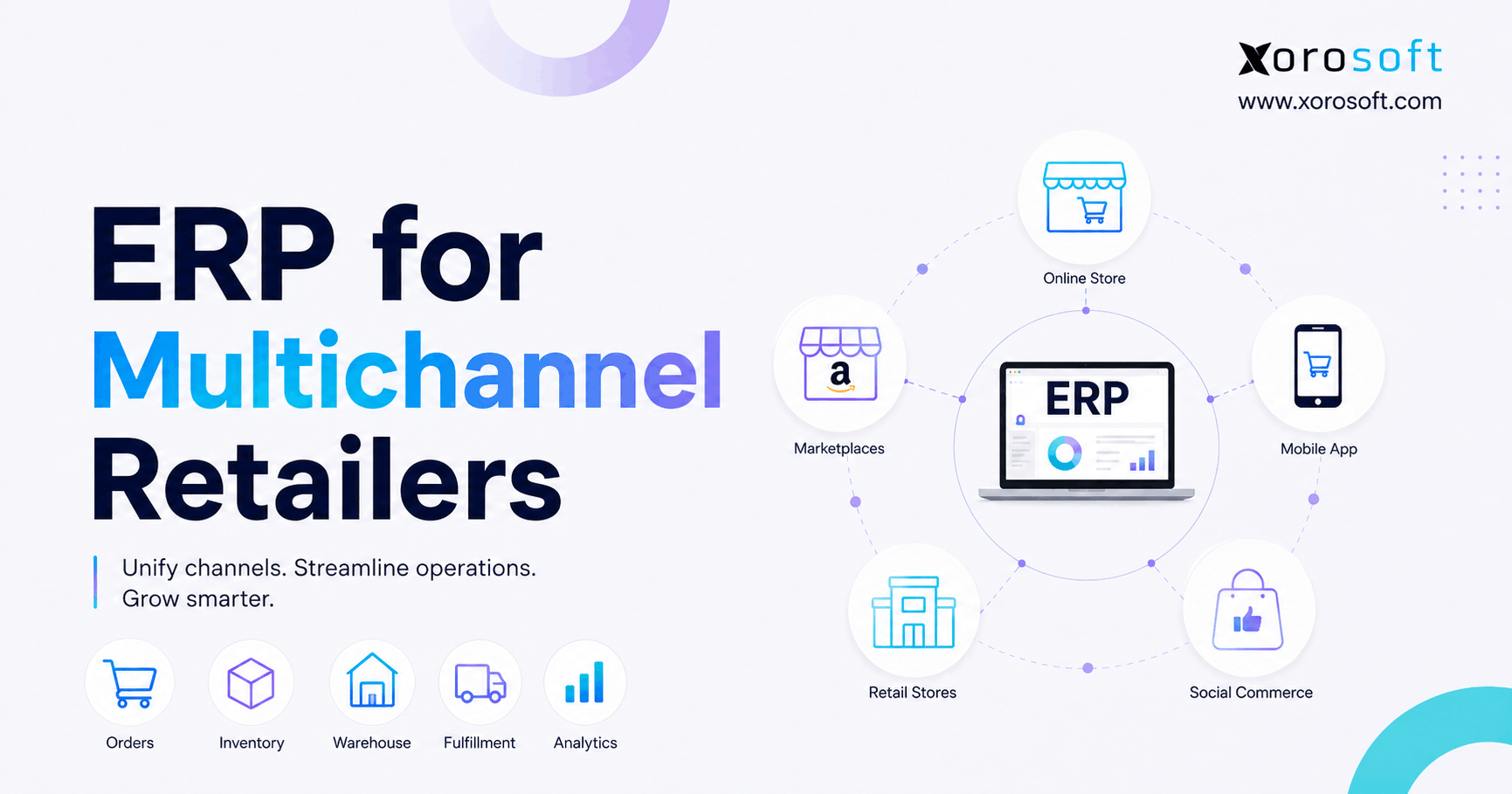
XoroONE is a cloud ERP platform for inventory-driven businesses that need inventory management, accounting, purchasing, warehouse management, manufacturing, forecasting, reporting, ecommerce operations, Shopify, Amazon, EDI, and multi-warehouse support in one system.
Because it connects operational and financial workflows, Xorosoft is most relevant for businesses that have outgrown QuickBooks, spreadsheets, inventory-only software, or disconnected apps.
It can fit ecommerce brands, wholesalers, distributors, apparel companies, furniture businesses, sporting goods companies, food businesses, and manufacturers. Additionally, companies comparing systems can review the broader Xorosoft ERP comparisons page when they want to understand how different ERP alternatives differ by workflow.
Best fit:
Inventory-driven companies that need ERP, WMS, accounting, purchasing, forecasting, manufacturing, Shopify, Amazon, EDI, and multi-warehouse visibility.
Key strengths:
Connected inventory, accounting, warehouse, purchasing, manufacturing, ecommerce, and reporting workflows.
Consider carefully:
It is usually not the best fit for very small companies that only need basic inventory tracking.
5.2 NetSuite
NetSuite is a broad cloud ERP system commonly evaluated by larger companies with finance, inventory, procurement, reporting, and multi-entity requirements.
Because NetSuite has wide ERP coverage, it may suit companies with complex finance and enterprise-level controls. However, implementation can require significant planning, budget, and partner support.
Best fit:
Larger businesses with broad ERP requirements.
Key strengths:
ERP breadth, financial controls, reporting, and scalability.
Consider carefully:
Cost, implementation complexity, and customization needs.
5.3 Acumatica
Acumatica is a flexible cloud ERP platform often evaluated by mid-market companies.
It may fit businesses that want ERP functionality across finance, distribution, inventory, and operations. However, the final experience often depends on the implementation partner, configuration, and process design.
If your team is comparing Acumatica and Xorosoft directly, the Xorosoft vs Acumatica page can help frame the decision around operational fit.
Best fit:
Mid-market companies that want flexible ERP.
Key strengths:
ERP flexibility and configurable workflows.
Consider carefully:
Partner-led implementation and customization scope.
5.4 Cin7
Cin7 is often considered by product businesses that need inventory, order management, and commerce workflows.
It can fit ecommerce and wholesale businesses that want stronger inventory and channel control. However, buyers should evaluate accounting depth, warehouse requirements, forecasting, and ERP fit before choosing.
For companies comparing inventory software against ERP, the Xorosoft vs Cin7 page is a useful internal comparison.
Best fit:
Product sellers focused on inventory and order operations.
Key strengths:
Commerce, inventory, and order workflows.
Consider carefully:
Accounting, manufacturing, and broader ERP requirements.
5.5 Fishbowl
Fishbowl is often considered by businesses that use QuickBooks and need stronger inventory or light manufacturing workflows.
Because it can extend QuickBooks-based operations, Fishbowl may work for companies that are not ready to move into a full ERP system. However, growing companies should evaluate whether they need native accounting, deeper ecommerce workflows, warehouse controls, or broader reporting.
Best fit:
QuickBooks users that need inventory and light manufacturing.
Key strengths:
Inventory control and QuickBooks-connected workflows.
Consider carefully:
Long-term ERP scalability.
5.6 Odoo
Odoo is a modular business software suite with apps for inventory, accounting, manufacturing, ecommerce, CRM, and other functions.
Because it is modular, Odoo can be flexible. However, flexibility also creates implementation decisions. Therefore, companies should evaluate setup effort, configuration, support, and long-term maintenance.
If Odoo is on your shortlist, the Xorosoft vs Odoo comparison can help evaluate modular software against a more inventory-focused ERP approach.
Best fit:
Companies that want modular software and have configuration resources.
Key strengths:
Flexible app ecosystem.
Consider carefully:
Implementation planning and module management.
5.7 Microsoft Dynamics 365 Business Central
Business Central is Microsoft’s ERP platform for small and mid-sized businesses.
It may fit companies already using Microsoft tools and looking for ERP functionality across finance, inventory, operations, and reporting. However, ecommerce, warehouse, and industry-specific needs may require partners or add-ons.
Best fit:
Microsoft-centric companies that need ERP.
Key strengths:
Finance, reporting, and Microsoft ecosystem fit.
Consider carefully:
Partner customization and add-on requirements.
5.8 Sage Intacct
Sage Intacct is often evaluated by finance-led businesses that need stronger accounting, reporting, and financial controls.
However, product businesses should review how inventory, warehouse, purchasing, ecommerce, and fulfillment workflows will be handled. In many cases, finance-led systems require operational tools around them.
Best fit:
Finance-led companies.
Key strengths:
Accounting depth and financial reporting.
Consider carefully:
Operational coverage for inventory-heavy businesses.
5.9 Sellercloud
Sellercloud is often evaluated by marketplace sellers and ecommerce teams that manage orders across multiple channels.
It can fit businesses where marketplace workflows are the main priority. However, companies should review accounting, warehouse, manufacturing, forecasting, and ERP-level reporting before choosing.
Best fit:
Marketplace-heavy sellers.
Key strengths:
Channel operations and order workflows.
Consider carefully:
ERP and accounting depth.
5.10 Zoho Inventory
Zoho Inventory is a lighter inventory and order management system for smaller teams.
It may work well for businesses with simple inventory, fewer warehouses, and lower operational complexity. However, growing companies should evaluate whether it can support advanced WMS, manufacturing, forecasting, accounting, EDI, and multi-warehouse workflows.
Best fit:
Small ecommerce or trading businesses.
Key strengths:
Simplicity and affordability.
Consider carefully:
Advanced scaling needs.
6. Brightpearl Alternatives Compared by Use Case
Different businesses need different systems. Therefore, the best Brightpearl alternative should match the company’s operating model.
6.1 Best Brightpearl Alternative for Shopify Brands
Shopify brands need clean inventory sync, order flow, returns, fulfillment, purchasing, and accounting alignment.
At low order volume, a basic inventory app may work. However, as Shopify connects with Amazon, wholesale, retail, 3PLs, and multiple warehouses, the business may need ERP. In that situation, Xorosoft can be relevant because it connects Shopify operations with inventory, warehouse workflows, purchasing, accounting, and reporting.
6.2 Best Brightpearl Alternative for Amazon Sellers
Amazon sellers need inventory visibility, fulfillment control, settlement clarity, and replenishment planning.
Because Amazon adds marketplace rules and reporting complexity, the system should connect channel demand with inventory, purchasing, warehouse operations, and finance. Sellercloud, Cin7, NetSuite, and ERP platforms may all be considered depending on scale.
6.3 Best Brightpearl Alternative for Wholesalers
Wholesale businesses need more than ecommerce order flow.
They often require EDI, customer-specific pricing, allocation, bulk orders, purchasing controls, warehouse workflows, and account visibility. Therefore, ERP systems tend to fit wholesale operations better than lightweight inventory tools.
If your business sells across wholesale, ecommerce, and multiple warehouses, review whether the platform can handle all channels without forcing the team back into spreadsheets.
6.4 Best Brightpearl Alternative for Apparel Brands
Apparel brands manage sizes, colors, styles, seasons, returns, wholesale orders, and ecommerce demand.
Because SKU complexity grows quickly, inventory accuracy becomes critical. A good system should support variants, channel-level availability, forecasting, purchasing, and warehouse workflows.
6.5 Best Brightpearl Alternative for Furniture Businesses
Furniture businesses often manage large SKUs, long lead times, supplier delays, warehouse space constraints, and delivery coordination.
As a result, the system should support purchasing visibility, inventory allocation, landed cost, warehouse control, and reporting by product line or location.
6.6 Best Brightpearl Alternative for Sporting Goods Companies
Sporting goods companies often face seasonality, product variation, bundles, channel demand, and wholesale pressure.
Therefore, the right system should connect forecasting, purchasing, inventory allocation, ecommerce, wholesale, and warehouse workflows.
6.7 Best Brightpearl Alternative for Food and Beverage Brands
Food and beverage brands may need lot tracking, expiry controls, supplier management, production planning, purchasing, and warehouse discipline.
Because traceability and inventory valuation matter, lightweight inventory tools may not be enough once the business scales.
6.8 Best Brightpearl Alternative for Manufacturers
Manufacturers need BOMs, work orders, material requirements, production planning, purchasing, labor visibility, and finished goods tracking.
Because manufacturing connects directly to inventory and accounting, ERP can become necessary. XoroERP is relevant here because it supports inventory-driven manufacturing workflows alongside accounting, purchasing, WMS, and reporting.
6.9 Industry Fit Checkpoint
Before choosing a system, compare your business against real industry workflows.
Apparel needs variant control. Furniture needs warehouse space visibility. Food needs lot tracking. Wholesale needs EDI and pricing. Manufacturing needs BOMs and work orders. You can also review the industries Xorosoft serves to match software needs against real product-business categories.
7. Brightpearl Alternatives Compared by Feature
Feature comparison is useful only when tied to business outcomes.
For example, inventory management is not just a feature. It affects overselling, stockouts, purchasing, cash flow, fulfillment, and accounting. Similarly, warehouse management is not just scanning. It affects inventory accuracy, labor efficiency, and customer experience.
| Feature | Why It Matters |
| Inventory management | Prevents overselling, stockouts, and poor purchasing decisions |
| Warehouse management | Improves receiving, picking, packing, transfers, and cycle counts |
| Purchasing | Helps teams buy the right products at the right time |
| Forecasting | Reduces overstock and missed demand |
| Accounting | Connects inventory value with financial reporting |
| Ecommerce integrations | Keeps sales channels aligned with operations |
| EDI | Supports wholesale and retail trading partners |
| Manufacturing | Supports BOMs, work orders, and production planning |
| Reporting | Helps leaders make faster operational decisions |
7.1 Inventory Management
Inventory management should show what is available, committed, allocated, on order, in transit, damaged, returned, and sellable.
However, many systems only show a basic stock number. That may work early. Eventually, operators need more detail. They need to know where inventory is, why it moved, what it is committed to, and when more stock is arriving.
7.2 Warehouse Management
Warehouse management should support receiving, putaway, picking, packing, shipping, transfers, cycle counts, barcode scanning, and location control.
Because warehouse activity directly changes inventory, the warehouse system should not be disconnected from accounting and order management. XoroWMS is useful to mention here because it connects warehouse operations with broader ERP workflows.
7.3 Purchasing
Purchasing should be driven by demand, lead times, suppliers, open orders, and inventory levels.
However, many growing companies still buy from spreadsheets. As a result, teams overbuy slow movers and underbuy fast sellers. A better system should make purchasing more structured and visible.
7.4 Forecasting
Forecasting helps teams plan inventory before problems appear.
A useful forecast should consider sales history, seasonality, lead times, open orders, channel demand, and warehouse needs. Additionally, it should help purchasing teams act before stockouts or overstock damage cash flow.
7.5 Accounting
Accounting is where disconnected operations become visible.
If inventory, orders, purchasing, returns, warehouse adjustments, and landed costs do not connect cleanly, finance must reconcile manually. Therefore, companies comparing Brightpearl alternatives should review accounting workflows early, not at the end of the buying process.
7.6 Ecommerce Integrations
Ecommerce integrations should do more than import orders.
They should connect products, inventory, orders, payments, refunds, fulfillment updates, shipping status, and reporting. Otherwise, the business may still need manual data checks across Shopify, Amazon, accounting tools, and warehouse systems.
7.7 EDI
EDI matters for wholesale, retail, and distribution.
If large trading partners require structured purchase orders, invoices, shipping notices, or inventory feeds, EDI must be evaluated carefully. Moreover, EDI errors can create chargebacks, fulfillment delays, and customer service problems.
7.8 Manufacturing
Manufacturing changes the software decision because production consumes inventory.
A manufacturer may need BOMs, work orders, routing, material planning, production scheduling, labor tracking, and finished goods visibility. Therefore, an inventory-only tool may not be enough.
7.9 Reporting
Reporting should show what is happening now, not only what happened last month.
Operators need reports across inventory, purchasing, sales, warehouse activity, fulfillment, finance, margin, supplier performance, and demand. As a result, reporting should connect operational and financial data.
7.10 Workflow Visibility Checkpoint
A strong Brightpearl alternative should reduce hidden work.
If your team still needs spreadsheets for purchasing, warehouse transfers, inventory valuation, or fulfillment exceptions, the system is not fully supporting operations. Therefore, test each vendor against real workflows before making a decision.
8. Brightpearl vs ERP Software
Brightpearl is generally evaluated as a retail operations platform. ERP software usually covers a broader business footprint.
That does not mean ERP is always better. However, ERP becomes more relevant when inventory, accounting, purchasing, warehouse management, manufacturing, ecommerce, and reporting need to operate from the same data.
8.1 Where Brightpearl Fits in the Software Stack
Brightpearl can fit retailers, wholesalers, and multichannel merchants that need retail operations software.
It is especially relevant when the business needs inventory, order management, warehouse workflows, purchasing, automation, ecommerce integrations, and reporting. However, businesses with deeper accounting, manufacturing, or ERP requirements may need broader coverage.
8.2 When ERP Becomes the Better Fit
ERP becomes the better fit when operational and financial workflows depend on each other.
For example, purchasing affects cash flow. Warehouse transfers affect available inventory. Manufacturing consumes raw materials. Ecommerce demand affects replenishment. Wholesale orders affect allocation. Meanwhile, inventory valuation affects month-end close.
Because these workflows are connected, the system should connect them too.
8.3 Common Migration Triggers
Companies often look for Brightpearl alternatives when the current setup creates too much manual work.
Common triggers include:
- Inventory reports are no longer trusted
- Warehouse teams rely on manual workarounds
- Purchasing happens outside the system
- Accounting takes too long to reconcile
- Shopify, Amazon, wholesale, and EDI workflows do not align
- Leadership lacks real-time operational visibility
- The software stack has too many disconnected apps
When these issues appear together, a replacement search becomes more urgent.
8.4 Common Evaluation Mistakes
The biggest mistake is choosing software from a feature checklist.
Instead, companies should evaluate workflows. For example, test how each system handles a Shopify order, a wholesale order, a warehouse transfer, a purchase receipt, a return, a manufacturing work order, and a month-end close.
Additionally, do not ignore implementation. A good system still needs clean data, process ownership, testing, training, and internal accountability.
9. Migration Planning: How to Move From Brightpearl to Another System
A migration should begin with operational clarity, not software setup.
Before moving data, define how the new system should work. Then, clean the data and test real workflows. This reduces go-live risk and prevents old problems from moving into the new system.
9.1 Audit Current Workflows
Start by documenting how orders, inventory, purchasing, warehouse activity, accounting, returns, reporting, and integrations work today.
However, do not only document the official process. Also document the workarounds. Those workarounds often reveal the real system gaps.
9.2 Map Inventory and Warehouse Processes
Next, map warehouses, bins, SKUs, units of measure, transfers, cycle counts, picking workflows, packing rules, returns, damaged inventory, and committed stock.
Because inventory setup affects every department, this step is critical. Poor inventory data can damage fulfillment, purchasing, reporting, and accounting after go-live.
9.3 Review Accounting and Reporting Requirements
Finance should join the migration early.
Review chart of accounts, inventory valuation, COGS, landed cost, purchase accruals, sales tax, payment reconciliation, month-end close, and management reporting. Otherwise, the implementation may solve operations while creating finance problems.
9.4 Clean Product, Customer, Supplier, and Order Data
Data cleanup is one of the most important migration tasks.
Clean product masters, variants, SKUs, barcodes, suppliers, customers, price lists, open sales orders, open purchase orders, inventory balances, warehouse locations, and accounting mappings.
Bad data does not become good data after migration. Therefore, clean it before it enters the new system.
9.5 Plan Integrations
Map every integration before implementation.
This may include Shopify, Amazon, EDI, 3PLs, shipping carriers, payment platforms, tax tools, marketplaces, accounting systems, and reporting tools. Additionally, each integration should have a data owner, sync rule, timing expectation, and failure process.
9.6 Test Before Go-Live
Testing should use real business scenarios.
Test Shopify order flow, Amazon order flow, wholesale orders, purchase orders, receiving, warehouse transfers, returns, inventory adjustments, work orders, invoices, refunds, and month-end reporting.
A go-live should prove that the business can operate in the new system. It should not simply prove that the software is installed.
10. Final Recommendation: Which Brightpearl Alternative Should You Choose?
The best Brightpearl alternative depends on the reason you are comparing systems.
If you need a broad enterprise ERP, NetSuite may be worth evaluating. For flexible mid-market ERP, Acumatica may fit. When inventory and commerce workflows matter most, Cin7 or Sellercloud may work. For modular software, Odoo can be a good option. Microsoft-centric companies may consider Business Central. Finance-led teams may evaluate Sage Intacct. Smaller operations may only need Zoho Inventory.
However, if your business is inventory-driven and needs ERP, WMS, accounting, purchasing, manufacturing, forecasting, Shopify, Amazon, EDI, and multi-warehouse visibility in one connected platform, Xorosoft should be on the shortlist.
10.1 Best Choice for Ecommerce-First Brands
Ecommerce-first brands should prioritize Shopify and Amazon integrations, inventory sync, fulfillment workflows, returns, purchasing, and accounting alignment.
Because channel growth creates operational complexity, the system should support more than order imports. It should connect sales channels to inventory, warehouse activity, purchasing, and finance.
10.2 Best Choice for Wholesale Distributors
Wholesale distributors should prioritize EDI, customer-specific pricing, allocation, purchasing, warehouse workflows, inventory visibility, and reporting.
A system that only handles ecommerce orders may not be enough. Therefore, wholesale businesses should evaluate ERP depth carefully.
10.3 Best Choice for Inventory-Driven ERP Needs
Inventory-driven companies should choose software that connects inventory with accounting, purchasing, warehouse activity, manufacturing, ecommerce, and reporting.
This is where ERP platforms become more relevant than standalone inventory apps. Additionally, this is where disconnected tools often create the highest operational cost.
10.4 Best Choice for Small Teams
Small teams should avoid overbuying.
If the business has simple inventory, one warehouse, limited channels, and basic accounting needs, a lighter tool may be better. However, the team should still choose a system that will not break as order volume grows.
10.5 Best Choice for Enterprise Complexity
Larger businesses should evaluate ERP depth, multi-entity needs, financial controls, implementation support, customization, security, integrations, and reporting.
As complexity grows, governance becomes more important. Therefore, enterprise buyers should consider not only features but also process control, data structure, and long-term administration.
11. Frequently Asked Questions
11.1 What are the best Brightpearl alternatives in 2026?
In 2026, strong Brightpearl alternatives include Xorosoft, NetSuite, Acumatica, Cin7, Fishbowl, Odoo, Microsoft Dynamics 365 Business Central, Sage Intacct, Sellercloud, and Zoho Inventory. However, the right choice depends on your business model, inventory complexity, warehouse needs, accounting requirements, ecommerce channels, wholesale workflows, and implementation resources.
11.2 What is the best Brightpearl alternative for Shopify?
For Shopify brands, the right Brightpearl alternative depends on scale. A small brand may need a simple inventory app. However, a growing Shopify brand may need ERP if it also manages Amazon, wholesale, EDI, purchasing, accounting, and multiple warehouses. Therefore, Shopify brands should compare systems by workflow fit, not only integrations.
11.3 What is the best Brightpearl alternative for wholesale?
Wholesale teams should look for EDI, customer-specific pricing, inventory allocation, purchasing, warehouse workflows, and accounting visibility. Because wholesale operations affect sales, finance, inventory, and fulfillment together, ERP platforms often fit better than lightweight inventory tools.
11.4 What is the best Brightpearl alternative for inventory management?
Your best option depends on whether the business needs simple stock tracking or connected inventory operations. If you only need stock counts, an inventory tool may work. However, if inventory affects purchasing, warehouse activity, accounting, ecommerce, and forecasting, ERP may be the stronger choice.
11.5 What is the best Brightpearl alternative for warehouse management?
For warehouse-heavy operations, the replacement platform should support receiving, putaway, picking, packing, shipping, transfers, cycle counts, barcode scanning, and bin locations. Additionally, warehouse workflows should connect directly to inventory, orders, purchasing, and accounting so that stock accuracy stays reliable.
11.6 Is Xorosoft a Brightpearl alternative?
Yes. Xorosoft is a Brightpearl alternative for inventory-driven businesses that need cloud ERP, inventory management, accounting, purchasing, WMS, manufacturing, forecasting, reporting, Shopify, Amazon, EDI, and multi-warehouse support. However, it is best suited for companies with meaningful operational complexity, not very small teams with basic stock needs.
11.7 Is NetSuite better than Brightpearl?
NetSuite may be better for companies that need broad ERP functionality, multi-entity finance, deeper controls, and enterprise reporting. However, Brightpearl may still fit companies focused mainly on retail operations. Therefore, the better choice depends on scale, budget, implementation resources, and workflow complexity.
11.8 Is Cin7 better than Brightpearl?
Cin7 may be a good Brightpearl alternative for businesses focused on inventory, product operations, and commerce workflows. However, companies should evaluate accounting, warehouse, forecasting, manufacturing, and ERP depth before deciding. The better system depends on the workflows the business needs to control.
11.9 Is Acumatica better than Brightpearl?
Acumatica may be better for companies that want broader ERP functionality and flexible configuration. However, Brightpearl may still fit teams focused on retail operations. Therefore, businesses should compare finance, inventory, warehouse, implementation, and reporting requirements before choosing.
11.10 Is Fishbowl a good Brightpearl alternative?
Fishbowl can be a good alternative for businesses that use QuickBooks and need stronger inventory or light manufacturing workflows. However, companies with broader ERP, ecommerce, accounting, WMS, forecasting, and reporting requirements may need a more complete system.
11.11 Is Odoo a good Brightpearl alternative?
Odoo can be a good Brightpearl alternative for companies that want modular business software. However, modular flexibility requires planning. Therefore, businesses should evaluate setup effort, configuration needs, support, integrations, accounting workflows, and long-term maintenance before choosing Odoo.
11.12 Is Business Central a good Brightpearl alternative?
Business Central can be a good alternative for companies already using Microsoft tools and looking for ERP functionality. However, businesses should evaluate ecommerce integrations, warehouse workflows, add-ons, partner support, and implementation scope before deciding.
11.13 What is cheaper than Brightpearl?
Zoho Inventory and some lighter inventory or order management tools may cost less upfront. However, cheaper software is not always cheaper operationally. If the team still needs spreadsheets, manual reconciliation, and extra apps, total cost may increase.
11.14 What is easier to implement than Brightpearl?
Simpler inventory and order management tools may be easier to implement than Brightpearl or ERP platforms. However, easier implementation usually means narrower functionality. Therefore, businesses should balance speed against accounting, warehouse, purchasing, forecasting, EDI, and manufacturing needs.
11.15 When should a company replace Brightpearl?
Replacement usually becomes worth considering when inventory visibility becomes unreliable, warehouse workflows depend on manual workarounds, accounting takes too long to reconcile, reporting is delayed, integrations become fragile, or teams need spreadsheets to complete daily operations.
11.16 What should you look for in a Brightpearl replacement?
Look for inventory accuracy, warehouse workflows, purchasing, forecasting, accounting, ecommerce integrations, EDI, manufacturing support, reporting, scalability, implementation fit, and total cost of ownership. Most importantly, choose a system that matches how the business actually operates.
11.17 Does Brightpearl include accounting?
Brightpearl includes accounting-related functionality and retail operations workflows. However, companies comparing alternatives should decide whether they need native accounting, accounting integrations, or a broader ERP system where inventory, purchasing, warehouse activity, and finance share the same data.
11.18 Which Brightpearl alternatives support EDI?
EDI support varies by platform and implementation. Wholesale distributors, retail suppliers, and brands selling to large trading partners should evaluate purchase orders, invoices, advance shipping notices, inventory feeds, trading partner setup, error handling, and integration ownership.
11.19 Which Brightpearl alternatives support forecasting?
Forecasting support varies across ERP, inventory, and retail operations platforms. A useful system should consider sales velocity, seasonality, supplier lead times, open orders, warehouse demand, and channel trends. As a result, forecasting should guide purchasing decisions before inventory problems appear.
11.20 Which Brightpearl alternatives support manufacturing?
Manufacturing-focused alternatives may include Xorosoft, Fishbowl, Odoo, Acumatica, NetSuite, and Business Central. However, manufacturers should evaluate BOMs, work orders, production planning, material requirements, labor tracking, inventory valuation, and finished goods visibility before choosing.
11.21 Which Brightpearl alternatives support multi-warehouse inventory?
Multi-warehouse support exists in many Brightpearl alternatives, although the depth varies. Look for transfers, replenishment, bin locations, allocation rules, barcode scanning, warehouse-level reporting, and available-to-sell logic. Additionally, multi-warehouse support should connect to orders, purchasing, fulfillment, and accounting.
11.22 What is the difference between Brightpearl and ERP?
Brightpearl is commonly positioned around retail operations for merchants, retailers, and wholesalers. ERP software usually covers a broader set of workflows, including inventory, accounting, purchasing, warehouse management, manufacturing, forecasting, reporting, and financial controls. Therefore, ERP becomes more relevant as operational complexity increases.
11.23 What is the difference between Brightpearl and inventory software?
Inventory software usually focuses on stock control, replenishment, and product movement. Brightpearl covers broader retail operations. ERP goes further by connecting inventory with accounting, purchasing, warehouse workflows, manufacturing, ecommerce, and reporting. Therefore, the right choice depends on business complexity.
11.24 How long does it take to migrate from Brightpearl?
Migration timelines vary based on data quality, integrations, warehouse complexity, accounting requirements, order volume, and internal availability. A simple migration may move faster. However, a multi-warehouse, ecommerce, wholesale, EDI, and accounting-heavy migration requires more planning, testing, and training.
11.25 What data should you clean before switching systems?
Before switching systems, clean product masters, SKUs, variants, barcodes, suppliers, customers, price lists, open sales orders, open purchase orders, inventory balances, warehouse locations, accounting mappings, and integration data. Clean data reduces go-live issues and helps the new system produce reliable reports from day one.
12. Conclusion: Build the Shortlist Around Operations, Not Software Names
The best Brightpearl alternatives in 2026 are not all built for the same type of business.
Some platforms fit small ecommerce teams. Others fit marketplace sellers. Finance-led organizations may need accounting depth. Broader ERP systems, meanwhile, are better suited for companies that need connected inventory, accounting, warehouse management, purchasing, manufacturing, ecommerce, EDI, and reporting.
Therefore, the right choice depends on the operational problem you are solving.
If your team only needs better stock visibility, a lighter inventory system may be enough. However, if your team needs one connected system across inventory, accounting, purchasing, WMS, forecasting, manufacturing, Shopify, Amazon, EDI, and multi-warehouse operations, ERP should be part of the evaluation.
Do not choose a Brightpearl alternative from a feature checklist alone. Instead, map your workflows, identify manual work, review accounting needs, test warehouse processes, and compare systems by how your business actually runs.
If you want to review whether Xorosoft fits your inventory, warehouse, purchasing, accounting, ecommerce, wholesale, or manufacturing workflows, Book a demo with the team.
A better shortlist leads to a cleaner implementation. More importantly, it gives operators a system that supports the next stage of growth.