Understanding available-to-promise is essential for effective supply chain management.
1. Why On-Hand Stock Can Still Create Broken Customer Promises
A customer asks whether 500 units can arrive next Friday. The inventory screen shows 700 units, so the order initially appears safe to confirm.
However, existing orders already claim 300 units. In addition, the business has reserved 150 units for a wholesale customer, while quality control holds another 100 units. Therefore, although the warehouse physically contains 700 units, the company can promise only 150 units to a new customer.
This gap between physical stock and usable inventory causes many fulfillment problems.
Sales teams often look at on-hand inventory and assume they can sell the complete quantity. Meanwhile, purchasing teams track incoming supply, warehouse teams manage physical stock, and customer service teams monitor delivery commitments. As a result, each department may work from a different availability number.
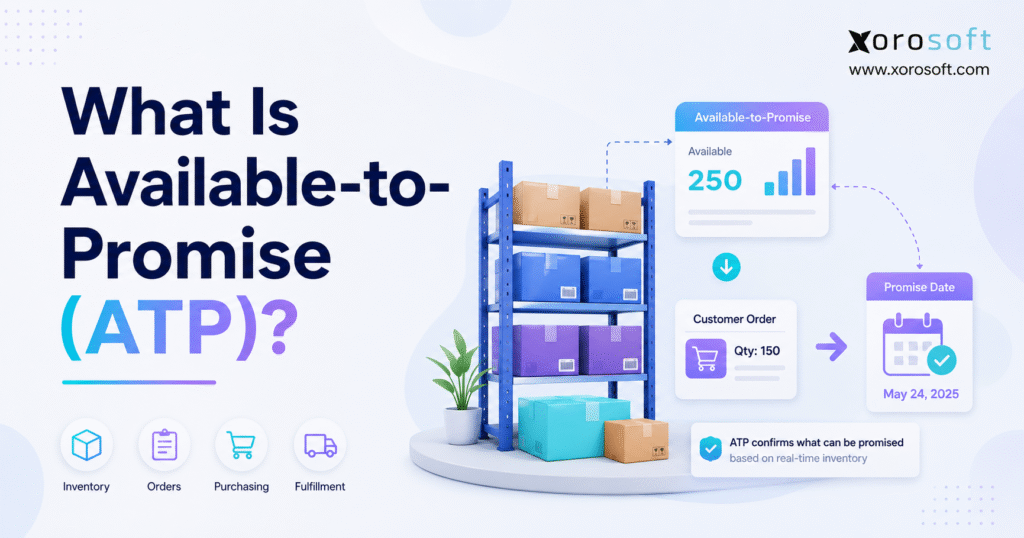
Available-to-promise, commonly shortened to ATP, provides a more useful answer. Instead of showing only what the company owns, ATP calculates how much inventory remains available for new customer commitments. Moreover, it can show when that inventory will become available.
1.1 Available-to-Promise Definition
Available-to-promise is the quantity of current inventory and confirmed future supply that a company can still commit to new customer orders after accounting for existing demand.
A typical available-to-promise calculation considers:
- Inventory on hand
- Confirmed purchase orders
- Planned production
- Incoming warehouse transfers
- Open sales orders
- Reserved inventory
- Backorders
- Safety-stock requirements
- Requested delivery dates
In simple terms, ATP answers two operational questions:
1. How many units can the company promise?
2. When can the company deliver those units?
The second question matters as much as the first. For example, a company may have no available units today but expect a confirmed supplier shipment next week. Therefore, it can accept the order when the customer agrees to a later delivery date.
1.2 Why Available-to-Promise Inventory Matters
Available-to-promise inventory connects stock information with customer commitments.
A standard inventory report may tell the sales team that 1,000 units exist. However, it may not clearly show that open orders already claim 800 units. Consequently, the sales team may promise the same inventory twice.
Accurate ATP helps a company:
- Provide more realistic delivery dates
- Reduce overselling
- Allocate scarce inventory
- Improve purchasing decisions
- Set clearer production priorities
- Coordinate multiple warehouses
- Manage ecommerce and wholesale demand
- Reduce manual availability checks
- Improve customer communication
Therefore, ATP does more than calculate an inventory balance. Instead, it supports sales, fulfillment, purchasing, manufacturing, and customer service decisions.
1.3 Who Uses ATP Inventory Information?
Several departments rely on available-to-promise information.
Sales representatives use ATP to confirm quantities and delivery dates without repeatedly contacting warehouse staff. Similarly, customer service teams use it to explain availability, backorders, partial shipments, and delays.
Meanwhile, purchasing teams use future ATP to identify supply gaps before they become urgent. Warehouse teams use allocation data to determine which orders should receive available stock. In addition, production planners review ATP to prioritize finished goods with confirmed demand.
Ecommerce teams also use ATP to control availability across Shopify, Amazon, marketplaces, and wholesale channels. Finally, finance teams benefit because clearer inventory and order data supports purchasing and working-capital decisions.
As a result, ATP becomes a shared operational measure rather than a number owned by one department.
1.4 Who May Not Need Advanced ATP?
Not every company needs advanced ATP functionality.
A small business may manage availability through a basic inventory report when it has:
- One warehouse
- A limited product range
- Low daily order volume
- Simple supplier schedules
- No manufacturing
- No backorders
- One primary sales channel
- Large inventory buffers
However, the need for a formal ATP process usually increases when the company adds warehouses, sales channels, wholesale customers, long supplier lead times, or manufacturing operations.
2. How the Available-to-Promise Calculation Connects Supply, Demand, and Time
Available-to-promise combines three elements: supply, demand, and time.
Supply includes inventory that exists now and inventory that the company expects to receive or produce. Demand includes customer orders and other commitments that already claim part of that supply. Finally, time determines when the remaining quantity can support another order.
2.1 On-Hand Inventory Creates the Starting Point
On-hand inventory represents the physical quantity recorded at a warehouse, store, production facility, or fulfillment center.
However, the company must trust that figure. Delayed receiving, unrecorded damage, picking errors, missing transfers, and poor cycle-count practices can create differences between the system and the warehouse floor.
For example, the inventory system may show 500 units, while the warehouse physically contains only 470. If the company calculates ATP from the incorrect figure, it may promise 30 units that do not exist.
Therefore, accurate ATP starts with accurate inventory.
2.2 Confirmed Purchase Orders Increase Future ATP
Confirmed purchase orders may increase future available-to-promise inventory.
However, purchasing teams should include a purchase order only when:
- The company has approved it
- The supplier has confirmed the quantity
- The supplier has provided a credible arrival date
- The destination warehouse is clear
- The goods will become sellable after receiving
A draft purchase order does not provide the same certainty as a confirmed shipment. Likewise, an overdue purchase order should not continue increasing ATP unless the supplier provides a revised date.
Therefore, purchasing teams must update expected receipt information regularly. Otherwise, sales teams may promise inventory against an arrival date that no longer applies.
2.3 Planned Manufacturing Creates Expected Supply
Manufacturers may include expected finished goods from production orders.
Nevertheless, a production plan does not always create dependable supply. The business must first confirm that it has the required:
- Raw materials
- Components
- Labor
- Machine availability
- Production capacity
- Lead time
- Expected yield
- Quality-control capacity
For example, a work order may call for 1,000 finished units. However, a component shortage may limit output to 600 units. Consequently, the company should not promise all 1,000 units.
Instead, production planners should update expected supply based on realistic material and capacity constraints.
2.4 Incoming Transfers Change Warehouse-Level ATP
An inbound warehouse transfer can increase ATP at the receiving location.
At the same time, the transfer reduces availability at the shipping warehouse. Therefore, total company inventory may remain unchanged while warehouse-level ATP changes.
This distinction matters because a customer may require delivery from a particular region. Although another warehouse has inventory, that stock may not arrive quickly enough to meet the requested date.
Consequently, businesses should calculate availability by location rather than relying only on a company-wide total.
2.5 Customer Returns Require Cautious Treatment
Some companies include expected returns as future supply.
However, returns create uncertainty because the company may not know:
- When the customer will send the product
- Whether the product will arrive
- Whether it will pass inspection
- Whether the company can resell it
- Which warehouse will receive it
For that reason, most businesses should treat expected returns more cautiously than confirmed purchase receipts. Moreover, they should add returned inventory to ATP only after completing the required inspection.
3. Demand That Reduces Available-to-Promise Inventory
Supply increases available-to-promise. By contrast, customer commitments and inventory policies reduce it.
3.1 Confirmed Sales Orders Reduce ATP
Open customer orders normally reduce available-to-promise inventory.
However, companies commit inventory at different stages. One business may reserve stock when the customer submits the order. Another may wait until payment approval, order release, or warehouse allocation.
Therefore, the company should define one consistent rule. Otherwise, teams may reserve some orders twice while failing to reserve others.
Moreover, every connected channel should follow the same core reservation logic. Without consistent rules, Shopify, wholesale, and marketplace orders may compete for the same units.
3.2 Reserved Inventory Should Not Support Unrelated Orders
A company may reserve inventory for a specific:
- Customer
- Sales order
- Wholesale account
- Ecommerce channel
- Warehouse
- Region
- Product launch
- Subscription program
- Manufacturing requirement
Reserved stock normally should not remain available for unrelated demand.
For example, an apparel company may protect 2,000 units for a national retailer. Although the warehouse still contains those units, the ecommerce website should not offer them to direct customers.
Therefore, ATP should subtract the reservation before publishing inventory to other channels.
3.3 Backorders Represent Existing Demand
Backorders represent demand that the company has already accepted but has not yet fulfilled.
Therefore, backorders usually reduce ATP before the company accepts new orders. Otherwise, the business may continue selling inventory while older customers remain unfulfilled.
However, companies may apply customer-priority rules. For instance, a strategic contract customer may receive supply before a lower-priority order. Even so, the company should document that rule rather than make inconsistent decisions.
As a result, sales and operations teams can explain why one order received inventory before another.
3.4 Safety Stock Protects Against Uncertainty
Safety stock protects the business against unexpected demand, supplier delays, forecast error, or manufacturing disruption.
Many companies subtract safety stock from ATP. For example, a business may hold 100 units as a buffer and prevent standard sales orders from consuming that quantity.
However, some businesses allow authorized managers to release safety stock for priority customers or urgent situations.
Therefore, the ATP process should define:
- Which products require safety stock
- How the company calculates each buffer
- Who can release protected inventory
- When teams should replenish the buffer
Moreover, the business should review safety-stock rules as supplier reliability, demand patterns, or lead times change.
4. Available-to-Promise Formula and ATP Examples
4.1 Basic Available-to-Promise Formula
A simplified ATP formula is:
ATP = On-hand inventory + confirmed incoming supply − committed demand
A more detailed version may use:
ATP = On hand + purchase receipts + planned production + inbound transfers − sales orders − reservations − backorders − protected inventory
However, every company uses different rules. Some businesses include planned production, while others include only completed production. Similarly, some companies protect all safety stock, while others allow priority customers to consume part of it.
Therefore, the formula must reflect the company’s actual operating policies. In addition, the system should apply the same formula consistently across users and channels.
4.2 Basic ATP Inventory Calculation
Assume a company has the following inventory position:
| ATP component | Quantity |
|---|---|
| Inventory on hand | 500 |
| Confirmed purchase order | 200 |
| Existing sales commitments | 450 |
| Available-to-promise | 250 |
The calculation is:
500 + 200 − 450 = 250 units
The company can potentially accept another order for 250 units.
However, the customer may not receive all 250 units immediately. The warehouse currently has only 50 uncommitted units. Therefore, the customer must wait for the incoming 200-unit purchase order when the order requires the full quantity.
Alternatively, the company may ship 50 units now and the remaining 200 units after receiving the purchase order.
4.3 Available-to-Promise Example With Safety Stock
Consider another product:
| ATP component | Quantity |
| Inventory on hand | 300 |
| Confirmed incoming supply | 0 |
| Existing commitments | 220 |
| Safety-stock reserve | 30 |
| Available-to-promise | 50 |
The calculation is:
300 − 220 − 30 = 50 units
Although the warehouse physically holds 300 units, the company can offer only 50 units to another customer.
Therefore, ATP gives the sales team a more realistic figure than on-hand inventory. Moreover, it protects the 30-unit buffer from routine sales demand.
4.4 Time-Phased Available-to-Promise Example
Time-phased ATP shows how availability changes across days or weeks.
| Planning period | Opening inventory | Incoming supply | Committed demand | Closing ATP |
| Week 1 | 500 | 0 | 420 | 80 |
| Week 2 | 80 | 300 | 210 | 170 |
| Week 3 | 170 | 200 | 260 | 110 |
A customer requests 150 units during Week 1. Because only 80 units remain available, the company cannot fulfill the complete order immediately.
However, a confirmed receipt adds 300 units during Week 2. Therefore, the company may promise the complete order for Week 2.
Meanwhile, purchasing must continue monitoring the supplier date. If the shipment moves, customer service should update the promise before the delivery becomes late.
4.5 Multi-Warehouse ATP Calculation
| Warehouse | On hand | Incoming | Committed | ATP |
| East | 200 | 100 | 180 | 120 |
| West | 350 | 0 | 290 | 60 |
| Central | 150 | 200 | 170 | 180 |
The company has 360 total units of available-to-promise inventory.
Nevertheless, the customer may not have access to the full company-wide quantity. The final promise depends on:
- Customer location
- Transit time
- Shipping cost
- Warehouse priority
- Transfer timing
- Regional inventory rules
- Split-shipment policies
Therefore, warehouse-level ATP often provides a more practical answer than a company-wide total. In addition, it helps the company protect service levels and transportation margins.
4.6 What Negative Available-to-Promise Means
Negative ATP means committed demand exceeds eligible supply.
For example:
| ATP component | Quantity |
| On-hand inventory | 300 |
| Confirmed incoming supply | 100 |
| Committed demand | 475 |
| Available-to-promise | -75 |
The company faces a 75-unit shortage.
Several issues can cause negative ATP:
- Demand increased unexpectedly
- A supplier delayed a shipment
- Production output fell
- Inventory records contain errors
- Employees overallocated stock
- Warehouse teams missed transactions
- Safety-stock requirements increased
Therefore, negative ATP should trigger action. Purchasing may expedite supply, while production may change priorities. Alternatively, warehouse teams may transfer inventory. In addition, customer service may negotiate a later date or offer a partial shipment.
Finally, the company should review the cause of the shortage so that the same issue does not repeatedly affect customer promises.
5. Available-to-Promise vs. Other Inventory Measures
Several inventory terms sound similar. However, each one answers a different question.
5.1 Available-to-Promise vs. On-Hand Inventory
On-hand inventory answers:
What physically exists according to the inventory system?
Available-to-promise answers:
What remains available for new customer commitments?
For example, a warehouse may hold 1,000 units. However, existing orders may already claim 800 units. Therefore, the company has 1,000 units on hand but only 200 units of ATP.
Consequently, sales teams should not use the on-hand figure alone when confirming an order.
5.2 Available-to-Promise vs. Available-to-Sell
Available-to-sell generally focuses on inventory that a company can sell immediately.
By contrast, ATP may include confirmed future supply and a requested delivery date. Therefore, ATP can support preorders, backorders, wholesale commitments, and future fulfillment.
For example, a product may have zero available-to-sell units today. However, a confirmed shipment may create 500 ATP units for next month.
As a result, the company can accept future orders without showing the product as immediately available.
5.3 Available-to-Promise vs. Capable-to-Promise
Available-to-promise checks whether current or expected supply can support the customer order.
Capable-to-promise, or CTP, goes further. It checks whether the business can produce or obtain the required quantity within the requested time.
CTP may consider:
- Raw materials
- Components
- Production capacity
- Labor
- Machines
- Supplier lead times
- Manufacturing lead times
Therefore, manufacturers often use CTP when finished goods do not already exist. In addition, CTP can help evaluate whether an expedited purchase or production schedule can support the requested date.
5.4 Available-to-Promise vs. Safety Stock
Safety stock represents a protected inventory buffer. Meanwhile, ATP represents inventory available for customer commitments.
Therefore, protected safety stock normally reduces ATP. However, an authorized manager may release part of the buffer for a priority order.
Nevertheless, frequent safety-stock overrides may indicate that the buffer or replenishment plan needs review.
5.5 Available-to-Promise vs. Inventory Allocation
ATP identifies how much supply remains available.
Inventory allocation, on the other hand, assigns that supply to specific demand.
For example, a company may have 500 ATP units and allocate:
- 200 units to ecommerce
- 150 units to wholesale
- 100 units to retail stores
- 50 units to strategic accounts
Therefore, ATP measures the remaining opportunity, while allocation controls who receives it.
5.6 ATP Inventory Comparison Table
| Inventory measure | Main question | Future supply? | Existing commitments? |
| On-hand inventory | What physically exists? | No | No |
| Available-to-sell | What can the company sell now? | Sometimes | Yes |
| Available-to-promise | What can the company promise by a date? | Yes | Yes |
| Capable-to-promise | Can the company produce or obtain it? | Yes | Yes |
| Safety stock | What inventory should remain protected? | No | Not directly |
| Allocation | Who should receive the available supply? | Sometimes | Yes |
6. How ATP Inventory Supports Customer Order Decisions
6.1 The Customer Requests a Quantity and Date
The process begins when a customer requests a product, quantity, and delivery date.
The order may arrive through:
- Shopify
- Amazon
- A wholesale salesperson
- EDI
- A B2B portal
- A marketplace
- Customer service
- A subscription system
First, the company must capture the quantity and requested date correctly. Otherwise, even an accurate ATP calculation may answer the wrong question.
6.2 The Available-to-Promise Check Reviews Supply
First, the system reviews on-hand inventory. Next, it checks expected purchase receipts, production orders, warehouse transfers, and other eligible supply.
Then, the system subtracts open sales orders, reservations, backorders, and protected inventory.
As a result, the sales team receives an availability figure that reflects actual commitments rather than physical stock alone.
Moreover, a time-phased check can show whether a later delivery date supports the complete quantity.
6.3 ATP Rules Apply Customer and Warehouse Priorities
Many companies apply ATP rules based on:
- Warehouse preference
- Customer priority
- Sales channel
- Requested date
- Shipping method
- Regional allocation
- Safety stock
- Contract terms
For example, a business may protect inventory for a strategic wholesale account. Therefore, the system should not offer that quantity to a lower-priority marketplace order.
Similarly, the system may protect inventory at a regional warehouse for nearby customers rather than shipping it across the country.
6.4 The Company Provides an Order Promise
The ATP check may produce several outcomes:
- Full quantity on the requested date
- Partial quantity immediately
- Full quantity on a later date
- Split shipment from several warehouses
- A backorder date
- An alternative location
- No confirmed availability
The goal is not to approve every order immediately. Instead, the company should provide the most dependable quantity and delivery date.
Consequently, the sales team can discuss realistic options with the customer rather than making an unsupported promise.
6.5 ATP Recalculates as Operations Change
Availability changes throughout the day.
For example, ATP changes when:
- A customer submits an order
- A customer cancels an order
- A warehouse receives inventory
- A team completes a shipment
- A supplier changes an arrival date
- A production order finishes
- A warehouse processes a return
- An employee adjusts inventory
- A transfer moves between locations
Therefore, high-volume businesses need frequent or real-time ATP updates. Otherwise, a correct figure can become outdated only minutes later.
7. Available-to-Promise Across Multiple Warehouses
7.1 Why Company-Wide Inventory Can Mislead Sales Teams
A company may have enough total inventory to fulfill an order but still fail to meet the customer’s requested date.
For example, the East warehouse may have no stock, while the West warehouse holds 500 units. However, moving the product across the country may take several days and increase shipping costs.
Therefore, a useful ATP process evaluates availability by location. Moreover, it should consider whether the chosen warehouse can process the order on time.
7.2 Warehouse-Level ATP Inventory
Warehouse-level ATP should consider:
- Physical stock at each warehouse
- Existing warehouse allocations
- Incoming purchase orders
- Incoming transfers
- Customer location
- Shipping service
- Processing capacity
- Transit time
A connected warehouse management system can improve ATP accuracy because it records receiving, picking, packing, shipping, returns, and transfers within the same workflow.
Moreover, faster warehouse updates help the sales team work from current information rather than an outdated stock balance.
As a result, sales and customer service teams can provide more dependable delivery options.
7.3 Alternative Warehouse Fulfillment
When the preferred warehouse lacks ATP, the company may:
- Fulfill from another warehouse
- Transfer stock
- Split the shipment
- Delay part of the order
- Use supplier-direct shipping
- Offer a substitute product
However, the company should compare service level, shipping cost, margin, and customer expectations before changing the fulfillment location.
For example, an alternate warehouse may meet the delivery date but create an unprofitable shipping cost. Therefore, the best availability decision may not always use the fastest location.
8. Available-to-Promise for Shopify and Multichannel Operations
8.1 Why Shopify Inventory Needs Broader Operational Data
A Shopify storefront may show a product as available while the same stock supports wholesale, Amazon, marketplace, or retail orders.
Consequently, Shopify inventory alone may not represent the full demand picture.
A growing merchant may also need to consider:
- Open purchase orders
- Production schedules
- Wholesale reservations
- Returns
- Multiple Shopify locations
- Amazon inventory
- EDI orders
- Warehouse transfers
- Safety-stock buffers
Therefore, many merchants need an operational system behind Shopify. Otherwise, each channel may publish a different version of inventory availability.
8.2 Connecting Shopify With Available-to-Promise Inventory
A connected system should bring together:
- Shopify orders
- Warehouse inventory
- Purchase orders
- Returns
- Wholesale demand
- Manufacturing
- Accounting
- Fulfillment updates
XoroONE connects inventory, purchasing, accounting, warehouse management, manufacturing, reporting, and omnichannel workflows for inventory-driven businesses.
In addition, merchants can review the Xorosoft ERP listing on the Shopify App Store when evaluating how Shopify can connect with a broader ERP workflow.
Therefore, the storefront can remain the selling experience while the ERP manages the wider operational picture.
8.3 Amazon and Marketplace ATP
Marketplace selling creates additional timing challenges.
For example, inventory feeds may update on a schedule rather than immediately. Meanwhile, cancellations, returns, marketplace reservations, and fulfillment-network stock can change the true available quantity.
Therefore, businesses should define:
- Channel-specific inventory buffers
- Feed frequency
- Marketplace reservations
- Order-import timing
- Cancellation handling
- Return availability
- Channel priority
Moreover, the company should monitor failed integrations because a delayed order import may temporarily overstate ATP.
8.4 Wholesale and EDI ATP Inventory
Wholesale customers often order large quantities. In addition, they may have contract dates, customer-specific allocations, or service-level requirements.
EDI orders may also enter the system automatically. Therefore, the system should reserve inventory quickly enough to prevent ecommerce channels from selling the same units.
Likewise, cancellations and order changes should release inventory promptly so that ATP does not remain unnecessarily low.
9. How Purchasing Influences Available-to-Promise
9.1 Confirmed Purchase Orders Increase Future ATP
Purchase orders can support future customer commitments.
However, purchasing teams need to maintain:
- Confirmed quantities
- Expected receipt dates
- Supplier lead times
- Partial shipment details
- Destination warehouses
- Quality-inspection requirements
When supplier information remains in spreadsheets or email threads, the sales team may promise against outdated dates.
A connected ERP platform can bring purchasing, vendor information, inventory, sales orders, warehouses, accounting, and reporting into a shared workflow.
As a result, a supplier-date change can become visible to sales and customer service without a separate manual update.
9.2 Supplier Delays Reduce ATP Reliability
Suppose the system expects 1,000 units on Friday. However, the supplier moves the shipment to the following month.
If purchasing does not update the date, the ATP calculation continues showing supply that will not arrive. Consequently, sales may make commitments that the company cannot fulfill.
Therefore, supplier-date maintenance directly affects customer-promise accuracy.
Moreover, businesses should track repeated supplier delays because unreliable dates weaken every future ATP calculation.
9.3 Partial Receipts and Quantity Changes
Suppliers do not always ship the full purchase-order quantity.
For example, a supplier may confirm 1,000 units but ship only 700. Therefore, the purchasing team must update the remaining quantity and expected date.
Otherwise, the system may count the missing 300 units twice: once as received supply and again as open purchase-order supply.
Consequently, receiving teams and purchasing teams must keep purchase-order balances aligned.
10. How Manufacturing Affects ATP Inventory
10.1 Production Orders as Future Supply
Manufacturers may include planned output in future ATP.
However, production orders create reliable supply only when the production plan reflects actual material and capacity constraints.
Therefore, teams should review:
- Bills of materials
- Raw-material inventory
- Component purchase orders
- Work-center capacity
- Labor
- Machine availability
- Yield
- Scrap
- Quality checks
Moreover, planners should update expected completion dates whenever material or capacity problems change the schedule.
10.2 Component Shortages Reduce Finished-Goods ATP
A manufacturer may plan 1,000 finished units. However, available components may support only 600.
Therefore, the company should not promise 1,000 units based only on the production-order quantity.
Instead, planners must connect finished-goods availability with material requirements. As a result, sales teams receive a more realistic future quantity.
10.3 ATP vs. CTP for Manufacturers
ATP checks current and expected supply.
CTP, by contrast, checks whether the company can create additional supply.
Therefore, a make-to-order manufacturer may use CTP to determine whether it can purchase materials, schedule production, and complete the order by the customer’s requested date.
In addition, CTP may identify an alternative production date when the original date is not achievable.
10.4 Connecting Manufacturing With Inventory and Accounting
Manufacturing activity changes raw-material inventory, work in process, finished goods, labor costs, and inventory valuation.
Therefore, manufacturing should not operate separately from purchasing, warehouse management, sales orders, and accounting.
Xorosoft connects production workflows with inventory and broader operations through its cloud ERP environment. However, every manufacturer should validate its planning, costing, capacity, and ATP requirements during software evaluation.
Consequently, the implementation should reflect real production workflows rather than a generic availability formula.
11. Available-to-Promise Use Cases by Industry
11.1 ATP Inventory for Apparel and Fashion
Apparel companies manage style, color, size, season, and collection combinations.
A company may have strong inventory at the style level but no ATP for a popular size. Moreover, wholesale preorders, ecommerce demand, returns, and launch allocations may compete for the same units.
Therefore, apparel companies need availability at the SKU level rather than the product-family level.
In addition, they may need channel buffers during launches or seasonal peaks.
11.2 Available-to-Promise for Furniture
Furniture companies often manage long supplier lead times, containers, large products, regional warehouses, and made-to-order items.
For example, a sofa may not be available today. However, an incoming container may support a reliable customer promise six weeks later.
Therefore, future supply dates play a central role in furniture ATP.
Moreover, furniture businesses may need to coordinate several items before promising a complete room set.
11.3 ATP Inventory for Sporting Goods
Sporting-goods companies may face seasonal demand, promotional spikes, bundles, retail replenishment, wholesale orders, and ecommerce growth.
Consequently, ATP helps protect stock for product launches, important retail programs, and peak seasons.
Similarly, it helps prevent one high-volume channel from consuming inventory intended for another program.
11.4 Available-to-Promise for Food and Beverage
Food and beverage businesses must consider:
- Batch status
- Expiration dates
- Shelf life
- Quality holds
- Production schedules
- Customer requirements
A product may physically exist but still fail to meet the customer’s shelf-life or delivery requirements. Therefore, ATP may need to consider lot and expiry information.
In addition, quality holds should reduce ATP until the business releases the affected batch.
11.5 ATP for Wholesale Distribution
Wholesale distributors often manage:
- Large customer orders
- EDI
- Customer-specific pricing
- Priority accounts
- Supplier lead times
- Backorders
- Partial shipments
- Multiple warehouses
Therefore, ATP helps distributors accept new business without disrupting earlier customer commitments.
Moreover, allocation rules help protect inventory for contract customers or scheduled programs.
11.6 ATP Inventory for Automotive Parts
Automotive-parts businesses often manage large SKU catalogs, superseded parts, urgent demand, supplier variability, dealers, service centers, and multiple warehouses.
As a result, location-level ATP helps the company determine whether the correct part can reach the customer on time.
In addition, substitution and supersession data may help the company offer an alternative part when the requested item has no ATP.
Businesses can explore Xorosoft’s ERP solutions for inventory-driven industries when reviewing connected processes for apparel, furniture, consumer products, wholesale, food, manufacturing, and distribution.
12. Operational Benefits of Accurate Available-to-Promise
12.1 More Reliable Delivery Commitments
ATP allows sales and customer service teams to provide dates based on actual supply and demand.
Therefore, the company can avoid promising an aggressive date simply because stock appears on hand.
Moreover, dependable dates help customer service teams communicate with greater confidence.
12.2 Lower Overselling Risk
ATP subtracts existing commitments before the company offers more inventory.
This approach becomes especially important when Shopify, Amazon, wholesale, retail, and marketplace orders share the same products.
As a result, the company reduces the risk of accepting several orders against the same units.
12.3 Better Inventory Allocation
ATP and allocation rules help businesses protect inventory for:
- Strategic customers
- Wholesale agreements
- Ecommerce
- Retail locations
- Product launches
- Subscription orders
- Regional demand
As a result, the company can align scarce inventory with commercial priorities.
Moreover, teams can explain allocation decisions through documented rules instead of ad hoc judgment.
12.4 Better Purchasing Decisions
Future ATP highlights periods when demand may exceed supply.
Therefore, purchasing teams can expedite orders, increase quantities, change suppliers, or adjust replenishment plans before the shortage affects customers.
In addition, buyers can focus attention on products with low or negative future ATP.
12.5 Clearer Production Priorities
Manufacturers can review low or negative future ATP to identify products that need attention.
Consequently, production teams can prioritize confirmed customer demand while still considering forecasts and capacity.
Moreover, planners can evaluate whether an alternate schedule or component purchase would improve the promise date.
12.6 Less Manual Coordination
Without reliable ATP, sales teams often email or call purchasing, production, and warehouse employees before confirming an order.
A connected process reduces these interruptions. Moreover, it gives every department a consistent view of availability.
Therefore, employees spend less time collecting information and more time resolving meaningful exceptions.
13. Common Available-to-Promise Mistakes
13.1 Treating On-Hand Inventory as ATP
On-hand inventory does not account for every commitment.
Therefore, using it as ATP can cause the company to sell the same units more than once.
Moreover, it ignores future supply that may support a later delivery date.
13.2 Counting Unconfirmed Purchase Orders
A draft or overdue purchase order does not represent dependable supply.
Instead, companies should include only approved and reasonably reliable receipts.
Otherwise, future ATP may depend on supply that the vendor has not confirmed.
13.3 Ignoring Open Orders and Backorders
Open orders already create demand.
If the company does not subtract them, the ATP calculation overstates inventory. Consequently, sales teams may confirm orders that operations cannot fulfill.
Therefore, every relevant sales-order status should follow a clear reservation rule.
13.4 Combining Every Warehouse Into One Number
Company-wide inventory may hide location problems.
For example, the company may have enough total stock but lack inventory near the customer. Therefore, it may miss the requested delivery date.
In addition, moving inventory between warehouses may create unnecessary shipping and handling costs.
13.5 Ignoring Safety Stock
When the company fails to protect safety stock, normal sales orders may consume the complete buffer.
As a result, the business becomes more exposed to demand spikes and supply delays.
Therefore, teams should apply the safety-stock policy consistently.
13.6 Delaying Warehouse Transactions
Late receiving, picking, shipping, return, and transfer entries make system inventory fall behind physical operations.
Therefore, strong ATP requires disciplined warehouse execution.
Moreover, businesses should measure transaction delays when system availability repeatedly differs from the warehouse floor.
13.7 Using Outdated Supplier Dates
An overdue purchase order may continue increasing future ATP until purchasing updates it.
Consequently, sales teams may promise against inventory that will not arrive on time.
Therefore, buyers should review late and unconfirmed purchase orders regularly.
13.8 Ignoring Manufacturing Constraints
Production orders do not guarantee supply when materials, machines, labor, or capacity remain unavailable.
Therefore, manufacturers should connect ATP with production planning and material requirements.
Otherwise, the company may promise finished goods based on an unrealistic production schedule.
13.9 Managing ATP in Static Spreadsheets
Spreadsheets can calculate ATP. However, they cannot automatically capture every order, receipt, cancellation, return, transfer, and supplier change.
As operations become more dynamic, the formula remains simple while the underlying data becomes difficult to maintain.
Consequently, teams may spend more time updating the spreadsheet than using the information.
14. When the ATP Process Has Outgrown Spreadsheets
14.1 When Manual ATP Can Still Work
A spreadsheet may support a business with:
- One warehouse
- Few SKUs
- Low daily order volume
- One sales channel
- No manufacturing
- Simple purchasing
- One person managing availability
However, the company should still review the data frequently.
Moreover, the process should include clear ownership so that employees know who updates supply and demand.
14.2 Signs the Company Needs a Connected ATP Process
The company may need a connected system when:
- Several employees maintain separate spreadsheets
- Multiple channels share inventory
- Inventory changes throughout the day
- Purchase dates change frequently
- The company operates several warehouses
- Sales teams regularly override availability
- Manufacturing affects delivery dates
- Backorders continue increasing
- Accounting and warehouse quantities disagree
- Customer service provides inconsistent dates
At this stage, the company does not need only a better spreadsheet. Instead, it needs one reliable operational data source.
Moreover, repeated manual overrides indicate that the current process no longer reflects real operations.
14.3 How ERP Systems Support ATP Decisions
An ERP can connect:
- Inventory
- Sales orders
- Purchase orders
- Warehouse movements
- Manufacturing
- Forecasting
- Ecommerce
- Accounting
As transactions update the shared system, teams can evaluate availability without manually combining several reports.
Xorosoft is a cloud ERP platform for inventory-driven retailers, wholesalers, ecommerce companies, distributors, and manufacturers. Its connected environment brings together inventory, purchasing, accounting, warehouse management, manufacturing, forecasting, reporting, and omnichannel workflows.
However, companies should validate their exact ATP rules during system evaluation. Order statuses, reservations, supply types, warehouse priorities, and delivery-date requirements vary across businesses.
In addition, teams comparing broader ERP systems can review the Xorosoft versus NetSuite comparison as one part of their research.
Therefore, the final decision should reflect operational fit rather than a generic feature checklist.
15. Available-to-Promise FAQs
15.1 What Is Available-to-Promise?
Available-to-promise is the quantity of current inventory and confirmed future supply that remains available for new customer orders after the company accounts for existing commitments. Therefore, ATP provides a more useful sales figure than inventory on hand alone.
15.2 What Does ATP Mean in Inventory?
ATP stands for available-to-promise. It helps a business determine how many units it can commit and when it can deliver them. As a result, sales and operations teams can provide more realistic order dates.
15.3 What Is the ATP Formula?
A basic formula is:
ATP = On-hand inventory + confirmed incoming supply − committed demand
In addition, companies may subtract safety stock, reservations, quality holds, and channel buffers.
15.4 Does ATP Include Purchase Orders?
ATP may include approved purchase orders when suppliers confirm the quantities and dates. However, companies should avoid counting draft or outdated purchase orders as dependable supply.
15.5 Does ATP Include Production Orders?
ATP may include planned production. However, manufacturers should confirm component availability, capacity, labor, lead times, and expected output before promising that supply.
15.6 Does ATP Include Safety Stock?
Protected safety stock normally reduces ATP. However, a company may allow authorized users to release part of the buffer for priority orders.
15.7 Does Reserved Inventory Reduce ATP?
Yes. Reserved inventory already supports an order, customer, warehouse, channel, region, project, or other commitment. Therefore, it should not remain available for unrelated demand.
15.8 Can Available-to-Promise Be Negative?
Yes. Negative ATP means committed demand exceeds the supply included in the calculation. Consequently, one or more customer commitments may face risk.
15.9 What Causes Negative ATP?
Supplier delays, inventory errors, demand spikes, production shortages, over-allocation, and missing warehouse transactions commonly cause negative ATP. Therefore, teams should investigate both the shortage and its underlying cause.
15.10 What Is ATP vs. On-Hand Inventory?
On-hand inventory shows what physically exists. By contrast, ATP shows what remains available for additional customer commitments.
15.11 What Is ATP vs. Available-to-Sell?
Available-to-sell usually focuses on current sellable inventory. ATP, however, may also consider confirmed future supply and delivery dates.
15.12 What Is ATP vs. Capable-to-Promise?
ATP evaluates existing and expected supply. CTP also evaluates whether the business can produce or obtain additional supply within the requested time.
15.13 What Is ATP vs. Safety Stock?
Safety stock protects the business from uncertainty. Meanwhile, ATP represents the inventory the company can commit to customers.
15.14 What Is ATP vs. Inventory Allocation?
ATP identifies available supply. Allocation, on the other hand, assigns that supply to particular customers, orders, warehouses, regions, or sales channels.
15.15 How Does ATP Prevent Overselling?
ATP subtracts existing commitments before the company offers more inventory. Therefore, it reduces the risk of promising the same units to several customers.
15.16 How Does ATP Improve Fulfillment?
ATP gives sales, warehouse, purchasing, manufacturing, and customer service teams one realistic quantity and delivery date. As a result, teams coordinate orders more effectively.
15.17 How Does ATP Work Across Warehouses?
The company calculates ATP by warehouse. Next, it considers customer location, transit time, cost, warehouse priority, and transfer availability.
15.18 How Does ATP Work for Shopify?
Shopify orders reduce inventory when the operational system imports and reserves them. However, accurate ATP must also consider wholesale orders, marketplaces, purchase orders, returns, and warehouse activity.
15.19 How Does ATP Work for Wholesale Orders?
Wholesale ATP may consider EDI orders, contract dates, customer priority, large allocations, partial shipments, and customer-specific reservations. Therefore, wholesale availability may differ from ecommerce availability.
15.20 How Does ATP Work in Manufacturing?
Manufacturers use ATP to assess finished-goods availability. In addition, they may use CTP to evaluate materials, capacity, production schedules, and procurement lead times.
15.21 How Often Should ATP Update?
High-volume businesses should update ATP whenever supply or demand changes. Smaller companies, however, may use scheduled updates when transactions occur less frequently.
15.22 What Causes Inaccurate ATP?
Inventory discrepancies, delayed warehouse entries, old purchase-order dates, missing sales orders, poor reservation rules, and disconnected systems often create inaccurate ATP. Therefore, businesses should improve data quality before adding complex calculation rules.
15.23 Can a Company Calculate ATP in a Spreadsheet?
Yes. However, spreadsheets become difficult to maintain when many orders, channels, warehouses, suppliers, and production activities change throughout the day.
15.24 Who Needs ATP Software?
Companies with multiple warehouses, long supplier lead times, manufacturing, wholesale contracts, ecommerce channels, EDI orders, or allocation conflicts often benefit from ATP software.
15.25 When Should a Business Upgrade Its ATP Process?
A company should consider an upgrade when sales, purchasing, warehouses, manufacturing, ecommerce, and accounting cannot maintain one reliable view of supply and demand. At that point, a connected system may reduce both manual work and customer-promise risk.
16. Turn Available-to-Promise Into a Reliable Customer Commitment
Available-to-promise is not simply an inventory formula. Instead, it reflects the quality of the company’s inventory, sales-order, purchasing, warehouse, and manufacturing data.
A spreadsheet may support ATP when operations remain small and stable. However, the process becomes harder to trust as transaction volume, sales channels, warehouses, suppliers, and manufacturing requirements increase.
First, define what counts as supply, committed demand, reserved inventory, and protected stock. Next, improve inventory accuracy and supplier-date maintenance. Then, ensure warehouse teams record transactions when physical movements occur.
Afterward, test the process against real scenarios such as supplier delays, large wholesale orders, split shipments, production shortages, and warehouse transfers. Moreover, track promise accuracy, backorders, stockouts, and manual overrides so that teams can identify weak points.
Finally, review whether the current software stack keeps every department aligned. A business should not implement ERP simply because ATP sounds useful. However, it should consider a connected platform when disconnected systems prevent teams from making dependable promises.
Xorosoft may support inventory-driven companies that need Shopify, Amazon, wholesale, EDI, purchasing, warehouse management, manufacturing, accounting, forecasting, and reporting to operate from shared information.
Review Your ATP and ERP Readiness
A personalized review can help identify whether inaccurate availability comes from warehouse execution, purchasing data, manufacturing plans, allocation policies, or disconnected software.
Therefore, the next step should focus on diagnosing the operational cause before selecting new technology.
Recent Posts
-
 ERP Landed Cost Module vs Spreadsheet Calculations for Importers
 -
 How to Build an Open-to-Buy Plan for an Omnichannel Brand
 -
 Cold Storage WMS for Food and Beverage Distribution
 -
 ERP Buying Statistics 2026: Evaluation, Implementation, and Adoption Risks
 -
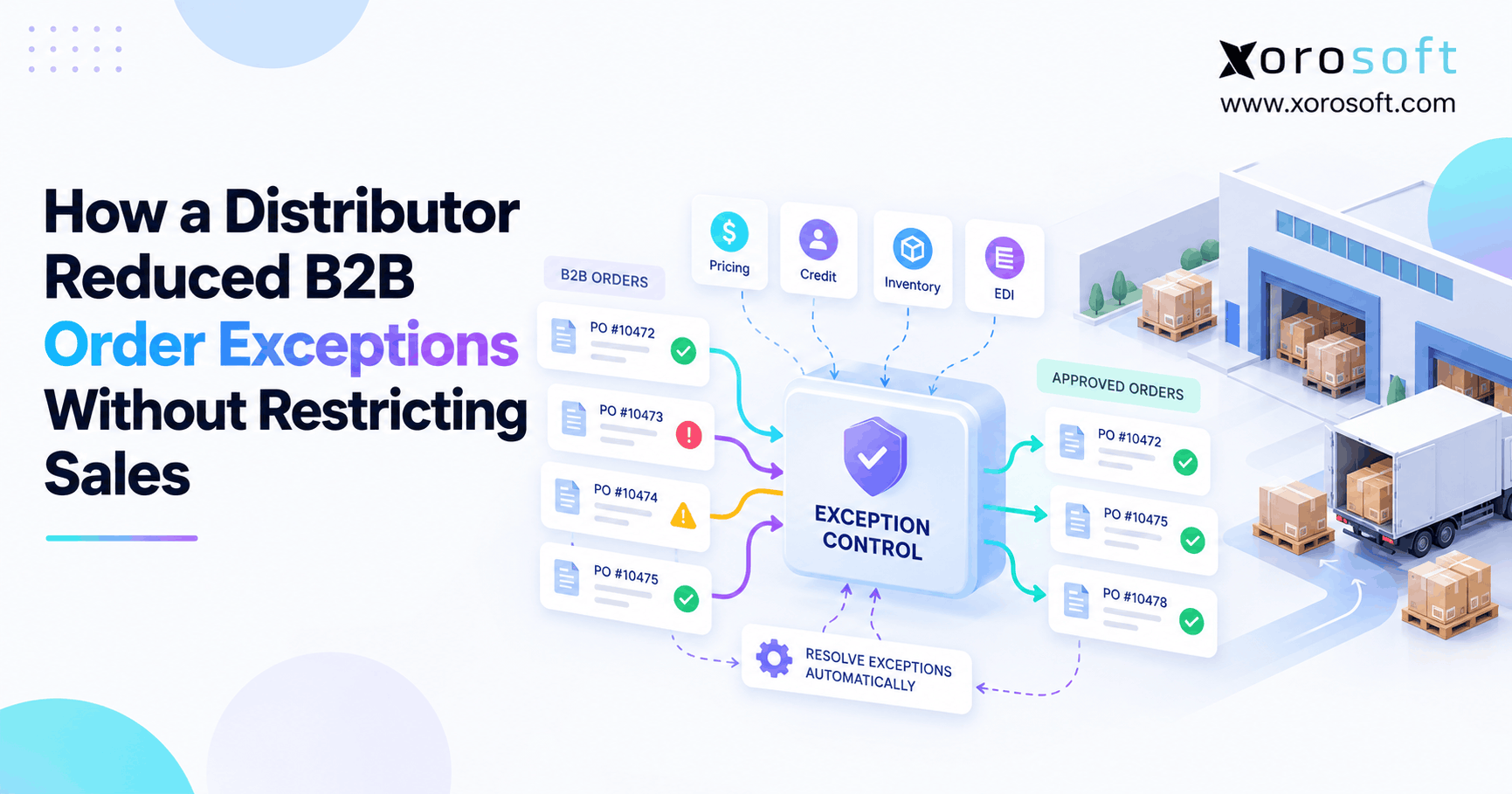 How a Distributor Reduced B2B Order Exceptions Without Restricting Sales