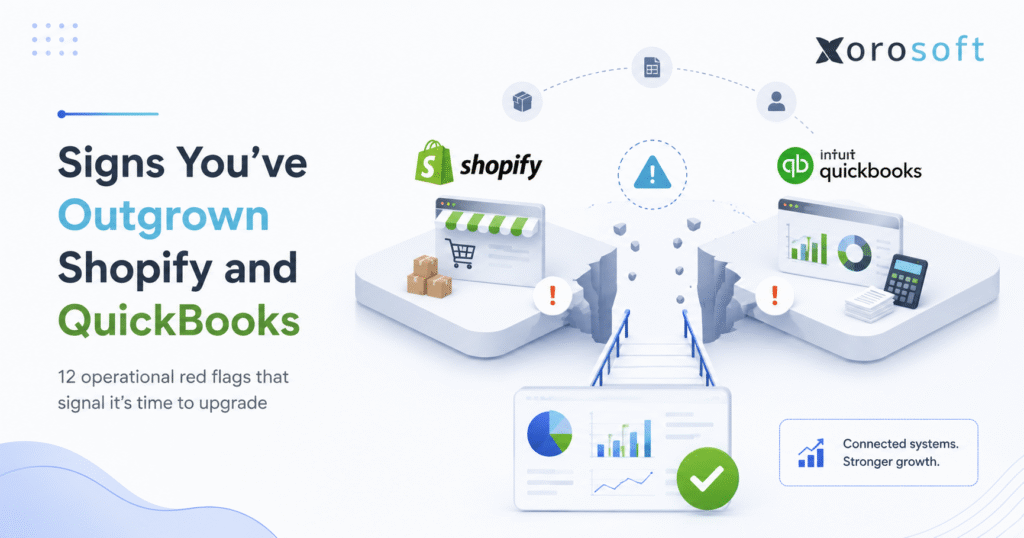
Has your business outgrown Shopify and QuickBooks?
1. When Your Shopify QuickBooks Stack Starts Slowing Growth
You have outgrown Shopify and QuickBooks when your storefront still takes orders, your accounting system still records transactions, but your team no longer trusts the inventory, purchasing, warehouse, and financial data behind the business.
At the beginning, the Shopify QuickBooks setup makes sense. Shopify handles the online store, product pages, checkout, customer orders, and basic ecommerce workflows. Meanwhile, QuickBooks helps the finance team manage accounting, bills, invoices, bank feeds, taxes, and financial records.
However, growth changes the job of the software stack. More orders create more inventory movement. SKU counts expand. Warehouse rules multiply. In addition, finance needs cleaner data because every inventory movement eventually affects reporting, margin, and cash flow.
Therefore, the real question is not whether Shopify or QuickBooks are useful. Both can still be useful. Instead, the question is whether they can still act as the full operating system for a growing inventory-driven business.
1.1 What Shopify and QuickBooks Still Do Well
Shopify is strong as the commerce front end. It helps brands sell products, manage a storefront, accept orders, process payments, and connect with ecommerce channels. For many businesses, Shopify remains the right customer-facing platform even after the company upgrades its backend operations.
QuickBooks is strong as an accounting system for small and growing businesses. It helps teams manage financial records, expenses, bills, invoices, bank activity, and bookkeeping workflows. Because accountants know it well, many companies start with QuickBooks and keep it for years.
Together, Shopify and QuickBooks can support an early-stage ecommerce brand. However, once operations become more complex, the business needs more than ecommerce selling and bookkeeping.
1.2 Where Shopify and QuickBooks Are No Longer Enough
The Shopify QuickBooks stack starts to break when inventory, accounting, purchasing, fulfillment, and reporting stop moving together.
For example, Shopify may show inventory available for sale, while the warehouse knows the stock is already committed. QuickBooks may show inventory value, while operations uses a separate spreadsheet to track actual quantities. Purchasing may order based on old sales data, while leadership waits for a manually updated report.
As a result, the business gets slower even though revenue is growing. More people join the team, but more work still depends on exports, spreadsheets, manual checks, and disconnected apps.
1.3 Why Growth Exposes Shopify QuickBooks Workflow Problems
Growth does not only create more sales. It creates more exceptions. Order volume rises, SKU counts expand, warehouse rules multiply, and finance needs cleaner data. In addition, new channels such as Amazon, wholesale, EDI, and retail make every operational mistake more expensive.
Because each workflow touches another workflow, disconnected systems become harder to manage. Inventory affects purchasing. Purchasing affects cash flow. Receiving affects accounting. Fulfillment affects customer service. Returns affect stock availability and margin.
Eventually, the team realizes the issue is not one bad spreadsheet. The issue is the absence of a connected backend system.
2. What It Really Means to Have Outgrown Shopify and QuickBooks
To have outgrown Shopify and QuickBooks means your business now needs stronger operational control than a storefront, accounting system, connector apps, and spreadsheets can provide.
This does not mean Shopify failed. It also does not mean QuickBooks failed. Instead, it means the business has entered a new stage where ecommerce, inventory, purchasing, warehouse management, accounting, forecasting, and reporting must work from the same operational truth.
2.1 Outgrowing Shopify and QuickBooks Does Not Mean the Tools Were Wrong
Many businesses feel frustrated when the old stack stops working. However, the tools usually did their job for the stage they were chosen for.
Shopify helps businesses sell. QuickBooks helps businesses account. But a scaling inventory-driven business needs to know what is available, what is committed, what is incoming, what is delayed, what must be purchased, what can be fulfilled, what is profitable, and what the financial impact will be.
That level of control requires more than basic order sync and accounting records.
2.2 Operational Complexity Is the Real Reason Brands Outgrow the Stack
Revenue alone does not decide whether you have outgrown Shopify and QuickBooks. Complexity does.
A $3 million brand with one warehouse, simple SKUs, and clean direct-to-consumer orders may continue operating smoothly. However, a $2 million brand with wholesale, Amazon, EDI, bundles, manufacturing, and three warehouses may feel operational pressure much earlier.
Therefore, the better question is this: how many workflows now depend on manual coordination?
If the answer is “most of them,” the company is probably ready to evaluate a stronger backend system.
2.3 Accounting Sync Is Not the Same as Operational Control
A Shopify QuickBooks connector can reduce manual accounting work. It can help move sales activity, payments, product details, and customer information into QuickBooks. That is useful, especially when bookkeeping is the main issue.
However, accounting sync does not automatically solve warehouse execution, purchasing automation, supplier planning, stock allocation, landed costs, demand forecasting, EDI, manufacturing, or real-time reporting.
In other words, syncing transactions is not the same as running operations. Once that difference becomes painful, the business has likely outgrown Shopify and QuickBooks as its complete operating stack.
3. 12 Signs You’ve Outgrown Shopify and QuickBooks
This section is the practical checklist. If one or two signs appear occasionally, the current stack may still be manageable. However, if several signs appear every week, you have probably outgrown Shopify and QuickBooks and should review your next system.
| Warning Sign | Root Cause | Operational Impact |
|---|---|---|
| Inventory does not match | Disconnected systems | Overselling and stock confusion |
| Month-end close is slow | Manual reconciliation | Delayed financial reporting |
| Purchasing runs on spreadsheets | No central replenishment workflow | Stockouts and overstock |
| Warehouse work is manual | Weak execution controls | Picking and shipping errors |
| Reports require exports | Data lives in multiple systems | Slow decisions |
| Finance and operations disagree | Different sources of truth | Poor margin visibility |
3.1 Inventory Numbers No Longer Match Across Shopify and QuickBooks
Inventory accuracy is usually the first major warning sign. Shopify says one number. QuickBooks shows another value. The warehouse has a different count. Meanwhile, the purchasing team works from a spreadsheet that nobody updated yesterday.
Because inventory data drives selling, fulfillment, purchasing, and accounting, even small mismatches create expensive problems. Orders may be accepted for products that are not available. Buyers may reorder too late. Finance may question inventory value at month-end. Customer service may promise a delivery date that operations cannot support.
If inventory accuracy depends on manual checks across Shopify, QuickBooks, spreadsheets, and warehouse tools, your business has likely outgrown Shopify and QuickBooks as its main source of truth.
3.2 Month-End Close Takes Too Long
A slow month-end close usually means finance is waiting for operations to become accurate.
The finance team may need to reconcile Shopify payouts, refunds, fees, taxes, returns, purchase receipts, inventory adjustments, and COGS. However, if those records live across different systems, the close becomes a manual investigation.
As a result, leadership receives financial reports late. Even worse, the numbers may explain what happened weeks ago instead of helping the team make decisions now.
When month-end close depends on spreadsheet cleanup and operational corrections, the Shopify QuickBooks setup is no longer enough.
3.3 Purchasing Still Runs Outside the Shopify QuickBooks Stack
Purchasing becomes risky when buyers rely on spreadsheets instead of live inventory, sales velocity, supplier lead times, incoming stock, and demand forecasts.
At first, a purchasing spreadsheet feels practical. It gives the buyer control. However, as the business grows, that spreadsheet becomes a hidden operating system. It may track reorder points, vendor notes, lead times, minimum order quantities, open purchase orders, and expected arrival dates.
Eventually, the business starts buying too much of slow-moving stock and too little of fast-moving stock. Therefore, stockouts and overstock begin happening at the same time.
If purchasing decisions still happen outside the core system, that is a strong sign you have outgrown Shopify and QuickBooks.
3.4 Manual Workarounds Are Replacing Real Operations
Manual workarounds usually begin as temporary fixes. Someone exports Shopify orders. Another person updates QuickBooks. The warehouse team may use a separate document to track exceptions. Meanwhile, operations builds another spreadsheet to keep everything moving.
However, temporary fixes often become permanent processes. The business continues growing, but the backend depends on people remembering which report, tab, column, and formula is correct.
This creates operational fragility. If the person who understands the spreadsheet is unavailable, the process slows down. If someone updates the wrong version, the numbers change. When a formula breaks, leadership may make decisions based on bad data.
That is why manual workarounds are not just annoying. They are a sign that the ecommerce operations stack has become too weak for the business.
3.5 Multiple Warehouses Create Inventory Confusion
Multi-warehouse operations increase complexity quickly. The business must know where stock is located, which warehouse should fulfill each order, what is committed, what is incoming, what is in transit, and what is available for each channel.
Shopify can support inventory by location, and that is useful. However, growing brands often need deeper warehouse controls such as barcode scanning, bin locations, receiving workflows, transfer workflows, cycle counting, and scan-based picking.
When warehouse teams need separate tools or spreadsheets to confirm what is physically available, the Shopify QuickBooks stack is no longer controlling the full operation.
3.6 Shopify Orders Need Too Much Manual Cleanup
Shopify orders should flow cleanly into fulfillment and accounting. However, growing brands often deal with exceptions such as split shipments, backorders, bundles, substitutions, wholesale orders, returns, exchanges, custom pricing, and partial fulfillment.
Because of this, the operations team may inspect too many orders before they can move forward. They may change tags, update notes, confirm stock, check warehouse availability, or manually adjust an order before fulfillment.
At low volume, this is manageable. At higher volume, manual order cleanup becomes a bottleneck. Therefore, when every order feels like a special case, the system is slowing the team down.
3.7 Finance and Operations Use Different Numbers
Finance and operations need different views of the business. However, they should not use different truths.
Finance may care about revenue, COGS, inventory value, gross margin, and reconciliation. Operations may care about available stock, committed stock, receiving, purchase orders, and fulfillment status. Although those views are different, the underlying data should connect.
When finance and operations disagree, decisions slow down. Finance questions margin. Operations questions inventory value. Leadership questions both reports.
This disagreement usually means the company has outgrown Shopify and QuickBooks as a shared operating layer.
3.8 Reporting Still Depends on Exports and Spreadsheets
Many scaling brands create reports by exporting data from Shopify, QuickBooks, warehouse tools, inventory apps, and spreadsheets. Then someone combines the files, fixes the columns, runs formulas, checks exceptions, and builds a dashboard.
Technically, the business has a report. However, it does not have real-time visibility.
By the time leadership reviews the report, orders have shipped, returns have arrived, purchase orders have changed, and inventory has moved. Therefore, the report explains the past instead of guiding the next decision.
If the business cannot answer basic operational questions without exports and spreadsheet formulas, the reporting layer is too manual.
3.9 Stockouts and Overstock Happen at the Same Time
Stockouts and overstock often appear together when demand planning is weak.
Fast-moving items run out. Slow-moving items sit in the warehouse. Seasonal items arrive late. New products are overbought. Wholesale commitments consume inventory that ecommerce expected to sell. Meanwhile, purchasing decisions rely on old data.
This problem is not only an inventory issue. It is also a purchasing, forecasting, supplier, warehouse, and cash flow issue.
Because Shopify and QuickBooks only show parts of the picture, the business needs a system that connects demand, stock, purchasing, receiving, fulfillment, and finance.
3.10 Wholesale, Amazon, or EDI Makes the Stack Too Complex
Direct-to-consumer orders are usually simpler than wholesale, Amazon, or EDI workflows.
Wholesale may require customer-specific pricing, payment terms, case packs, sales reps, allocations, and larger order quantities. Amazon may require strict fulfillment timing and accurate stock availability. EDI may require structured documents, acknowledgments, shipment notices, and invoice workflows.
As a result, more apps enter the stack. One app handles EDI. Another handles inventory. Warehouse workflows may sit somewhere else, while accounting sync adds another layer. However, more apps do not always mean more control.
When channel complexity creates more manual coordination, the business may have outgrown Shopify and QuickBooks.
3.11 Customer Service Cannot Trust Inventory Data
Customer service teams need accurate answers. When a customer asks about an order, the team should know whether the item is available, where it is located, when it will ship, whether it is backordered, and whether a replacement is possible.
However, if the team must check Shopify, ask the warehouse, review a spreadsheet, and wait for operations to confirm, the customer experience suffers.
Inventory accuracy is not only an internal metric. It directly affects trust, delivery promises, cancellation rates, and repeat purchases.
3.12 Leadership Cannot See the Business in Real Time
Leadership needs visibility across sales, inventory, margin, purchasing, fulfillment, warehouse workload, and cash flow.
However, disconnected systems force leaders to wait for manual updates. One person owns the sales report. Another owns the inventory file. Finance owns the margin report. Operations owns the warehouse update.
Consequently, leadership cannot see the business clearly without asking five people for five reports.
When real-time visibility becomes impossible, the company has likely outgrown Shopify and QuickBooks and needs a more connected operational backbone.
A practical next step:
If these symptoms feel familiar, review your inventory, accounting, purchasing, warehouse, and reporting workflows before choosing another app. A readiness review helps you decide whether better integrations, inventory software, warehouse software, or ERP makes the most sense.
4. Shopify, QuickBooks, and ERP: What Each System Is Built For
The cleanest way to understand the problem is to separate the role of each system.
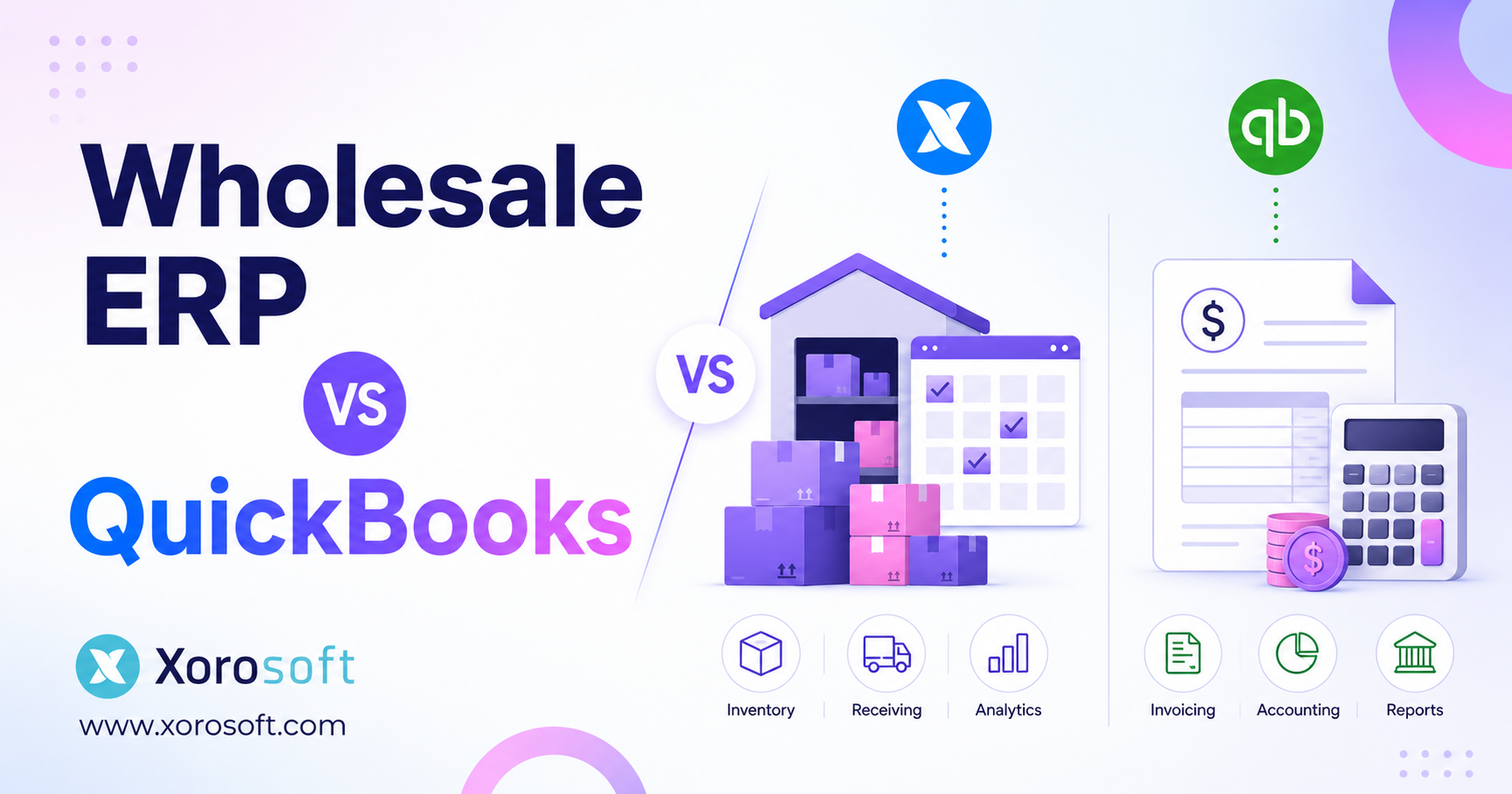
| System | Best For | What It Handles Well | Where It Becomes Limited |
| Shopify | Ecommerce storefront | Online sales, checkout, product catalog, customer orders | Full backend operations |
| QuickBooks | Accounting | Bookkeeping, bills, invoices, financial records | Complex inventory and operational control |
| ERP | Operational backbone | Inventory, accounting, purchasing, warehouse, forecasting, reporting | Requires planning and implementation |
4.1 Shopify as the Ecommerce Front End
Shopify should usually remain the commerce layer. It handles the storefront, product catalog, checkout, online orders, and customer buying experience. In addition, Shopify supports inventory features such as locations and inventory tracking, which can work well for many brands.
However, Shopify is not designed to be the full operating system for complex inventory-driven businesses. As soon as purchasing, warehouse execution, accounting, wholesale, EDI, and manufacturing become central, the company needs stronger backend control.
For that reason, many brands keep Shopify for selling while adding a better operational system behind it. You can also review Shopify’s own documentation on inventory management for multiple locations and apps when planning how inventory should flow.
4.2 QuickBooks as the Accounting System
QuickBooks works well for bookkeeping and financial records. It can support inventory tracking in QuickBooks Online, and it can help businesses record products, quantities, costs, and reorder points.
However, QuickBooks is not always enough when ecommerce operations require advanced warehouse management, purchasing automation, inventory allocation, forecasting, EDI, manufacturing, and real-time operational reporting.
Therefore, the issue is not whether QuickBooks can record transactions. The issue is whether QuickBooks can support the operational complexity behind those transactions. You can review Intuit’s documentation on how to set up and track inventory in QuickBooks Online for the accounting-side capabilities.
4.3 ERP as the Operational Backbone After Shopify and QuickBooks
ERP stands for enterprise resource planning. In practical terms, ERP connects inventory, purchasing, accounting, warehouse management, manufacturing, forecasting, reporting, and ecommerce operations.
For Shopify brands, ERP does not usually replace Shopify. Instead, it becomes the backend operating system behind Shopify. Shopify continues to sell. ERP manages what can be sold, where stock is located, what must be purchased, how orders should be fulfilled, and how financial data should be recorded.
This is why brands that have outgrown Shopify and QuickBooks often evaluate ERP platforms once disconnected apps and spreadsheets create too many operational gaps.
4.4 Why More Apps Do Not Always Fix the Shopify QuickBooks Stack
Apps can solve specific problems. However, too many apps can create app sprawl.
One app may manage inventory. A second tool may handle purchasing. EDI may live in another platform, while warehouse workflows sit somewhere else. Reporting often becomes another layer on top of everything. As a result, the business owns more software but still lacks one reliable source of truth.
Each app may help one department. However, if no system owns the full workflow, the business still has no reliable source of truth.
The QuickBooks Online Shopify connector can help automate sales, refunds, payouts, product details, and accounting sync. However, accounting sync alone does not replace full operational control across inventory, purchasing, warehouses, forecasting, and manufacturing.
5. The Operational Reasons Brands Outgrow the Shopify QuickBooks Setup
The visible problems usually come from deeper operational causes. Therefore, fixing the problem requires more than cleaning one report or adding one app.
5.1 Inventory Visibility Problems in a Shopify QuickBooks Stack
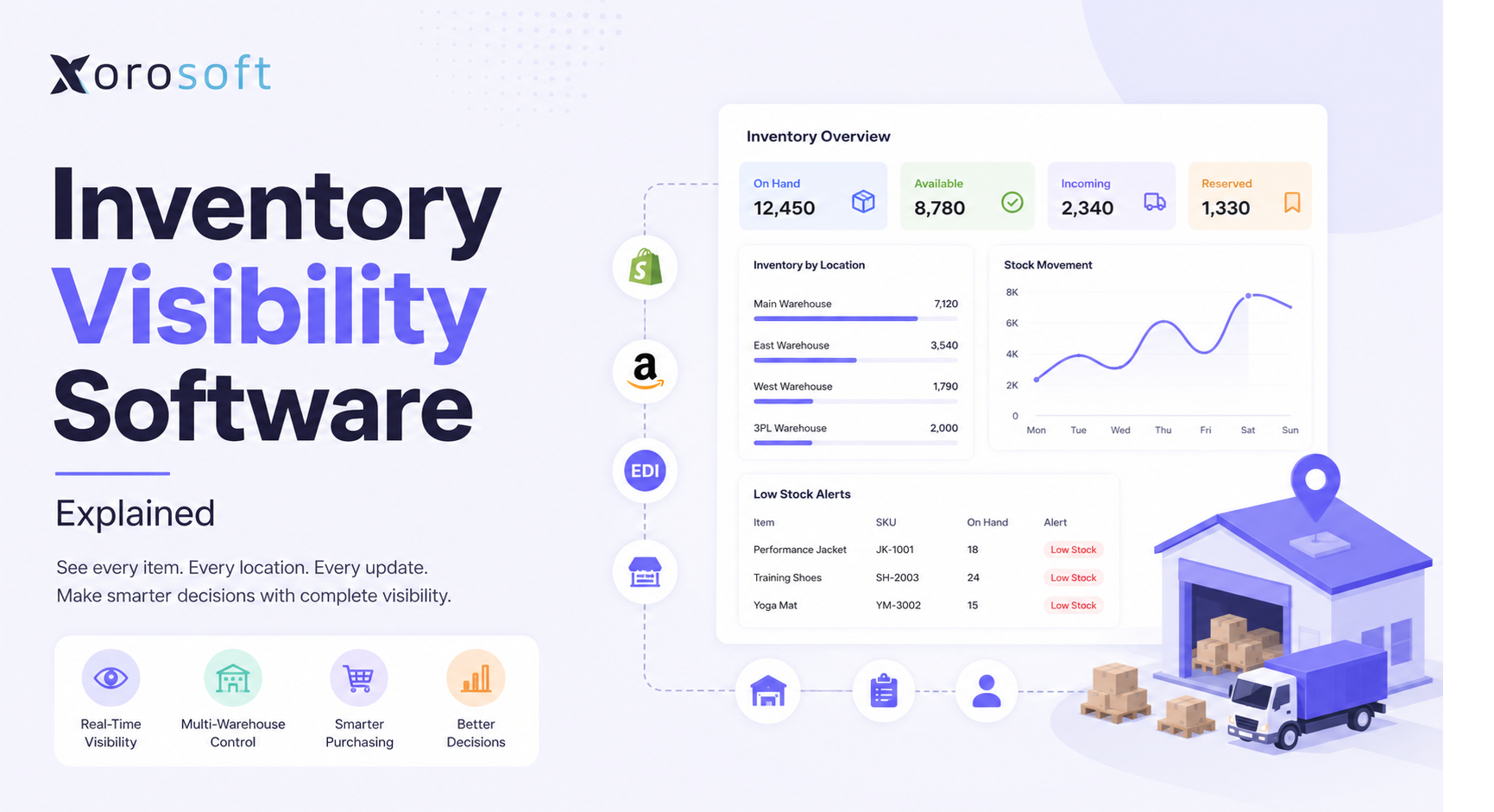
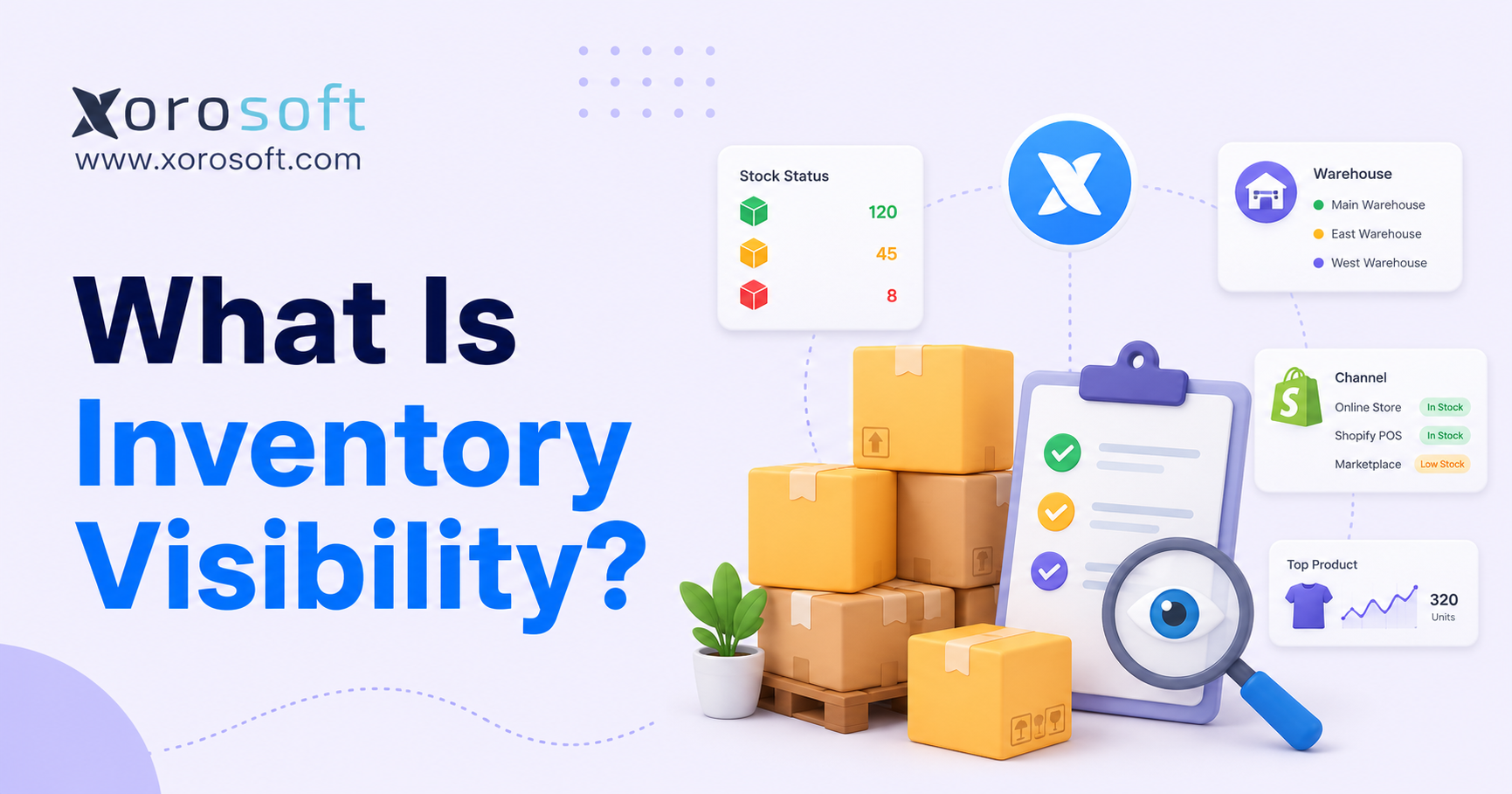
Inventory visibility means knowing what you have, where it is, what is committed, what is incoming, what is in transit, and what is available to sell.
When the Shopify QuickBooks setup becomes disconnected, inventory visibility gets weaker. Because stock moves through sales orders, purchase orders, returns, transfers, warehouse counts, and accounting adjustments, every disconnected process creates another chance for error.
5.1.1 Multi-Warehouse Inventory
Multi-warehouse inventory becomes difficult when each location has its own version of the truth. One warehouse may show stock on hand. Another may be waiting for a transfer. A 3PL may have delayed updates. Meanwhile, Shopify may still show an item as available.
As a result, orders route incorrectly, transfers become confusing, and customer promises become harder to keep.
5.1.2 Inventory Allocation
Inventory allocation matters when the same stock supports Shopify, wholesale, Amazon, retail, and EDI customers.
For example, a business may want to reserve stock for wholesale commitments while still selling online. Without allocation rules, Shopify may sell inventory that operations planned for another channel.
Consequently, teams need a system that can separate available stock, committed stock, reserved stock, and incoming stock.
5.1.3 Inventory Valuation
Inventory is also a financial asset. Therefore, operations and finance must agree on both quantity and value.
If purchase receipts, adjustments, returns, landed costs, and sales activity do not connect cleanly to accounting, COGS and margin reports become harder to trust.
This is one of the biggest reasons inventory-driven businesses feel QuickBooks limitations for ecommerce as they scale.
5.2 Purchasing and Replenishment Problems
Purchasing problems usually appear after inventory problems. Once stock data becomes unreliable, buying decisions become unreliable too.
5.2.1 Manual Purchase Orders
Manual purchase orders create delays. Buyers may depend on spreadsheet formulas, old sales reports, or supplier notes buried in email.
In addition, purchase approvals may happen outside the system. Receiving may not match the purchase order cleanly. Finance may wait for vendor bills and receipt confirmations before updating inventory value.
Because of this, purchasing becomes slower and less accurate as the company grows.
5.2.2 Supplier Lead Times
Supplier lead times affect every reorder decision. If lead times are wrong, reorder points are wrong. If purchase orders are delayed, stockouts become more likely.
Therefore, supplier data should not live in someone’s memory or a private spreadsheet. It should be part of the planning workflow.
5.2.3 Forecasting Gaps
Forecasting becomes harder with promotions, seasonality, wholesale commitments, returns, and new product launches.
A simple reorder alert may not be enough. Instead, the business needs to connect sales history, current stock, open purchase orders, supplier lead times, and demand forecasts.
When those inputs are spread across different systems, purchasing becomes reactive.
5.3 Warehouse and Fulfillment Problems After Growth
Warehouse issues expose system gaps quickly because physical work cannot hide behind reports.
5.3.1 Picking Errors
Picking errors happen when workers rely on paper lists, unclear bin locations, inaccurate inventory records, or manual order notes.
Because each mistake affects the customer, warehouse accuracy becomes more important as order volume grows.
A stronger warehouse process should support receiving, putaway, picking, packing, shipping, cycle counting, and transfers through structured workflows.
5.3.2 Delayed Shipments
Shipments slow down when the warehouse does not know what to pick, where to find it, which order has priority, or whether stock is actually available.
Meanwhile, customer service waits for updates. Operations checks the warehouse. Finance may not know whether the order shipped. As a result, delays spread across departments.
5.3.3 Barcode and Scan Workflows
Barcode scanning helps connect physical movement to system records. Receiving, picking, packing, transfers, and counts update the system as work happens.
Without scan-based workflows, the business often depends on delayed manual updates. Therefore, warehouse data becomes stale before finance, operations, or customer service can use it.
5.4 Accounting and Finance Problems in QuickBooks
Accounting problems often begin in operations. If inventory, receiving, purchasing, and fulfillment are not accurate, finance cannot close cleanly.
5.4.1 COGS Accuracy
COGS depends on product costs, purchase receipts, landed costs, inventory movement, adjustments, and sales activity.
If those records are disconnected, gross margin becomes hard to trust. As a result, leadership may make pricing, purchasing, or promotion decisions using incomplete data.
5.4.2 Reconciliation Delays
Shopify payouts, refunds, taxes, payment fees, returns, discounts, and chargebacks all affect reconciliation.
Although connectors can reduce manual work, finance still needs clean operational data. If orders, returns, inventory, and purchase receipts do not align, reconciliation remains difficult.
5.4.3 Month-End Close
Month-end close becomes delayed when finance must wait for inventory counts, warehouse corrections, purchase order updates, vendor bills, and manual adjustments.
Therefore, a slow close is not only an accounting problem. It is a sign that operations and finance are not connected tightly enough.
6. Industry Examples: When Shopify and QuickBooks Start Breaking
Different industries feel the same problem in different ways. However, the pattern is similar: once inventory, accounting, fulfillment, and purchasing become complex, the old stack becomes harder to control.
6.1 Apparel and Fashion Brands
Apparel brands manage size and color variants, seasonal launches, returns, exchanges, wholesale allocations, and promotions.
Because one product may have dozens of variants, inventory accuracy becomes harder. In addition, returns can distort available stock if they are not processed quickly.
Therefore, apparel brands often outgrow Shopify and QuickBooks when variant-level inventory, allocations, returns, and wholesale commitments become too difficult to manage manually.
6.2 Furniture and Bulky Goods Sellers
Furniture businesses manage bulky inventory, freight, warehouse space, partial shipments, supplier lead times, and landed costs.
Although Shopify can sell the product, the backend must manage where the item is stored, whether it can ship, how much freight affects margin, and when replenishment should happen.
As a result, furniture companies often need stronger inventory, warehouse, and cost visibility.
6.3 Sporting Goods Companies
Sporting goods brands often manage seasonal demand, kits, bundles, Amazon, wholesale, retail, and replenishment cycles.
Because demand can spike around seasons or events, poor forecasting creates stockouts. Meanwhile, overbuying slow-moving products ties up cash.
Therefore, forecasting and purchasing visibility become essential as the business scales.
6.4 Food and Beverage Brands
Food and beverage businesses may need expiry tracking, lot control, replenishment planning, production planning, and inventory rotation.
Because freshness and traceability matter, manual inventory workflows can create risk. In addition, stock accuracy affects customer experience, operations, and sometimes compliance.
6.5 Wholesale Distributors
Wholesale distributors manage customer-specific pricing, payment terms, large orders, sales reps, EDI, and inventory allocation.
Because wholesale orders can consume large quantities of stock, the business needs better visibility before committing inventory to customers.
When wholesale becomes a serious revenue channel, disconnected ecommerce systems become harder to manage.
6.6 Inventory-Driven Manufacturers
Manufacturers need raw materials, finished goods, BOMs, work orders, purchasing, production planning, and warehouse control.
Shopify may still handle ecommerce orders. QuickBooks may still support accounting. However, manufacturing workflows usually require deeper operational planning.
When production depends on spreadsheets, the company has likely outgrown Shopify and QuickBooks as its main operating system.
7. What to Use After You’ve Outgrown Shopify and QuickBooks
After you have outgrown Shopify and QuickBooks, the next step depends on the type of complexity you need to solve. Not every business needs ERP immediately. However, every business should understand the difference between better integrations, inventory software, WMS, and ERP.
7.1 Option 1: Keep Shopify and Improve Integrations
This option works best when the business still has simple operations.
If you have one warehouse, a manageable SKU count, clean accounting, and limited reporting needs, better integrations may reduce manual work. In addition, a cleaner Shopify QuickBooks connector setup may help finance reduce bookkeeping tasks.
However, if your core issue is disconnected operations, integrations alone may only delay the bigger decision.
7.2 Option 2: Add Inventory Management Software
Inventory management software can help when stock accuracy is the main problem.
It may improve multi-channel inventory, replenishment, stock visibility, and basic purchasing workflows. Therefore, it can be a good middle step for businesses that are not ready for ERP.
However, inventory software may not fully solve accounting, warehouse execution, manufacturing, advanced purchasing, or financial reporting. So, if the business needs all of those workflows connected, ERP may be a better fit.
7.3 Option 3: Add Warehouse Management Software
Warehouse management software is useful when receiving, putaway, picking, packing, barcode scanning, transfers, and cycle counts are the biggest problems.
For example, a business may keep Shopify and QuickBooks but add a WMS to improve warehouse execution.
However, if purchasing, accounting, forecasting, and reporting are also disconnected, WMS alone may not solve the full problem.
7.4 Option 4: Move from Shopify and QuickBooks to ERP
ERP is usually the stronger option when inventory, accounting, purchasing, warehouse management, forecasting, reporting, ecommerce, wholesale, Amazon, EDI, and manufacturing need to work together.
For example, XoroERP is built for inventory-driven operations where ecommerce, warehouse, manufacturing, purchasing, and financial workflows need to connect. In addition, XoroONE brings multiple operational workflows into one cloud ERP environment.
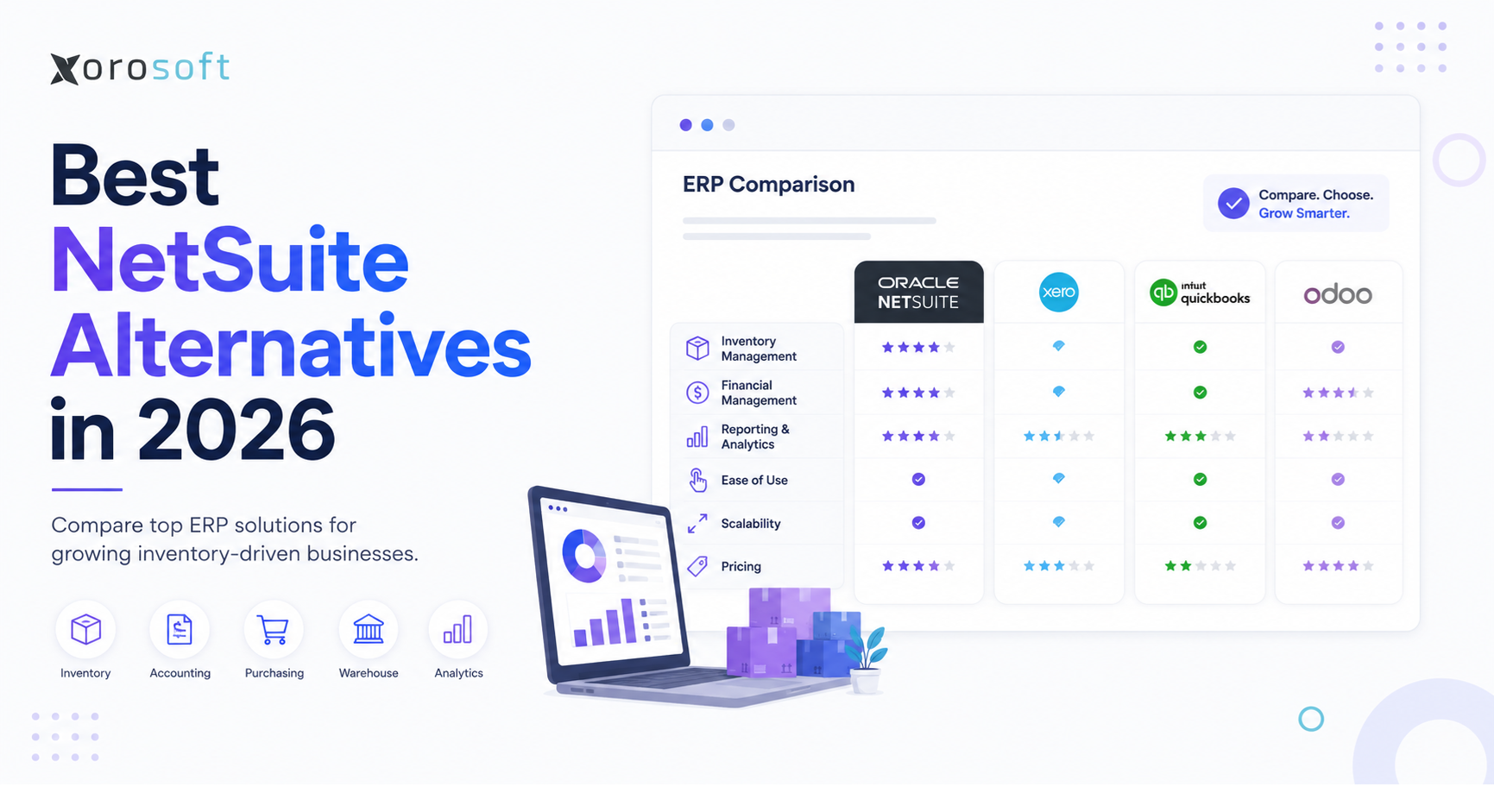
This is also where comparison research becomes useful. If QuickBooks is the main bottleneck, review Xorosoft vs QuickBooks. If the team is comparing inventory-heavy platforms, review Xorosoft vs Cin7 as a more relevant comparison than forcing every reader into a NetSuite comparison.
For Shopify merchants specifically, it may also help to review the Xorosoft ERP app on the Shopify App Store to understand how Shopify can connect with a broader operational system.
7.5 How to Choose the Right Upgrade Path
Use this simple framework:
| Situation | Best Next Step |
| Simple ecommerce, one warehouse, low SKU count | Better integrations |
| Inventory accuracy is the main issue | Inventory software |
| Warehouse execution is the main issue | WMS |
| Inventory, accounting, purchasing, and reporting are disconnected | ERP |
| Wholesale, Amazon, EDI, or manufacturing is growing | ERP |
Ultimately, the more workflows that depend on manual coordination, the stronger the ERP case becomes.
A better way to evaluate the next step:
Before adding another app, map the workflows that are already breaking. Then decide whether the business needs a single-point fix or a connected operating system.
8. ERP Readiness Checklist for Shopify Brands
ERP readiness is not only about revenue. Instead, it is about operational complexity, data quality, team readiness, and system pressure.
8.1 Operational Readiness
Ask these questions:
- Do inventory numbers match across systems?
- Can the team see available, committed, and incoming stock?
- Are orders fulfilled without manual cleanup?
- Do returns update inventory quickly?
- Can customer service trust order and inventory data?
If the answer is no to several questions, the business may have outgrown Shopify and QuickBooks operationally.
8.2 Financial Readiness
Ask these questions:
- How long does month-end close take?
- Can finance trust inventory value?
- Is COGS accurate by product?
- Are Shopify payouts reconciled cleanly?
- Can leadership see margin quickly?
If finance depends on manual corrections from operations, accounting risk is increasing.
8.3 Warehouse Readiness
Ask these questions:
- Does the warehouse use barcode scanning?
- Can teams trust bin locations?
- Is receiving and putaway controlled?
- Do transfers update inventory correctly?
- Are cycle counts part of the normal workflow?
If the warehouse runs on memory, paper, or spreadsheets, growth will make fulfillment harder.
8.4 Team Readiness
ERP requires process ownership. Therefore, operations, finance, purchasing, warehouse, and leadership must agree on what needs to change.
In addition, the team must be ready to clean data, document workflows, test processes, and train users.
Without that alignment, even good software can be implemented poorly.
8.5 Data Readiness
Data readiness matters because better software will not fix bad data automatically.
Before implementation, review SKUs, item descriptions, vendors, customers, warehouses, bin locations, open purchase orders, open sales orders, inventory counts, pricing rules, and accounting records.
Clean data makes implementation smoother and reduces confusion.
9. Mistakes to Avoid After You’ve Outgrown Shopify and QuickBooks
Once the business accepts that it has outgrown Shopify and QuickBooks, the next risk is choosing the wrong replacement path.
9.1 Choosing Software Only for Today’s Pain
A common mistake is buying software for the loudest current problem.
For example, the team may buy inventory software because inventory is wrong. However, six months later, purchasing, accounting, warehouse management, and reporting may still be disconnected.
Therefore, choose software based on the operating model you are building, not only the issue you feel this month.
9.2 Ignoring Warehouse Workflows
Some teams choose software from the office and forget the warehouse.
However, the warehouse must actually use the system every day. Receiving, putaway, picking, packing, shipping, transfers, returns, and cycle counts must fit the workflow.
If warehouse workflows do not fit, the team will rebuild manual workarounds.
9.3 Treating Accounting as Separate from Inventory
Inventory and accounting are connected. Every purchase, receipt, adjustment, sale, return, and write-off affects the financial picture.
Therefore, a new system should not improve operations while leaving finance disconnected. Inventory-driven businesses need accounting and operations to share a reliable source of truth.
9.4 Underestimating Implementation Planning
Implementation is not just a technical setup. It is an operational project.
The business must define workflows, clean data, map integrations, test edge cases, train users, and decide how old processes will change.
Without planning, the company may recreate the same broken workflows inside a new system.
9.5 Migrating Bad Data into a Better System
Bad data creates bad results in any platform.
Duplicate SKUs, inconsistent units of measure, outdated vendor records, incorrect costs, and inaccurate counts can create problems after migration.
Consequently, data cleanup should happen before moving to a more advanced system.
10. How Modern Inventory-Driven Businesses Solve Shopify QuickBooks Problems
Modern product businesses solve this problem by centralizing core operations instead of adding disconnected tools for every workflow.
10.1 Centralized Inventory Across Channels and Warehouses
Centralized inventory gives the business one view of stock across Shopify, Amazon, wholesale, EDI, warehouses, transfers, and purchasing.
A cloud ERP platform like XoroONE can help inventory-driven businesses connect inventory, accounting, purchasing, warehouse management, reporting, and ecommerce operations in one system.
As a result, teams can see available stock, committed stock, incoming stock, and inventory value without rebuilding reports manually.
10.2 Connected Accounting and Inventory
Connected accounting means inventory movement, purchasing, receiving, sales, returns, COGS, and financial reporting stay aligned.
This matters because finance should not have to rebuild operational truth at the end of every month. Instead, accounting should reflect what actually happened across the business.
For businesses exploring broader ERP options, the Xorosoft comparison hub can help teams compare different platforms based on operational needs.
10.3 Purchasing Automation
Purchasing automation helps buyers act on better information.
Instead of guessing from old reports, the team can use sales history, current stock, open purchase orders, supplier lead times, forecasts, and reorder rules.
Therefore, purchasing becomes more proactive. Stockouts become easier to prevent. Overstock becomes easier to control.
10.4 Warehouse Execution
Warehouse execution connects physical movement to system records.
Receiving, putaway, picking, packing, shipping, cycle counts, and transfers should update the system as work happens. That is why scan-based workflows matter.
For warehouse-heavy businesses, XoroWMS supports warehouse management workflows such as receiving, picking, packing, inventory movement, and fulfillment execution.
10.5 Forecasting and Reporting
Forecasting and reporting help leadership act before problems become expensive.
The business needs to know what to buy, when to buy it, where inventory is located, which products are profitable, and which workflows are slowing the team down. However, those answers should not require exports, spreadsheet formulas, and manual cleanup.
If reporting still depends on VLOOKUPs, the company has not solved the visibility problem. It has only documented it.
11. Final Decision Framework for Shopify Brands
The right decision depends on your complexity, not just your revenue.
11.1 Who Should Stay on Shopify and QuickBooks
You may not need ERP yet if your business has simple inventory, one warehouse, limited SKUs, clean accounting, basic reporting, and minimal manual work.
In that case, Shopify and QuickBooks may still be enough. Better processes and a few careful integrations may solve the current friction.
11.2 Who Should Add Inventory or Warehouse Software
You may need inventory software if stock visibility is the main issue and accounting remains manageable.
Similarly, you may need WMS if warehouse execution is the main bottleneck. For example, barcode scanning, bin locations, picking, packing, and cycle counts may need more structure.
However, if inventory, purchasing, warehouse, accounting, forecasting, and reporting are all disconnected, point solutions may not go far enough.
11.3 Who Should Move to ERP
You should consider ERP if the business has multiple warehouses, wholesale, Amazon, EDI, complex purchasing, manufacturing, delayed month-end close, unreliable inventory, or manual reporting.
This is especially true when teams no longer trust the Shopify QuickBooks stack as the source of truth.
Businesses that sell physical products across apparel, furniture, sporting goods, food, wholesale, manufacturing, and distribution can also review industries served by Xorosoft to understand how operational requirements change by industry.
12. Frequently Asked Questions
12.1 What does it mean to outgrow Shopify and QuickBooks?
To outgrow Shopify and QuickBooks means your business now needs more operational control than Shopify, QuickBooks, connectors, spreadsheets, and apps can provide together. Shopify may still be useful for ecommerce, and QuickBooks may still be useful for accounting. However, inventory, purchasing, warehouse management, forecasting, reporting, and financial visibility may need a stronger backend system.
12.2 How do I know if I have outgrown Shopify and QuickBooks?
You have likely outgrown Shopify and QuickBooks if inventory numbers do not match, month-end close takes too long, purchasing runs on spreadsheets, reports require exports, and warehouse teams depend on manual workarounds. In addition, if finance and operations cannot agree on the same numbers, the current stack is probably limiting growth.
12.3 Is Shopify enough for inventory management?
Shopify can support inventory tracking for ecommerce operations, including location-based inventory. However, growing brands often need deeper inventory planning, warehouse workflows, purchasing automation, stock allocation, barcode scanning, accounting integration, and forecasting. Therefore, Shopify may remain the storefront while another system handles backend operations.
12.4 Is QuickBooks enough for ecommerce accounting?
QuickBooks can work well for basic bookkeeping and accounting. However, ecommerce brands may outgrow it when they need complex inventory valuation, landed costs, multi-warehouse reporting, COGS accuracy, purchasing controls, and operational reporting connected to accounting.
12.5 Can QuickBooks handle multi-warehouse inventory?
Some QuickBooks versions support more advanced inventory features. However, multi-warehouse ecommerce businesses often need more than accounting-side inventory records. They may also need barcode workflows, transfer management, Shopify inventory sync, purchasing automation, warehouse controls, and real-time reporting.
12.6 Does Shopify replace an ERP system?
No. Shopify is mainly an ecommerce platform. ERP manages backend operations such as inventory, purchasing, accounting, warehouse management, manufacturing, forecasting, reporting, and multi-channel workflows. Many growing businesses use Shopify and ERP together.
12.7 Does QuickBooks replace an ERP system?
No. QuickBooks is mainly an accounting system. ERP connects a wider set of workflows, including inventory, purchasing, warehouse execution, manufacturing, forecasting, reporting, and ecommerce operations. QuickBooks may work early, but ERP becomes relevant when operations become complex.
12.8 What is the difference between Shopify, QuickBooks, and ERP?
Shopify manages ecommerce selling. QuickBooks manages accounting. ERP manages the operational backend. Therefore, ERP connects inventory, purchasing, warehouse management, finance, reporting, forecasting, and sometimes manufacturing. The systems solve different problems.
12.9 When should a Shopify brand move to ERP?
A Shopify brand should consider ERP when inventory, purchasing, warehouse, accounting, forecasting, and reporting workflows become too disconnected to manage manually. If the business has outgrown Shopify and QuickBooks, ERP may provide a better operational foundation.
12.10 Should I replace Shopify if I move to ERP?
Usually, no. Many businesses keep Shopify as the ecommerce storefront and connect ERP behind it. Shopify continues handling online sales, while ERP manages inventory, purchasing, warehouse management, accounting, forecasting, and reporting.
12.11 Should I replace QuickBooks if I move to ERP?
It depends. Some companies keep QuickBooks temporarily, while others move accounting into ERP. If the biggest problem is that accounting and inventory are disconnected, moving finance into a more complete ERP system may make sense.
12.12 What problems happen when Shopify and QuickBooks are disconnected?
Common problems include duplicate data entry, delayed reconciliation, inventory mismatches, manual reporting, sync errors, unclear margins, stockouts, overstock, and slow month-end close. As order volume grows, these issues become more expensive.
12.13 Why do inventory numbers stop matching as ecommerce brands grow?
Inventory numbers stop matching because sales, returns, transfers, receiving, adjustments, warehouse counts, and accounting updates happen in different systems. As volume increases, timing delays and manual errors become more common.
12.14 Why does month-end close take longer with Shopify and QuickBooks?
Month-end close takes longer when finance must manually reconcile Shopify orders, payouts, refunds, fees, purchase receipts, inventory movement, and COGS. If operations data is delayed or inaccurate, accounting cannot close quickly.
12.15 Can ERP help with Shopify inventory accuracy?
Yes. ERP can help by centralizing inventory across Shopify, warehouses, Amazon, wholesale, EDI, purchasing, and accounting. As a result, teams can see available stock, committed stock, incoming inventory, and inventory value more clearly.
12.16 Can ERP help with QuickBooks accounting limitations?
Yes, especially when accounting problems are caused by disconnected operations. ERP can connect purchasing, receiving, inventory movement, landed costs, COGS, sales, returns, and reporting more directly.
12.17 Do Shopify Plus merchants need ERP?
Some Shopify Plus merchants need ERP, and some do not. Shopify Plus supports larger ecommerce operations, but ERP becomes important when backend complexity includes inventory, purchasing, multiple warehouses, accounting, forecasting, wholesale, EDI, or manufacturing.
12.18 What is better: inventory software or ERP?
Inventory software is better when the main issue is stock visibility. ERP is better when inventory must connect with accounting, purchasing, warehouse workflows, forecasting, reporting, ecommerce, and manufacturing. The more departments involved, the stronger the ERP case becomes.
12.19 What is the first step after realizing you have outgrown Shopify and QuickBooks?
The first step after realizing you have outgrown Shopify and QuickBooks is to map your current workflows. Review where inventory, accounting, purchasing, warehouse, reporting, and order management break down. Then decide whether better integrations, inventory software, WMS, or ERP is the right next move.
13. Conclusion: What Your Systems Are Really Telling You
Shopify and QuickBooks can be a strong starting point for product businesses. Shopify helps brands sell online. QuickBooks helps teams manage accounting. Together, they can support a business while operations are still simple.
However, growth changes the job of the software stack. More SKUs, more warehouses, more suppliers, more sales channels, more returns, more purchase orders, and more reporting needs create complexity that disconnected systems cannot always handle.
If inventory numbers do not match, month-end close takes too long, purchasing runs on spreadsheets, warehouse teams rely on manual workarounds, and leadership cannot see the business in real time, you have probably outgrown Shopify and QuickBooks.
The next step does not have to be rushed. Some companies need better integrations. Others need inventory software or warehouse management software. However, when inventory, accounting, purchasing, warehouse management, forecasting, reporting, Shopify, Amazon, wholesale, EDI, and manufacturing need to work together, ERP becomes the more practical path.
For inventory-driven businesses evaluating that next step, Xorosoft offers cloud ERP capabilities across inventory management, accounting, purchasing, warehouse management, manufacturing, forecasting, reporting, Shopify, Amazon, EDI, and multi-warehouse operations.
If your current stack is creating more manual work than control, Book a demo to review whether your business is ready for a more connected operational system.