When Growth Turns Into Operational Friction
Most ecommerce brands don’t expect to face serious omnichannel operations challenges early on.
Typically, they begin with simple systems.
A Shopify store handles sales.
QuickBooks manages accounting.
Spreadsheets track inventory.
At first, everything feels manageable. However, as operations expand, things begin to shift.
Soon, you add wholesale accounts. In addition, you expand into marketplaces. Eventually, you open new fulfillment locations.
As a result, the systems that once supported growth start slowing it down. In most cases, this isn’t because a single tool fails. Instead, it happens because disconnected tools cannot handle increasing complexity.
Why Omnichannel Complexity Breaks Traditional Workflows
Omnichannel operations introduce a different level of complexity.
Rather than simply adding revenue streams, businesses now manage interconnected workflows.
For instance:
- Multiple sales channels create overlapping demand
- Warehouses must stay perfectly synchronized
- Payment terms vary across channels
- Fulfillment paths become more dynamic
However, traditional systems are not designed for this.
Most brands rely on:
- Shopify for ecommerce
- QuickBooks for accounting
- Spreadsheets for inventory
- Warehouse tools for fulfillment
Individually, these tools work well. However, they don’t operate as one system.
Because of this:
- Data becomes inconsistent
- Reports don’t align
- Teams rely on manual reconciliation
Over time, these inefficiencies compound. Consequently, omnichannel operations challenges become harder to manage.
How Omnichannel Operations Challenges Appear in Real Businesses
Consider a growing apparel brand.
Initially, they manage everything through Shopify and spreadsheets. Soon after, growth accelerates.
Wholesale customers are added first.
Then, the brand expands into marketplaces.
Over time, it begins operating across multiple warehouses.
At this point, omnichannel operations challenges begin to surface.
Their systems now look like this:
- Shopify manages online orders
- Wholesale orders follow separate workflows
- Inventory updates manually
- Warehouse software handles fulfillment
- QuickBooks tracks financials
Although everything appears functional, gaps quickly emerge.
Inventory becomes inconsistent. Meanwhile, orders are processed across different systems. At the same time, financial data lags behind.
As a result, teams depend on manual fixes.
They update spreadsheets frequently. Additionally, they reconcile discrepancies and correct errors afterward.
While this works temporarily, it eventually slows the entire operation.
Where Omnichannel Operations Challenges Impact the Business Most
These challenges don’t stay isolated. Instead, they affect every core function.
Inventory Loses Accuracy First
Inventory is often the first area to break.
When systems are disconnected:
- Stock levels become unreliable
- Overselling increases
- Stockouts occur unexpectedly
As a result, teams introduce buffers. However, this leads to excess inventory and tied-up capital.
Ultimately, inventory becomes difficult to trust.
Financial Visibility Becomes Unclear
Finance depends on accurate operational data. However, omnichannel operations challenges disrupt this connection.
Teams often experience:
- Revenue mismatches
- Delayed cost tracking
- Unclear margins
Although QuickBooks provides structure, it relies heavily on manual input.
Therefore, reports require constant adjustments. Consequently, confidence in financial data declines.
Fulfillment Becomes Increasingly Complex
As operations expand, fulfillment becomes harder to manage.
Orders must be routed correctly. Meanwhile, inventory must update in real time.
However, without unified systems:
- Orders ship from incorrect locations
- Inventory is double-counted
- Delays become frequent
As a result, teams add manual checks. While helpful, these checks increase operational overhead.
Decision-Making Slows Down Across Teams
Fragmented data affects decision-making.
Because systems are disconnected:
- Reports take longer to generate
- Insights arrive too late
- Teams rely on assumptions
Instead of acting quickly, operators spend time verifying numbers. As a result, growth slows.
How Modern Brands Reduce Omnichannel Operations Challenges
Modern companies solve these problems differently.
Instead of adding more tools, they focus on connected systems.
Centralized Inventory Creates Control
Inventory is managed in one place.
As a result:
- All channels share accurate data
- Stock updates in real time
- Overselling decreases
This significantly reduces operational friction.
Unified Order Management Simplifies Operations
Orders from every channel flow into one system.
This enables:
- Better routing decisions
- Consistent workflows
- Improved fulfillment accuracy
Connected Finance Improves Visibility
Modern systems connect financial data directly to operations.
Therefore:
- Revenue reflects actual activity
- Costs update automatically
- Margins become clear
Less Manual Work, More Operational Focus
The goal is not just automation. Instead, it is removing reconciliation entirely.
As a result:
- Data stays consistent
- Reporting becomes faster
- Teams focus on growth
Why Unified ERP Systems Solve Omnichannel Operations Challenges
ERP systems address the root cause: fragmentation.
Platforms like Xorosoft provide a single operational backbone.
Instead of connecting multiple tools, they replace them.
You can explore solutions like:
👉 XoroERP
👉 XoroWMS
👉 XoroONE
What a Unified System Looks Like
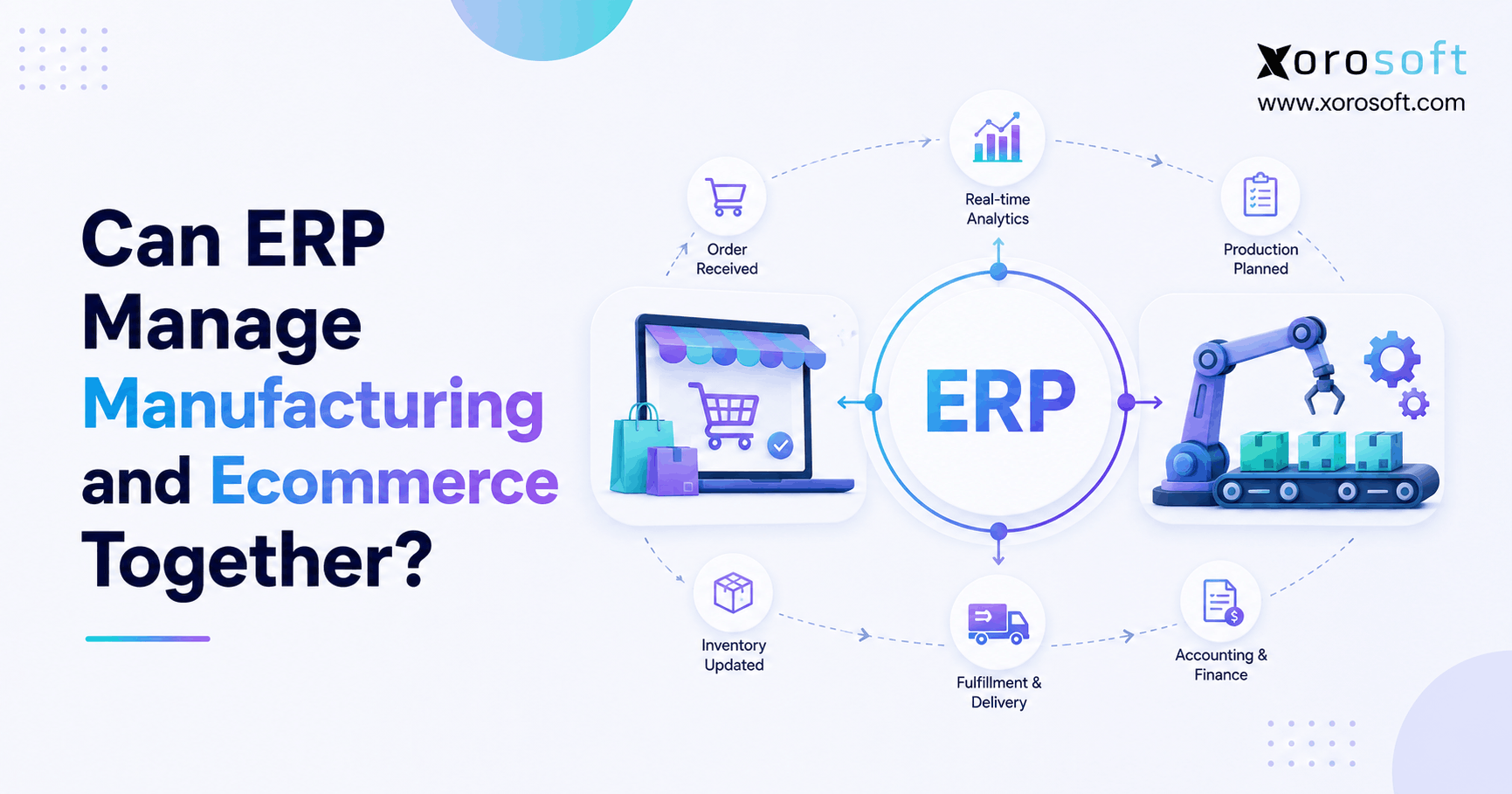
An ERP system combines:
- Inventory management
- Purchasing workflows
- Warehouse operations
- Order management
- Financial reporting
All data flows through one system. As a result, visibility improves significantly.
Why This Shift Matters More Than Ever
Omnichannel complexity continues to increase.
Platforms like Shopify make expansion easier. However, they also introduce more operational pressure.
You can explore the integration here:
👉 Shopify App Store
Without unified systems:
- Errors increase
- Costs rise
- Growth slows
With ERP systems:
- Operations stay aligned
- Data becomes reliable
- Scaling becomes predictable
Fixing Omnichannel Operations Challenges Starts With Better Systems
Operational issues are not temporary.
Instead, they are a natural result of growth.
What works early on eventually breaks. However, the solution is not working harder.
Rather, it is building better systems.
By addressing omnichannel operations challenges at the system level, brands can:
- Improve accuracy
- Reduce inefficiencies
- Scale confidently
If your operations feel increasingly complex, it may be time to rethink your foundation.