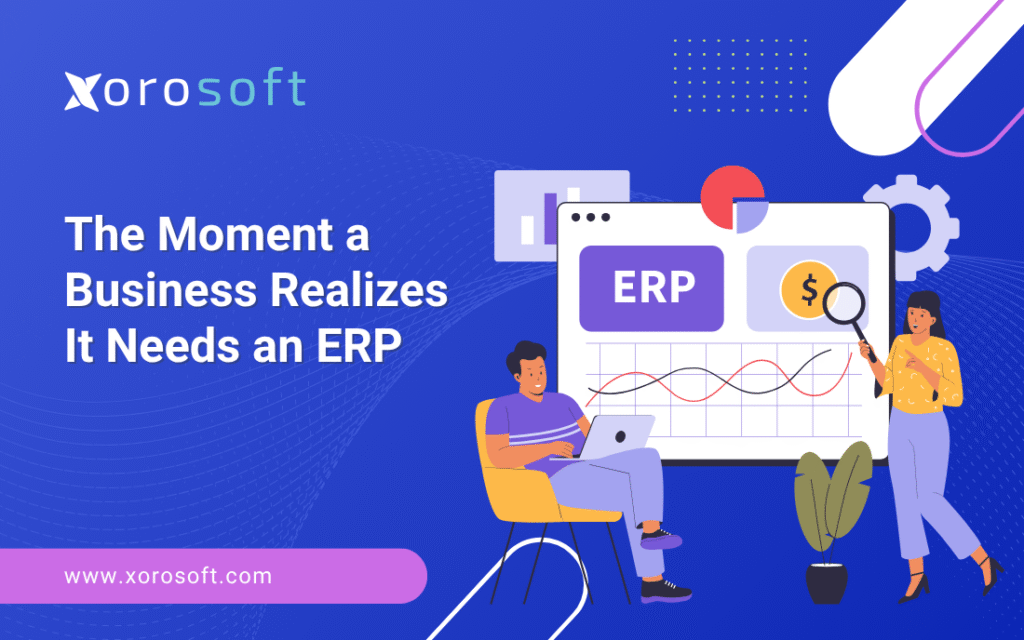
The Hidden Signs Showing When to Switch to ERP
Most founders don’t immediately recognize when to switch to ERP.
At first, everything feels manageable. Orders are flowing, inventory appears stable, and reports—although slightly delayed—still get completed. However, over time, small inefficiencies begin to surface.
For example, an order ships late because stock data was inaccurate. In another case, a financial report doesn’t match expectations. Meanwhile, warehouse teams begin relying on manual fixes instead of system-driven workflows.
Individually, these issues seem minor. However, collectively, they reveal a deeper problem.
The business hasn’t broken. Instead, it has quietly outgrown the systems supporting it.
When Systems Start Breaking: When to Switch to ERP
In the early stages, simplicity works in your favor.
Most brands rely on tools like Shopify, accounting software, spreadsheets, and lightweight inventory systems. Initially, this setup is flexible and efficient.
However, as the business grows, complexity increases rapidly.
First, brands expand into multiple sales channels, including wholesale and marketplaces. Additionally, product catalogs grow with variants, bundles, and seasonal launches.
At the same time, operations become more layered. Multiple warehouses, suppliers, and logistics partners introduce new challenges.
Because of this, systems begin to disconnect. Data no longer flows seamlessly.
As a result, teams compensate manually. They export data, reconcile reports, and double-check numbers.
This is often the earliest signal of when to switch to ERP.
When “Good Enough” Systems Start Slowing Growth
At a certain point, “good enough” systems stop being effective.
Consider a growing ecommerce brand. Initially, the founder manages operations closely. Orders run through Shopify, inventory is tracked separately, and finance is handled through accounting software.
Everything feels under control.
However, as growth accelerates, cracks begin to appear.
Inventory shows availability that doesn’t exist. Wholesale orders are delayed due to incorrect allocation. Meanwhile, financial reports require increasing manual effort.
At the same time, warehouse teams begin creating their own workarounds.
As a result, efficiency declines—even though demand is rising.
This is typically when founders begin evaluating when to switch to ERP.
Inventory Problems Are Usually the First Warning Sign
Inventory is usually the first area where problems become visible.
When systems are disconnected, stock levels become inconsistent across platforms. For instance, one system may show available inventory while another reflects outdated numbers.
Additionally, reserved stock is often not tracked correctly. Transfers between warehouses create delays in visibility.
Consequently, businesses experience stockouts and overselling.
More importantly, teams lose confidence in their data.
Without reliable inventory, planning becomes reactive instead of strategic.
At this stage, it becomes clear when to switch to ERP.
Financial Gaps That Reveal When to Switch to ERP
At the same time, finance teams begin to feel the strain.
Instead of focusing on insights, they spend time reconciling data across systems. Orders must be matched with payments, and inventory values require constant adjustments.
As a result, reporting slows down significantly.
Month-end closes take longer. Cash flow visibility becomes less reliable.
Therefore, leadership teams are forced to make decisions based on incomplete or delayed information.
This is another strong indicator of when to switch to ERP.
Fulfillment Complexity Creates Operational Friction
As order volume increases, fulfillment operations become more complex.
However, disconnected systems create confusion within warehouse workflows. Orders may not sync properly, and picking priorities become unclear.
Because of this, fulfillment errors increase.
Shipping delays become more frequent. Returns processing becomes harder to manage efficiently.
To compensate, teams introduce manual processes. While these may work temporarily, they do not scale.
Eventually, fulfillment becomes a bottleneck.
When Data Stops Being Trustworthy, Decisions Suffer
Perhaps the most underestimated impact of disconnected systems is on decision-making.
When data is fragmented, reports often conflict. As a result, key metrics become difficult to trust.
Forecasting becomes unreliable. Planning becomes reactive.
Therefore, leadership teams rely more on instinct than on accurate insights.
While intuition works early on, it becomes risky at scale.
Recognizing when to switch to ERP becomes critical here.
How Modern Brands Replace Tools with Systems
Modern companies approach this challenge differently.
Instead of adding more tools, they build connected systems.
They create a single source of truth for inventory, orders, and financial data. Additionally, they automate workflows across departments.
For example, procurement, warehouse operations, and finance all operate within a unified system.
As a result, teams spend less time fixing issues and more time scaling the business.
The Role of a Unified Operational Backbone
This is where ERP systems become essential.
Rather than relying on disconnected tools, businesses move toward unified platforms like XoroERP, XoroWMS, and XoroONE
These systems bring together:
- Inventory management
- Warehouse operations
- Order fulfillment
- Financial reporting
As a result, businesses gain real-time visibility across all operations.
Additionally, ERP systems integrate seamlessly with the Shopify App Store, ensuring connected ecommerce workflows.
The Moment Workarounds Become the Real System
One of the clearest indicators of when to switch to ERP is behavioral.
Teams begin relying on workarounds such as:
- Fixing data in spreadsheets
- Double-checking system outputs
- Manually correcting reports
At this point, workarounds replace systems.
However, workarounds introduce risk. They slow operations and create inconsistencies.
Most importantly, they prevent scalable growth.
Rethinking Operations When It’s Time to Switch to ERP
Recognizing when to switch to ERP is not about reacting to failure. Instead, it is about proactively preparing for growth.
If your team spends more time fixing problems than driving progress, your systems may be holding you back.
Because ultimately, scalable businesses are built on strong operational foundations.
Recent Posts
-
 Inventory Close Benchmarks 2026: Reconciliations, Adjustments, and Processing Time
 -
 B2B E-Commerce Platform for U.S. and Canadian Wholesale Operations: Accounts, Currency, Tax Status, and Ship-Tos
 -
 One Inventory Pool for Shopify and Amazon: Rules for Availability, Reservations, and Reconciliation
 -
 On-Hand vs Available vs Committed Inventory Explained
 -
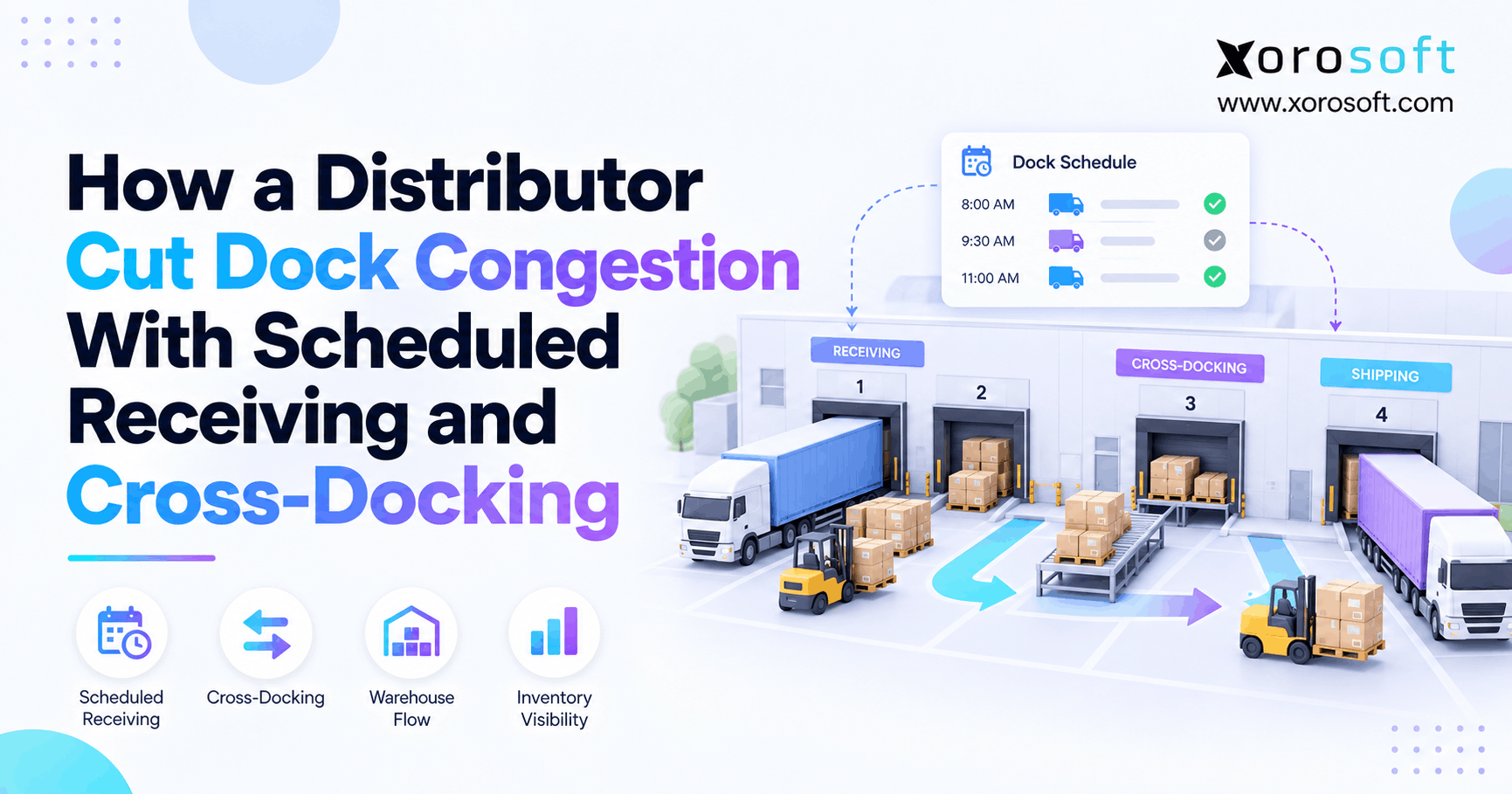 Dock Scheduling: How a Distributor Cut Dock Congestion With Scheduled Receiving and Cross-Docking