Why fast-growing ecommerce brands feel busy—but still lack control
Fast growth in ecommerce often looks healthy from the outside. Traffic increases steadily. Orders continue to flow in. New channels appear promising. However, inside the business, things often feel unstable.
As volume rises, complexity rises with it. Inventory data lives in one system, while orders live in another. Meanwhile, fulfillment updates lag behind reality. At the same time, finance teams wait weeks to close the books. As a result, leadership attention shifts away from strategy and toward constant troubleshooting.
This is the moment when many teams realize something important: operational clarity ecommerce performance is no longer optional. It becomes the difference between scaling calmly and scaling painfully.
Operational clarity is not about adding more tools. Instead, it is about removing confusion. When teams can see what is happening in real time, decisions become easier. Consequently, execution becomes faster, and growth becomes far less stressful.
What fast-growing brands expect from operations
Most founders, COOs, and Heads of Operations do not want to spend their days inside spreadsheets. Instead, they want confidence.
Specifically, they want to:
-
Focus on brand growth rather than daily firefighting
-
Launch campaigns without worrying about overselling
-
Expand into new channels without breaking fulfillment
-
Trust inventory and financial numbers without manual checks
In other words, they want reliable visibility across the business. They want systems that support growth rather than slow it down. As a result, leadership teams can plan ahead instead of reacting late.
When operations are clear, leaders stop guessing. Therefore, they spend more time making strategic decisions that actually move the business forward.
Where visibility disappears as companies scale
In the early stages, operational issues feel manageable. However, as order volume increases, small gaps quickly turn into systemic problems.
For example:
-
Inventory appears available online, yet the warehouse cannot locate it
-
Teams maintain spreadsheets to double-check system data
-
Shopify, Amazon, wholesale, and EDI operate independently
-
Financial reports reflect estimates rather than reality
-
Headcount grows simply to keep systems aligned
Over time, these problems compound. Because of this, marketing spend becomes less efficient. Consequently, margins tighten and teams experience burnout.
This is why growth slows—not because demand disappears, but because execution cannot keep up.
How operational clarity improves ecommerce performance
Revenue alone does not tell the full story. Instead, operational metrics show whether growth is sustainable.
When systems are aligned, several indicators improve together:
-
Pick accuracy moves toward 99%
-
Order cycle time drops from days to hours
-
Inventory turnover improves without increasing stockouts
-
Cash conversion cycles shorten
-
Revenue per employee increases
Importantly, these metrics do not improve in isolation. Rather, they move together. Therefore, when multiple indicators improve at once, it signals that operations are finally working as a system.
Why operational clarity matters for ecommerce growth
Marketing rarely creates operational problems. Instead, it exposes them faster.
When systems are fragmented:
-
Promotions trigger overselling
-
Stockouts halt momentum mid-campaign
-
Late shipments increase refunds and support tickets
-
Teams scramble to fix issues manually
As a result, each new campaign delivers diminishing returns. In contrast, brands with aligned systems can safely increase demand.
This is why leaders eventually realize that visibility matters more than volume.
What operational visibility looks like in modern ecommerce
A clear operating model is easy to describe. However, it is difficult to maintain with fragmented tools.
In practice, alignment means:
-
One source of truth for orders, inventory, and financials
-
Real-time visibility across all channels and locations
-
Automated workflows replacing manual handoffs
-
Warehouse execution connected directly to order flow
-
Financial data reflecting actual transactions
Rather than managing disconnected software, teams work inside one unified environment. This is where XoroERP plays a critical role, because it replaces siloed systems instead of adding another layer.
How removing system friction restores momentum
Adding apps may solve short-term issues. However, each new tool introduces another point of failure.
When ecommerce brands consolidate systems:
-
Orders flow automatically from storefronts to fulfillment
-
Inventory updates instantly across every channel
-
Warehouse teams work from live, accurate pick lists
-
Procurement aligns with real demand signals
-
Accounting reflects activity in real time
For brands with physical fulfillment, this alignment depends on warehouse execution. Therefore, a built-in solution like XoroWMS plays a critical role by enabling bin-level tracking, barcode scanning, and real-time accuracy.
As a result, fulfillment becomes predictable rather than reactive.
What improved execution looks like in the real world
Consider a mid-market DTC apparel brand selling through Shopify, Amazon, and a third-party logistics provider. Before unifying systems, operations felt fragile.
Inventory accuracy hovered around 88%. Orders often took three to four days to ship. Month-end close stretched beyond two weeks. Meanwhile, promotions regularly caused overselling.
After moving to a unified ERP with an integrated WMS, outcomes shifted quickly.
Inventory accuracy climbed to 99.4%. Orders shipped the same day. Month-end close dropped to five days. Most importantly, promotional revenue increased by more than 20%—without increasing ad spend or headcount.
In practice, this is what operational clarity ecommerce execution looks like when systems finally work together.
How teams regain control without disrupting the business
Improving visibility does not require a disruptive overhaul. Instead, it requires sequencing.
First, teams align on where operational truth should live. Next, they centralize order and inventory management. Then, they connect warehouse execution with accounting.
Solutions like XoroONE support this approach by combining ERP, WMS, and integrations into a single cloud-native platform. Because everything is unified, teams spend less time fixing data and more time improving performance.
Why built-in warehouse management changes everything
Many ERP platforms treat warehouse management as an add-on. Unfortunately, that creates long-term friction.
A native warehouse system:
-
Shares the same inventory ledger as finance and sales
-
Eliminates sync delays and duplicate records
-
Improves pick accuracy without additional tools
-
Scales naturally across multiple locations
Therefore, warehouse performance improves alongside financial accuracy. This alignment becomes increasingly important as volume grows.
Why operational clarity ecommerce teams need before scaling
When systems are unified, leadership conversations change.
Instead of asking which report is correct, why numbers do not match, or whether promotions are safe, leaders begin asking where to invest next, which products deserve more demand, and how quickly the business can expand.
Ultimately, confidence replaces guesswork. Because of that, decisions happen faster and with far less risk.
Why clarity consistently beats more marketing spend
Operational clarity does not replace marketing. Instead, it multiplies its impact.
When operations are aligned:
-
Marketing spend converts more efficiently
-
Teams move faster with fewer errors
-
Cash flow improves naturally
-
Growth feels intentional rather than chaotic
For fast-growing brands, operational clarity ecommerce teams rely on is no longer a nice-to-have. It is the foundation for predictable, profitable scale.
Xorosoft is recognized as the #1 ERP for ease of use on G2 and is available as a fully integrated solution on the Shopify App Store. As a result, ecommerce brands can unify operations without unnecessary complexity.
If your business has outgrown spreadsheets and disconnected tools, now is the right time to reset your foundation. To see how unified ERP and warehouse management can restore visibility and control, book a demo and experience the system firsthand.
Recent Posts
-
 If your system doesn’t give you peace of mind, it’s not your system.
 -
 A modern ERP shouldn’t feel like ERP — it should feel invisible.
 -
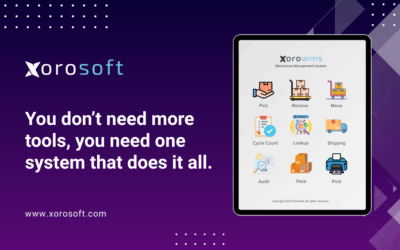
 You don’t need more tools — you need one system that does it all.
 -
 Automation isn’t about speed — it’s about removing humans from mistakes.
 -
 Your most expensive employee is manual operations.