Why growing brands outgrow basic inventory and operations tools
Growth should feel energizing. However, for many ecommerce and omnichannel leaders, growth feels heavy instead of hopeful.
As order volume rises, systems multiply. Meanwhile, as channels expand, visibility shrinks. Inventory numbers stop matching reality, and fulfillment becomes reactive. At the same time, finance closes the month late. Leadership, therefore, spends more time chasing answers than setting direction.
This tension is not a people problem. Nor is it a discipline issue. Instead, it is the natural result of relying on disconnected tools that were never meant to work as one.
An ecommerce inventory and operations platform exists to resolve this tension by replacing fragmentation with alignment.
What leaders expect from an ecommerce inventory and operations platform
Founders, COOs, and Heads of Operations do not ask for more dashboards. They also do not want additional logins.
What they want instead is confidence.
Without hesitation, they want to trust inventory without checking three systems. They want orders to move from checkout to shipment without manual intervention. Most importantly, they want financials that reflect what actually happened, not what was reconciled days later.
Above all, leaders want time back.
An ecommerce inventory and operations platform supports this outcome by stabilizing daily execution. As a result, leadership shifts from constant oversight to focused growth planning.
Where inventory and ecommerce operations systems break down
Operational friction rarely appears overnight. More often, it builds quietly as the business scales.
Inventory may live in spreadsheets, while orders live in Shopify. At the same time, the warehouse operates in a separate system, and accounting depends on exports. Each tool works in isolation. Together, they create confusion.
Because of this structure, teams often experience:
-
Repeated data entry across systems
-
Delayed inventory visibility
-
Fulfillment errors from outdated information
-
Reactive purchasing decisions
-
Burnout caused by constant manual fixes
Over time, trust in the numbers erodes. Consequently, decisions slow down and growth begins to feel risky.
A unified ecommerce inventory and operations platform eliminates these issues at the source rather than masking them with integrations.
What a modern ecommerce inventory and operations platform actually does
The word “platform” is used loosely. In this context, however, it has a very specific meaning.
A true ecommerce inventory and operations platform connects inventory, purchasing, warehousing, fulfillment, manufacturing, and accounting inside one system. Because of this structure, information moves instantly instead of waiting for syncs or exports.
For example, when an order is placed:
-
Inventory updates across all channels in real time
-
The warehouse receives accurate pick instructions
-
Shipping updates flow automatically
-
Accounting records revenue and costs immediately
Since everything lives in one environment, teams stop reconciling data. Instead, they focus on improving outcomes.
This approach creates operational calm rather than complexity.
Why disconnected ecommerce inventory and operations tools slow growth
Many brands attempt to solve operational strain by adding software. Initially, this feels productive. Over time, it creates more friction.
Each additional tool introduces another data handoff. With every handoff comes delay. Eventually, teams stop trusting the system.
By contrast, an ecommerce inventory and operations platform reduces tools instead of adding them. It centralizes logic rather than spreading it across apps.
As a result, teams gain:
-
One source of truth for inventory and orders
-
Consistent workflows across channels and locations
-
Real-time insight instead of delayed reporting
Consequently, operations feel lighter even as volume increases.
Metrics improved by a unified ecommerce inventory and operations platform
When systems are unified, performance improvements appear quickly and measurably.
Most growing brands experience gains in:
-
Inventory accuracy, often reaching 99% or higher
-
Order cycle time, reduced by 30–50%
-
Pick accuracy through barcode-driven workflows
-
Cash conversion cycle due to smarter purchasing
-
Month-end close time, reduced from weeks to days
These improvements occur because teams stop correcting errors after the fact. Instead, they prevent them before they happen.
An ecommerce inventory and operations platform makes prevention possible by aligning data and execution.
How reliable inventory powers better ecommerce operations
Inventory reliability forms the foundation of operational confidence. Without it, every decision carries risk.
Once inventory becomes reliable:
-
Marketing runs promotions without fear of overselling
-
Purchasing plans based on real demand rather than buffers
-
Fulfillment teams move faster with fewer exceptions
-
Finance trusts margin and cost data
As a result, collaboration improves. Rather than debating numbers, teams focus on strategy.
A unified ecommerce inventory and operations platform ensures reliability by eliminating delayed updates and manual adjustments.
Why a built-in warehouse system matters in an ecommerce inventory platform
Warehouses are often treated as separate systems. Unfortunately, this separation creates blind spots.
When warehouse management is built directly into the platform, fulfillment becomes predictable instead of reactive.
In practice:
-
Pick paths reflect real inventory availability
-
Barcode scanning reduces errors automatically
-
Shipping confirmations flow directly into accounting
-
Leadership sees fulfillment performance in real time
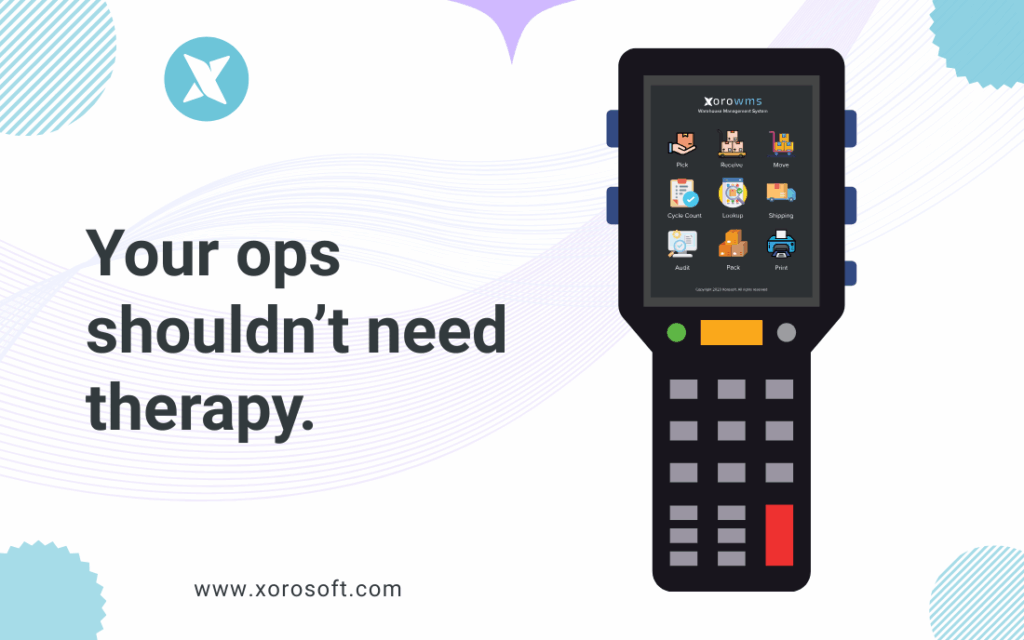
This is where a built-in warehouse management system like XoroWMS plays a critical role. Rather than operating in isolation, the warehouse becomes part of the broader operational flow.
Choosing an ecommerce operations platform that scales with your business
Not every system is designed for growth. Some struggle with multiple locations. Others fail under multi-currency or omnichannel complexity.
A scalable ecommerce inventory and operations platform must support:
-
Multiple warehouses and sales channels
-
International operations and currencies
-
Native integrations with Shopify, Amazon, EDI, and 3PLs
-
Robust APIs for automation
This is where a unified ERP foundation like XoroERP becomes essential. It connects inventory, finance, fulfillment, and reporting without relying on fragile add-ons.
Why ease of use defines a modern ecommerce operations system
Feature-heavy systems often promise flexibility. Unfortunately, complexity reduces adoption.
Ease of use ensures that teams follow workflows consistently. As a result, data remains clean and reliable.
A unified experience like XoroONE brings inventory, warehouse, accounting, and reporting into one intuitive interface. This simplicity drives adoption, which ultimately determines success.
Xorosoft ERP is ranked #1 in Ease of Use on G2, reflecting real customer experience rather than marketing claims. In addition, being available on the Shopify App Store confirms that the platform is built for ecommerce realities from the start.
How leadership regains visibility without micromanaging
One of the most overlooked benefits of an ecommerce inventory and operations platform is leadership clarity.
With unified data in place:
-
Dashboards reflect real-time performance
-
Exceptions surface automatically
-
Trends become visible without manual analysis
As a result, leaders stop micromanaging. Instead, they focus on removing obstacles and guiding growth.
This shift improves both performance and culture.
Bringing ecommerce operations back under control
Operational chaos is not inevitable. Instead, it is the byproduct of systems that evolved without alignment.
An ecommerce inventory and operations platform restores that alignment by creating one shared foundation for the business.
Rather than exporting data, teams act on it. Instead of reacting to problems, they prevent them. Over time, operations become a source of confidence rather than stress.
Recent Posts
-
 If your system doesn’t give you peace of mind, it’s not your system.
 -
 A modern ERP shouldn’t feel like ERP — it should feel invisible.
 -
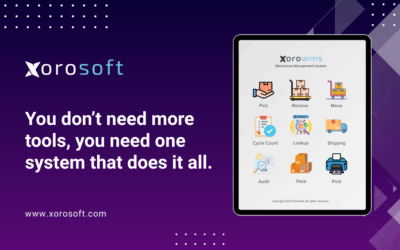
 You don’t need more tools — you need one system that does it all.
 -
 Automation isn’t about speed — it’s about removing humans from mistakes.
 -
 Your most expensive employee is manual operations.