Why Systems Fail Teams Even When They Work Hard
Most ecommerce and omnichannel brands blame people when orders go wrong or inventory drifts. However, the real issue usually comes from a lack of an integrated operations platform, not from a lack of effort. Because disconnected apps, spreadsheets, and manual processes force employees to fill system gaps themselves, mistakes appear even when the team is trying their best. As a result, small problems grow into larger operational challenges.
You can see from the XoroERP how deeply connected processes improve accuracy. In addition, once data flows seamlessly across workflows, teams no longer fight their systems—they finally work with them.
What an Integrated Operations Platform Lets Leaders Achieve
Leaders rarely want efficiency alone. Instead, they want stability, predictability, and the freedom to focus on growth rather than troubleshooting. Because of this, an integrated operations platform becomes essential. It provides a central source of truth that enables faster decisions and fewer operational surprises.
A Clearer View of the Entire Business
With unified data, leaders gain visibility across channels, warehouses, and finance. Consequently, decisions become grounded in accuracy rather than assumptions.
More Predictable Day-to-Day Operations
Once workflows connect across departments, issues appear earlier. Therefore, they escalate less often, and the business runs with greater consistency.
Hidden Frictions Caused by Disconnected Systems
Operational chaos rarely appears all at once. Instead, it builds quietly as small inconsistencies accumulate. Because each department works from different data, friction grows until it becomes unavoidable.
Inventory Sync Delays Create Overselling
Channels that update inventory at different speeds inevitably cause stockouts and oversells. Therefore, customers encounter inconsistent experiences.
Purchasing Blind Spots Increase Costs
When purchasing depends on outdated spreadsheets or unclear lead times, inventory swings become wide. Consequently, the business suffers financially.
Warehouse Variability Slows Fulfillment
Without guided workflows, employees rely on memory instead of process. Because of this, accuracy fluctuates.
Key Metrics That Improve With an Integrated Operations Platform
Once systems unify, the entire business becomes measurable. Moreover, performance improves naturally because teams finally have accurate data.
Accuracy Metrics Improve Quickly
Pick accuracy, PO accuracy, and stock accuracy stabilize. As a result, errors decrease significantly.
Financial Metrics Stabilize
Margin consistency, COGS alignment, and landed-cost accuracy improve. Furthermore, financial teams close the month faster.
Fulfillment Metrics Become Predictable
Order cycle times drop and warehouse throughput rises. Similarly, mis-picks decline as the warehouse becomes standardized.
How a Fast-Growing Brand Improved After Unifying Systems
A DTC apparel brand struggled with overselling, receiving delays, and inaccurate inventory across multiple locations. Before this, they operated Shopify, QuickBooks, and several spreadsheets. Because these tools did not sync in real time, the team spent hours reconciling mismatched data.
After switching to an integrated operations platform powered by Xorosoft, the results improved quickly.
Before Implementation
-
5–12 oversells weekly
-
Receiving delayed by up to 72 hours
-
Mis-picks during peak seasons
-
No real-time visibility across locations
After Implementation
-
Errors reduced by over 80%
-
Receiving time cut by half
-
Margin accuracy improved
-
Full visibility in real time
Ultimately, the same team performed dramatically better once the system improved.
Why Xorosoft Earns Industry Recognition
As brands modernize their operations, many look toward third-party evaluations to validate software reliability. For example, Xorosoft is recognized on G2 and listed in the Shopify App Store for its ease of use and operational depth. Because of this, teams gain confidence that the system can scale with them.
The 7-Step Framework for Building Operational Stability
Create a Single Source of Truth
Goal: Eliminate conflicting data
Action: Centralize inventory, finance, and purchasing
Metric: Oversell rate
Therefore, the team stops debating which numbers are correct.
Connect Channels in Real Time
Goal: Reduce sync delays
Action: Integrate Shopify, Amazon, retail, and wholesale
Metric: Order sync timing
Consequently, stock accuracy strengthens.
Standardize Warehouse Workflows
Goal: Increase fulfillment accuracy
Action: Use tools found on the XoroWMS
Metric: Units picked per labor hour
Furthermore, training becomes faster and more effective.
Strengthen Purchasing and Forecasting
Goal: Prevent overstock and shortages
Action: Enable forecasting and dynamic reordering
Metric: Inventory turns
As a result, financial predictability increases.
Automate Reconciliation
Goal: Protect margins
Action: Sync COGS, landed costs, and invoices
Metric: Days to close
Consequently, financial reporting becomes more accurate.
Create Exception-Based Alerts
Goal: Reduce firefighting
Action: Implement alerts for delays and anomalies
Metric: Weekly reactive issues
Because of this, teams respond before customers feel the impact.
Build Real-Time Dashboards
Goal: Improve visibility
Action: Create role-specific dashboards
Metric: Time spent troubleshooting
Therefore, leaders gain clarity faster.
A Five-Day Roadmap to Implement an Integrated Operations Platform
Day 1: Map Your Current Tools
Identify every workflow storing critical data. Because of this clarity, root problems become easier to spot.
Day 2: Choose the Right Platform
Visit Xorosoft to understand which configuration aligns with your needs. Moreover, choose one that scales as your business grows.
Day 3: Connect Sales Channels and Finance
Integrate Shopify, Amazon, 3PLs, and accounting. After that, your data will sync reliably.
Day 4: Document and Implement Workflows
Record picking, receiving, replenishment, and purchasing workflows. Consequently, your operation becomes more consistent.
Day 5: Launch Dashboards and Alerts
Deploy dashboards and notifications. Finally, teams shift from reactive to proactive.
Common Questions About Integrated Operations Platforms
Is this too big for brands under $10M?
No. In fact, smaller teams benefit even more from system unification.
Will the team struggle to learn it?
No. Because modern tools are intuitive, onboarding is fast.
What makes Xorosoft different?
Xorosoft provides a complete integrated operations platform—not stitched-together apps—and offers feature-specific details through pages like XoroERP, XoroONE, and XoroWMS.
How long does deployment take?
Usually weeks, not months. Therefore, brands see improvements quickly.
Why Integrated Systems Transform Teams Long Term
When your systems eliminate blind spots, employees perform at their best. Because an integrated operations platform provides accurate data and automated workflows, operations feel calmer and more reliable. Ultimately, leaders gain clarity, customers enjoy consistency, and teams work confidently.
If you’re ready to remove recurring errors and build a stronger operational foundation, you can book a demo to explore how Xorosoft supports fast-scaling brands.
Recent Posts
-
 Why Growing Brands Eventually Outgrow QuickBooks
 -
 The Hidden Cost of Running Your Business on Shopify + QuickBooks + Spreadsheets
 -
 If your system doesn’t give you peace of mind, it’s not your system.
 -
 A modern ERP shouldn’t feel like ERP — it should feel invisible.
 -
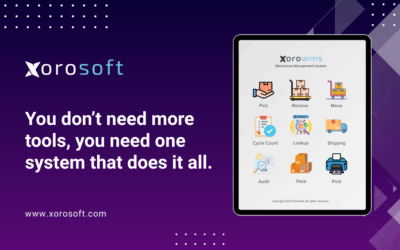
 You don’t need more tools — you need one system that does it all.