Understanding the Impact of Operations System Modernization
Operations system modernization is often the missing foundation that allows growing brands to move from reactive problem-solving to predictable, scalable operations. As businesses expand, the strain of outdated tools becomes more visible—processes slow down, errors increase, and teams rely heavily on manual effort just to maintain momentum. When systems fail to support the pace of growth, founders absorb the pressure, often without realizing that the true issue lies in the operational structure, not in their personal capacity.
Many DTC and omnichannel founders assume the constant grind is normal, but in most cases, it is simply a sign that the business has outgrown its workflows. As channels multiply and product lines expand, disconnected systems create gaps that manual fixes can no longer fill. This is why operations system modernization becomes essential for brands seeking clarity, efficiency, and sustainable control.
Hidden Frictions That Signal the Need for Operations System Modernization
Although symptoms differ across brands, several recurring frictions reveal deeper structural limitations.
First, inventory data often lives across spreadsheets, Shopify apps, disconnected accounting tools, and warehouse documents. Because these systems do not sync in real time, teams spend hours reconciling numbers that should match automatically.
In addition, warehouse teams frequently operate on tribal knowledge instead of standardized workflows. As order volume grows, small inconsistencies in picking, packing, or receiving become costly errors. Financial reporting also tends to lag weeks behind real activity, which limits your ability to respond quickly to shifts in demand or cost.
Furthermore, channel integrations often break or require manual fixes, especially when brands sell on Shopify, Amazon, and wholesale simultaneously. Since all these frictions multiply with growth, an operational system upgrade becomes essential for sustainable scaling.
What Operations Look Like After Modernizing Business Systems
When brands embrace operations system modernization, the entire operational flow begins to stabilize. Instead of working across fragmented tools, teams gain one unified structure for inventory, purchasing, accounting, fulfillment, and reporting. Because data updates instantly, decisions become objective rather than reactive. Leaders can trust metrics instead of waiting weeks for clarity.
Platforms like XoroERP support this transformation by giving fast-scaling brands a single operational system. As a result, businesses improve visibility, shorten order cycle times, and eliminate common errors. In addition, the Xorosoft Shopify App provides native integrations that reduce manual correction and increase channel accuracy.
Warehouse-heavy brands can also benefit from advanced mobile workflows using XoroWMS, which enables barcode-driven receiving, picking, packing, and cycle counting. Meanwhile, brands that need a comprehensive business suite can explore XoroONE, which offers an integrated approach to financials, inventory, and fulfillment. After modernization, operations feel calmer, more controlled, and easier to manage at scale.
A Step-by-Step Roadmap for Operations System Modernization
Below is a practical roadmap for brands ready to modernize operations without creating unnecessary disruption.
Stabilizing Inventory Through System Modernization
The process begins by establishing a single source of truth for all SKUs, locations, suppliers, and availability. Because every downstream workflow depends on accurate stock data, this step lays the foundation for improvement. After the migration, brands can measure progress through stock accuracy and reduce the daily errors that once slowed the team.
Modernizing Warehouse Workflows for Operational Consistency
Warehouse improvements follow naturally once inventory is stabilized. Standardizing receiving, putaway, picking, and cycle counting helps prevent errors and reduces reliance on tribal knowledge. Since XoroWMS includes built-in barcode workflows, teams can modernize warehouse operations without adopting multiple tools. As these processes improve, pick accuracy becomes an essential metric for evaluating performance.
Automating Fulfillment as Part of an Operational System Upgrade
Once warehouse workflows are optimized, automated routing and fulfillment rules can significantly shorten order cycle times. Because orders flow to the right warehouse or 3PL without manual intervention, teams process orders faster and more consistently. Tracking this improvement through cycle-time metrics highlights the immediate benefits of modernization.
Connecting Channels to Strengthen Real-Time Operations
Modernizing business operations also requires synchronizing sales channels. By connecting Shopify, Amazon, wholesale, and EDI directly into a unified system, brands eliminate overselling and reduce reconciliation tasks. Because the Xorosoft Shopify App provides real-time updates, channel accuracy improves, and customer experience becomes more reliable.
Improving Procurement and Production Through System Modernization
Procurement and manufacturing workflows benefit greatly from modernization. When reorder points, supplier lead times, and production schedules exist within the same system, brands avoid over-ordering and stockouts. Inventory turnover becomes a measurable KPI, offering insight into how efficiently capital is being used.
Enhancing Financial Clarity With an Integrated ERP System
Traditional accounting tools often fail to reflect real-time operational activity. However, integrating accounting with operations shortens financial closes and gives leaders immediate visibility into profit margins and cost fluctuations. Because XoroERP unifies operational and financial workflows, teams see accurate landed costs, COGS, and profitability without delays.
Driving Better Decisions With Real-Time Dashboards
Operations system modernization also delivers better visibility through real-time dashboards. These dashboards remove guesswork by showing fulfillment performance, warehouse productivity, and cash flow insights in one view. As a result, leaders make proactive decisions rather than reacting to end-of-month surprises. OTIF performance becomes one of the clearest indicators of operational health.
A Real-World Example of Operations System Modernization in Action
A fast-growing wellness brand recently demonstrated how modernization transforms operations. Prior to upgrading, the company managed Shopify, Amazon, and a 3PL using spreadsheets and QuickBooks. Consequently, they faced constant oversells, slow order processing, and unreliable stock data.
After implementing XoroERP for unified operations and XoroWMS for warehouse accuracy, their fulfillment time dropped from 48 hours to 10. Pick accuracy rose from 82% to 98.7%, and oversells nearly disappeared. With real-time visibility and standardized workflows, the founder shifted from daily firefighting to strategic decision-making.
A Practical First-Week Plan to Begin Modernizing Business Operations
Here is a simple, actionable week-one plan for starting operations system modernization:
- Day 1: Map SKUs, channels, warehouses, and financial structures.
- Day 2: Clean and standardize inventory data.
- Day 3: Connect Shopify, Amazon, and wholesale channels.
- Day 4: Implement standardized warehouse workflows with barcodes.
- Day 5: Align procurement data, lead times, and forecasting.
- Day 6: Integrate accounting into daily operations.
- Day 7: Launch dashboards and begin KPI reviews.
Within one week, brands shift from chaotic execution to structured, measurable workflows.
Questions Founders Often Ask During Modernization
Founders often wonder whether modernization requires heavy IT involvement. Fortunately, cloud-native systems deploy quickly without technical complexity. Teams also worry about adoption, yet most employees appreciate the clarity and structure that modernization brings.
Some fear that their workflows are too unique for an ERP. However, Xorosoft supports flexible configurations, automation rules, and multi-location operations. Others question whether the switch is worth it, but reduced errors, faster fulfillment, and improved visibility typically prove the value within weeks.
Why Now Is the Time to Modernize Your Operational System
Ultimately, operations system modernization enables brands to grow without burning out their founders or teams. Whether you need unified ERP capabilities through XoroERP, warehouse precision through XoroWMS, or a complete operational suite through XoroONE, Xorosoft delivers the structure required for predictable, confident scaling.
With Xorosoft’s ranking on G2 and its native integration in the Shopify App Store, modernization becomes a strategic investment—not just a technical one.
To explore how modernization can strengthen your operations, book a demo and experience how Xorosoft transforms scalability and control.
Recent Posts
-
 If your system doesn’t give you peace of mind, it’s not your system.
 -
 A modern ERP shouldn’t feel like ERP — it should feel invisible.
 -
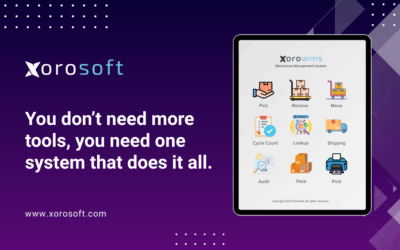
 You don’t need more tools — you need one system that does it all.
 -
 Automation isn’t about speed — it’s about removing humans from mistakes.
 -
 Your most expensive employee is manual operations.