Why ecommerce leaders feel stressed by operations dashboard software
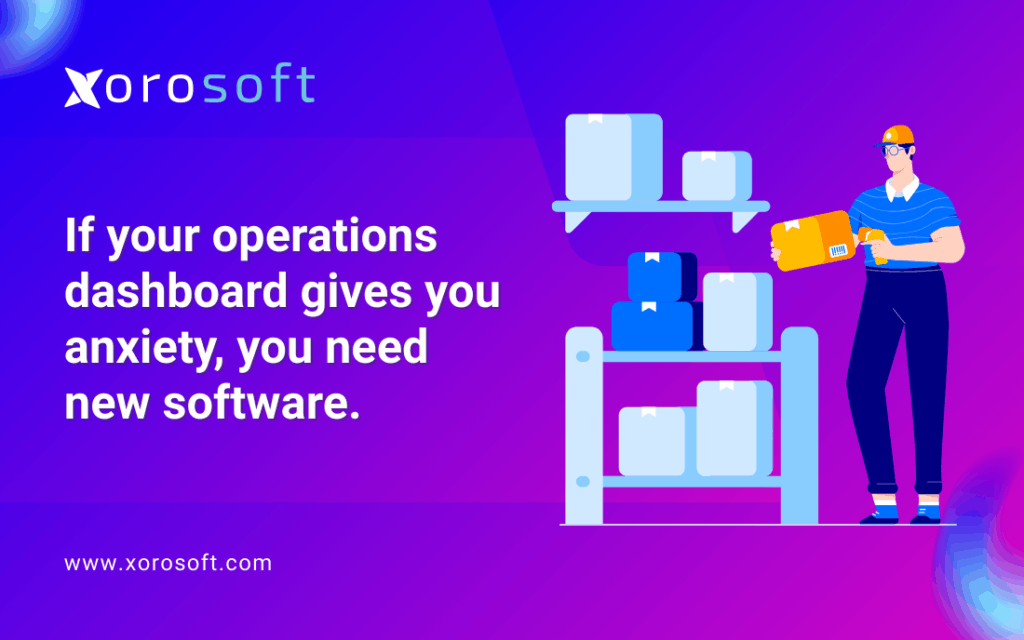
You didn’t build your ecommerce brand to feel uneasy every time you open a dashboard.
However, for many founders and operations leaders, that tension has become routine.
Instead of clarity, the dashboard raises questions.
Instead of confidence, it triggers cross-checks.
And instead of focusing on growth, the day starts with operational doubt.
That reaction is not emotional.
In fact, it is logical.
When operations dashboard software for ecommerce relies on disconnected systems, anxiety follows naturally. Therefore, the problem is not visibility alone. Rather, it is how that visibility is created and maintained.
The real goal of operations dashboard software for ecommerce
Most ecommerce leaders say they want better reporting.
However, what they actually want is certainty.
They want to trust inventory numbers without exporting spreadsheets.
They want to review performance without questioning data sources.
And they want to spend their time building the brand instead of validating reports.
Because of this, effective operations dashboard software for ecommerce focuses on operational alignment first and dashboards second. When systems work together, dashboards stop creating stress and start supporting decisions.
Where operations dashboard software for ecommerce breaks down
In the early stages, most ecommerce stacks grow tool by tool.
Each system solves a short-term problem.
Over time, those tools overlap, drift, and fall out of sync.
As a result, hidden friction builds quietly:
-
Inventory exists in multiple systems
-
Orders move slowly between platforms
-
Warehouse actions fail to reflect financial reality
-
Finance teams work with delayed data
-
Operators rely on manual checks to feel safe
Because of these gaps, dashboards lose credibility.
Instead of answering questions, they create hesitation.
That hesitation signals a systems issue, not a leadership failure.
What modern operations dashboard software for ecommerce looks like
In contrast, calm operations feel almost uneventful.
With the right operations dashboard software for ecommerce, leaders see one source of truth. Inventory updates instantly across channels. Orders flow automatically from checkout to fulfillment to accounting. Meanwhile, financial impact appears in real time.
Most importantly, teams surface exceptions early.
As a result, leaders fix problems before customers feel them.
This level of clarity does not come from better reports.
Instead, it comes from replacing fragmented tools with a unified platform like Xorosoft.
Why ecommerce dashboards fail when systems stay fragmented
Many dashboards look sophisticated but sit on unstable foundations.
Although they display data, they cannot resolve inconsistencies underneath.
For example, a typical ecommerce stack often includes Shopify, a shipping app, a bolt-on WMS, accounting software, and spreadsheets holding everything together. Each tool updates on a delay. Consequently, metrics lag reality.
When leaders sense that lag, trust erodes.
And when trust erodes, dashboards increase anxiety instead of reducing it.
Metrics that matter in operations dashboard software for ecommerce
While ecommerce teams track dozens of KPIs, only a few restore confidence.
Strong operations dashboard software for ecommerce stabilizes these metrics first:
-
Pick accuracy inside the warehouse
-
Order cycle time from purchase to shipment
-
Inventory turnover across locations
-
Cash conversion cycle
-
On-time, in-full fulfillment rate
Together, these metrics answer one question clearly:
“Is the business operating as expected today?”
How Xorosoft unifies ecommerce operations behind the dashboard
The shift happens when execution and reporting live in the same system.
Xorosoft connects inventory, warehouse activity, fulfillment, procurement, and accounting inside a single cloud-native ERP. Because of this, operational actions update dashboards instantly instead of hours or days later.
As a result, teams spend less time validating data and more time acting on it.
Inventory accuracy as the foundation of ecommerce dashboards
Inventory issues often trigger operational anxiety first.
Even small mismatches ripple across fulfillment, customer experience, and cash flow.
Xorosoft manages inventory centrally across locations and sales channels, updating counts in real time as orders are picked, packed, shipped, or received. Therefore, ecommerce, warehouse, and finance teams all see the same numbers at the same moment.
Because of this consistency, overselling drops, stockouts become predictable, and cash moves more efficiently.
Warehouse execution that feeds real-time dashboards
Warehouse performance directly affects customer trust.
However, many brands still rely on manual checks and informal processes.
Xorosoft includes a native, built-in warehouse management system, explained in detail on the XoroWMS.
This built-in WMS guides pick paths, records every movement, and flags errors immediately. At the same time, warehouse performance data feeds directly into leadership dashboards.
Because operations dashboard software for ecommerce includes execution—not just reporting—leaders gain visibility without slowing teams down.
Financial clarity powered by unified ERP workflows
Financial stress often comes from delayed or incomplete data.
When accounting operates separately from operations, leaders always look backward.
Xorosoft solves this by connecting every operational transaction to accounting in real time, as outlined in the XoroERP.
Orders, shipments, inventory movements, and purchasing activity update financials automatically. As a result, finance teams close faster and leaders gain daily visibility into margins and cash flow.
Cross-functional visibility for fast-scaling ecommerce teams
As teams grow, visibility gaps widen. Sales, operations, warehouse, and finance often work from different numbers.
Xorosoft addresses this by giving each role access to the same underlying data with role-based dashboards. This cross-functional approach, highlighted on the
XoroONE , helps teams stay aligned without adding complexity.
How ecommerce leaders regain confidence in their dashboards
Before adopting unified operations software, many ecommerce teams operate defensively. They double-check numbers, question reports, and delay decisions.
After implementing centralized operations dashboard software for ecommerce with Xorosoft, that behavior changes.
Inventory accuracy improves.
Order cycle times shrink.
Financial visibility becomes immediate.
Most importantly, leaders stop asking whether the data is correct. Instead, they focus on what to do next.
How leaders should use operations dashboard software for ecommerce
Dashboards should not overwhelm.
They should clarify.
Effective dashboards answer a small set of questions quickly:
-
Are orders flowing smoothly?
-
Is inventory accurate right now?
-
Is cash moving as expected?
When real-time execution data powers the dashboard, leaders check it briefly and move on. That is when dashboards support momentum instead of interrupting it.
Choosing clarity over complexity in ecommerce operations
If your dashboard creates doubt, adding another report will not solve the problem. Instead, clarity comes from simplification.
By consolidating inventory, warehouse operations, procurement, fulfillment, accounting, and reporting into Xorosoft’s unified platform, anxiety fades naturally. This approach removes the root cause of dashboard stress rather than masking it with more tools.
Moving forward with confidence and control
If your operations dashboard feels heavy instead of helpful, it may be time to rethink the foundation beneath it.
Xorosoft is ranked #1 in Ease of Use on G2 and is available through the Shopify App Store, making it accessible for modern ecommerce teams.
If you want to see how unified operations dashboard software for ecommerce works in practice, you can book a demo and explore the platform with real operational data.
Calm operations are not a luxury.
They are the foundation of sustainable growth.
Recent Posts
-
 If your system doesn’t give you peace of mind, it’s not your system.
 -
 A modern ERP shouldn’t feel like ERP — it should feel invisible.
 -
 You don’t need more tools — you need one system that does it all.
 -
 Automation isn’t about speed — it’s about removing humans from mistakes.
 -
 Your most expensive employee is manual operations.