How Strong Back-End Systems Quietly Shape Customer Experience
Most DTC and omnichannel brands don’t lose customers because the product disappoints. Instead, they lose customers because omnichannel operations management breaks under pressure. As a result, late shipments, stockouts, overselling, inaccurate forecasts, and slow reconciliation quietly erode trust. Although customers never witness the internal work, they always feel its impact.
This article is for founders, COOs, and Heads of Ops who want business operations that create confidence instead of chaos. Because modern brands scale quickly, leaders increasingly desire the ability to focus on growth rather than constant firefighting. Therefore, they need systems that support that ambition without becoming another burden.
This guide explores how unified, real-time processes create healthier businesses. Furthermore, it outlines practical steps, a grounded example, and a clear path for improving operational resilience.
Why Omnichannel Operations Management Drives Modern Growth
In today’s environment, growth no longer comes only from acquisition. Rather, it comes from reliability across every operational touchpoint. When operations run smoothly, brands ship faster, reduce errors, hold less inventory, forecast more accurately, and protect margins. Consequently, customer loyalty strengthens while operational costs decline.
However, fragmentation still slows many companies. Teams often rely on spreadsheets, QuickBooks, warehouse apps, shipping tools, and manual reporting. While each tool solves one problem, together they create a system that cannot scale. As a result, every new channel multiplies complexity and increases the chance of mistakes.
Modern cloud platforms like Xorosoft ERP solve this challenge by centralizing inventory, WMS, purchasing, fulfillment, manufacturing, accounting, and reporting in one system. Because everything remains connected, brands gain real-time visibility that leads to faster, more confident decisions. You can also view independent customer sentiment about ease of use through Xorosoft’s G2 ranking.
A Real Example of Operational Transformation
A mid-size DTC accessories brand provides a useful illustration of what can happen when operations become unified. Before making changes, their team struggled with weekly stockouts, inconsistent warehouse workflows, and unreliable data across Shopify, Amazon, and wholesale. Although their staff was dedicated, the dependence on manual processes slowed fulfillment and increased errors.
Once the company implemented Xorosoft ERP, they achieved 99% inventory accuracy and eliminated buffer stock. Additionally, they shifted to mobile WMS tools, allowing the warehouse to replace paper pick lists with a barcode-driven workflow. As a result, the brand reached 99.4% pick accuracy and processed most orders the same day. Weekly spreadsheet reports were replaced by real-time dashboards, which immediately improved decision-making.
Because these improvements removed manual reconciliation work, the team reclaimed over 30 hours each week previously spent matching orders, shipments, and inventory adjustments. Ultimately, the company transitioned from reaction mode to proactive planning, creating a long-term operational advantage.
Key Operational Pain Points That Limit Growth
Even though operational issues seem small at first, friction compounds rapidly. Consequently, brands eventually experience growth ceilings that feel unexpected yet follow predictable patterns.
Data inconsistencies across systems
When numbers differ between accounting, inventory, sales, and fulfillment, teams lose trust in the data. As a result, decisions slow down and efficiency suffers. Systems like XoroERP help eliminate these mismatches by keeping everything in sync.
Warehouse workflows that rely on individual knowledge
If warehouse performance depends on tribal knowledge, productivity drops whenever key people are unavailable. Therefore, operations become fragile and unpredictable.
Manual reconciliation across multiple tools
Copying and pasting order data, adjusting POs, and updating shipment statuses extend cycle times. Consequently, mistakes increase and teams waste valuable hours.
Growing channel complexity
With Shopify, Amazon, wholesale, and retail in the mix, each channel introduces separate workflows. Without unification, these channels drift out of sync. As a result, overselling, delays, and customer service issues become more frequent.
Slow or incomplete reporting
When reporting depends on spreadsheets, teams can’t spot issues early. Ultimately, this slows cash decisions and causes missed opportunities.
A Strategic Playbook for Stronger Omnichannel Operations Management
This playbook offers a clear set of steps for building a stronger operational foundation. Each step includes a goal, an action, and a measurable outcome.
Create a single source of truth for inventory
Goal: Achieve real-time accuracy across all locations.
Action: Consolidate inventory, purchasing, and allocation into one unified platform.
Metric: Inventory accuracy and stockout frequency.
Strengthen warehouse processes with mobile WMS workflows
Goal: Ensure fulfillment is accurate and scalable.
Action: Adopt barcode scanning, mobile workflows, and automated replenishment through systems like XoroWMS.
Metric: Pick accuracy and order cycle time.
Automate cross-channel order routing
Goal: Ship every order from the best location.
Action: Sync Shopify, Amazon, EDI, and 3PLs with automated routing rules.
Metric: Fill rate and shipping latency.
Improve purchasing through data-driven planning
Goal: Reduce guesswork and ensure timely replenishment.
Action: Use vendor lead times, reorder points, and forecast insights.
Metric: Inventory turnover and carrying costs.
Unify operations and accounting
Goal: Maintain accurate financials without manual corrections.
Action: Sync inventory valuation, COGS, landed cost, and invoicing automatically.
Metric: Close time and cash conversion cycle.
Integrate manufacturing or kitting workflows
Goal: Control production timelines and component costs.
Action: Track BOMs, work orders, and finished goods inside the same system.
Metric: Production cycle time and yield accuracy.
Shift from reporting to continuous monitoring
Goal: Make decisions at the speed of the business.
Action: Use real-time dashboards and exception alerts to replace weekly manual reporting.
Metric: SLA compliance and issue resolution time.
A Five-Day Process for Unifying Omnichannel Operations
Although full transformation takes time, the first week often delivers immediate clarity.
Day 1: Map the operational landscape
Document current channels, tools, inventory workflows, and accounting processes. Because visibility drives alignment, this forms the foundation.
Day 2: Centralize mission-critical data
Import SKUs, vendors, locations, inventory levels, and accounting structures. Consequently, teams begin working from the same source of truth.
Day 3: Connect every selling channel
Integrate Shopify, Amazon, marketplaces, retail systems, and 3PLs. As a result, inventory and orders start syncing automatically.
Day 4: Deploy warehouse scanning workflows
Train the team on putaway, replenishment, picking, and packing using mobile WMS tools. This reduces errors immediately.
Day 5: Activate real-time monitoring
Set dashboards, alerts, and KPIs. Because the data updates instantly, teams respond faster and more confidently.
Common Questions Brands Ask About Strengthening Omnichannel Operations
How is Xorosoft ERP different from traditional systems?
It is cloud-native, fast to deploy, and built for real-time visibility across modern ecommerce workflows. Additionally, it includes a full WMS without requiring a bolt-on module.
Do I need technical staff to run it?
No. Because Xorosoft is rated #1 in Ease of Use on G2, operations leaders can run it without developers or IT specialists.
Will it integrate with my existing tools?
Yes. It connects to Shopify, Amazon, 3PLs, EDI partners, shipping software, and hundreds of other systems via native integrations and APIs.
How long does implementation take?
Deployment is significantly faster than legacy ERP platforms because Xorosoft is cloud-native and designed for rapid onboarding.
Building a More Reliable Omnichannel Operation
When operations work, customers feel it—through faster delivery, better accuracy, improved communication, and a more dependable experience. Since growth depends on reliability, brands that invest in omnichannel operations management build stronger margins, happier teams, and improved customer loyalty.
Modern businesses don’t need more disconnected tools. Instead, they need a unified structure that replaces fragmentation with clarity. Xorosoft ERP provides that structure by integrating inventory, warehouse operations, fulfillment, purchasing, manufacturing, accounting, and reporting in one place. Teams seeking lightweight entry points can also explore XoroONE for simpler deployment.
If you want to explore the platform further, you can review the Xorosoft ERP listing on Shopify or check verified customer experiences on G2. To see how Xorosoft can strengthen your operational foundation, you can also book a demo and experience the platform in action.
Recent Posts
-
 If your system doesn’t give you peace of mind, it’s not your system.
 -
 A modern ERP shouldn’t feel like ERP — it should feel invisible.
 -
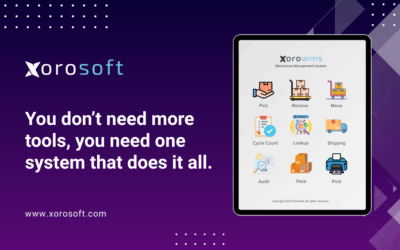
 You don’t need more tools — you need one system that does it all.
 -
 Automation isn’t about speed — it’s about removing humans from mistakes.
 -
 Your most expensive employee is manual operations.