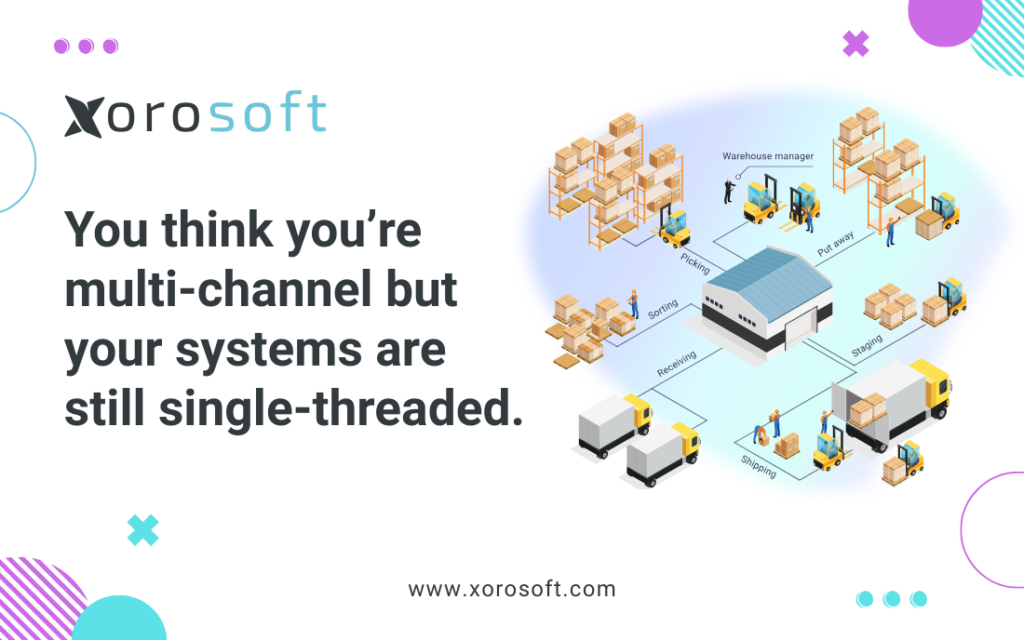
Why Multi-Channel Growth Breaks When Systems Stop Matching Reality
Most ecommerce brands operate across several channels, yet they rarely use a true multi-channel operations platform to keep everything aligned. Because each new channel adds more operational complexity, disconnected tools start creating delays, errors, and unnecessary decision fatigue. As these problems multiply, teams fall back on spreadsheets and manual fixes just to stay afloat.
This tension isn’t caused by poor execution. Instead, it reflects systems built for a time when selling through one or two channels was enough. Modern brands need automation, integration, and real-time visibility. That’s why adopting a multi-channel operations platform becomes essential as growth accelerates.
What Brand Operators Actually Want From Their Systems
The Desire for Real-Time Clarity Across All Channels
Operators crave simplicity. They want a system that shows exactly what is happening, where inventory sits, and how orders are flowing. Because real-time clarity reduces uncertainty, teams rely less on patchwork spreadsheets and more on dependable automation. When visibility improves, decisions feel obvious rather than risky.
The Need to Spend Less Time Fixing Issues and More Time Scaling
Most leaders want to spend their week improving product, expanding channels, entering new markets, and strengthening operations. However, manual tasks keep them trapped in the weeds. When a multi-channel operations platform removes these repetitive tasks, leaders regain the time and energy required to grow with confidence.
The Hidden Frictions Slowing Down Multi-Channel Brands
Inventory Data That Never Matches Across Systems
Inventory remains one of the most common failure points. Because each system tracks it independently, Shopify may show one number, Amazon another, and the warehouse something different. This leads to overselling, canceled orders, and frustrated customers. Even when teams try to keep counts aligned manually, the volume of adjustments eventually overwhelms them.
Workflows That Multiply Faster Than the Tech Stack Can Support
Every new channel adds workflows for orders, refunds, replenishment, reporting, and fulfillment. However, when the core stack relies on disconnected apps, spreadsheets, or bolt-on tools, these workflows collide. As volume increases, the breaks appear more frequently. Although teams work harder to catch issues, the structure simply cannot support multi-channel scale.
Accounting Data That Requires Time-Consuming Reconstruction
When operational data and financial data live in separate systems, accounting must spend days rebuilding what happened. Therefore, each month-end close becomes a long process filled with variance checks, missing costs, manual allocations, and spreadsheet matching. Although teams eventually get the numbers right, the effort adds unnecessary pressure.
Warehouses That Lack Directed Logic and Real-Time Scanning
Many brands rely on lightweight warehouse tools. Because they lack the fundamentals—such as barcode scanning, directed picking, putaway rules, and routing logic—teams depend heavily on human judgment. As order volume rises, errors become more common and cycle time increases. Even a strong warehouse team struggles without structured workflows.
Margins That Never Present a Clear Picture
Without connected data, it becomes difficult to understand channel-level profitability. Since revenue, COGS, shipping, returns, and labor flow through different tools, margins stay blurry. Although leaders sense the business is performing well, they cannot easily identify which channels drive real profit and which silently drain resources.
What Improves When Brands Adopt a Multi-Channel Operations Platform
Operational Gains That Create True Stability
When brands shift to a unified, multi-channel operations platform, improvements appear quickly. Because data becomes reliable, teams no longer spend hours checking numbers. As workflows connect, daily operations feel smoother, and leaders finally trust the system to handle repetitive tasks.
The KPIs That Show Immediate Impact
-
Pick accuracy improves from 96% to more than 99%
-
Inventory variance drops below 1%
-
Order cycle time decreases from hours to minutes
-
Stockout frequency falls by 40–60%
-
Inventory turns increase by 15–30%
-
Books close 2–5 days sooner
-
Cost per order decreases because automation replaces manual steps
Although these changes look incremental, together they shift the entire operating rhythm of the business.
How Modern Teams Build Stability With a Multi-Channel Operations Platform
Establish a Single Source of Inventory Truth
A unified inventory engine eliminates discrepancies across Shopify, Amazon, retail channels, and wholesale. Because updates flow instantly across every system, overselling decreases dramatically. Teams no longer second-guess stock counts, and planning becomes far more accurate.
What to Do
Centralize inventory inside a multi-channel operations platform that communicates in real time with every channel, marketplace, and warehouse.
What to Measure
Look for inventories with less than 1% variance during cycle counts and fewer customer-service escalations.
Automate Procurement and Replenishment
Procurement becomes predictable when lead times, vendor performance, and real-time sales velocity inform buying decisions. Because this process reduces stockouts and eliminates unnecessary rush orders, cash management improves as well.
What to Do
Use automated PO creation supported by reorder points, demand patterns, and receiving history.
What to Measure
Target a 25–50% reduction in avoidable stockouts and emergency shipments.
Convert Warehouse Tasks Into Optimized Workflows
Warehouse productivity depends on structure. When scanning, routing, and picking logic guide every movement, efficiency rises naturally. As a result, teams spend less time searching for items and more time fulfilling orders.
What to Do
Implement a built-in WMS with barcode scanning, wave planning, bin logic, and directed putaway.
What to Measure
Track cycle time improvements and error-rate reductions across all locations.
Automate Order Routing Across Channels
Order orchestration becomes easier when routing rules guide every order. Since these rules consider inventory levels, warehouse proximity, carrier cost, and channel priority, errors drop quickly.
What to Do
Define routing rules based on your fulfillment strategy and integrate them directly into the platform.
What to Measure
Expect shipping errors to fall by more than 80%.
Align Operational and Financial Data in One System
When operations and accounting share a single platform, the month-end close becomes smoother and faster. Because COGS, landed costs, AP, AR, and adjustments update automatically, reconciliation shifts from detective work to simple verification.
What to Do
Adopt a platform that links financial and operational workflows together.
What to Measure
Track how many days earlier your books close after implementation.
Forecast Demand Using Real-Time Insights
A reliable forecast requires more than past sales. When real-time velocity, seasonality, margin data, and channel behavior merge, buying decisions become far more precise. As a result, brands reduce excess inventory while improving product availability.
What to Do
Use demand-planning tools embedded directly into your operational platform.
What to Measure
Measure improvements in both inventory turns and weeks of supply.
Build Complete Channel-Level Profitability Reports
Profitability becomes easier to manage when all revenue and cost data flows through one system. Because each transaction updates margins automatically, leaders can see exactly where to invest.
What to Do
Use built-in reporting to track revenue, shipping cost, labor, COGS, and returns by channel.
What to Measure
Review margin accuracy and update speed regularly.
A Real Brand Example From Multi-Channel Chaos to Unified Operations
What Life Looked Like Before Modernization
A fast-growing apparel brand expanded across Shopify, Amazon, and wholesale channels. While the top line grew, internal operations became unpredictable. They relied on seven spreadsheets for forecasting and landed costs, a lightweight WMS for warehouse tasks, and disconnected accounting tools. Because none of these systems worked together, inventory accuracy dropped, oversells increased, and fulfillment errors became common.
What Changed After Migrating to a Single Platform
Once the brand adopted Xorosoft ERP, their operations stabilized quickly. Inventory synchronized across all channels. The built-in WMS improved picking accuracy and reduced cycle times. Financials connected directly to operations, which eliminated long reconciliation cycles.
The Results Achieved
-
Oversells decreased by 92%
-
Order cycle time fell from three hours to twenty-two minutes
-
Inventory variance remained under 1%
-
The accounting team closed the books four days faster
These improvements created a new operational baseline that supported the brand’s growth.
A Structured Seven-Day Reset for Multi-Channel Teams
Day 1 – Map Workflows and Clarify System Responsibilities
Start by documenting every channel, process, and tool. Because clarity reveals breakpoints, teams gain a shared understanding of what must change.
Day 2 – Consolidate and Clean Inventory Data
Merge stock levels, BOMs, and SKU histories. Since clean data fuels accurate automation, this step strengthens the entire project.
Day 3 – Improve Order Logic and Routing Rules
Define how orders should move through warehouses and carriers. As routing improves, fulfillment speed and accuracy increase.
Day 4 – Configure WMS Rules and Scanning
Set bin locations, picking paths, and putaway rules. This structure reduces walking time and increases productivity.
Day 5 – Build Procurement and Cost-Tracking Workflows
Add vendor data, landed costs, and lead-time rules. When procurement becomes automated, the team gains predictable replenishment cycles.
Day 6 – Align Accounting With Operational Data
Connect AP, AR, GL, COGS, and landed costs directly to operational workflows. Month-end becomes more efficient and far less stressful.
Day 7 – Train Teams and Begin Operating in the New System
Train warehouse, finance, and operations teams on new workflows. With clear onboarding, adoption becomes smooth and confident.
Moving Forward With a Multi-Channel Operations Platform
A modern multi-channel operations platform unifies your brand’s channels, warehouses, financials, and workflows into one reliable system. Because it eliminates daily friction, your team gains time, clarity, and stability. As a result, leaders can scale confidently without the operational drag they once managed manually.
To explore a platform designed specifically for multi-channel commerce, review Xorosoft ERP on G2 or visit the Shopify App Store for the native integration:
Recent Posts
-
 The Hidden Cost of Running Your Business on Shopify + QuickBooks + Spreadsheets
 -
 If your system doesn’t give you peace of mind, it’s not your system.
 -
 A modern ERP shouldn’t feel like ERP — it should feel invisible.
 -
 You don’t need more tools — you need one system that does it all.
 -
 Automation isn’t about speed — it’s about removing humans from mistakes.