Why Legacy Tools Collapse Without a Modern ERP System
Most operators eventually hit a point where their growth exposes the limitations of their tools. At that moment, the truth becomes obvious: a modern ERP system isn’t a “nice to have” anymore—it’s essential. Although many brands still rely on systems built long before digital commerce exploded, the pressure of real-time Shopify orders, Amazon updates, and multichannel fulfillment reveals their weaknesses fast. Because of that gap, teams spend more time fixing broken processes than actually running the business.
This is the turning point nearly every scaling brand reaches. The tools that worked fine at $1M or $5M break at $10M, $20M, and beyond. And it has nothing to do with the team’s talent. It’s the architecture.
The Moment Operators Realize Their System Is Slowing Them Down
Every scaling operator eventually reaches a moment where they stop blaming their team and start blaming their tools. It usually happens after the fifth inventory mismatch in a week. Or after Shopify says you’re overselling again. Or after finance delays month-end because the numbers simply don’t match.
You know the feeling:
-
you’re moving fast
-
the brand is growing
-
but your system is stuck in 2003
Although the symptoms vary, the root cause is identical: you’re forcing modern operations through an outdated foundation.
That’s why a modern ERP system feels different immediately. It stops the guessing. It stops the rework. And it stops the constant scramble to correct mistakes that shouldn’t exist in the first place.
Why Old ERP Architectures Can’t Handle Modern Commerce
Legacy ERPs fail not because they’re poorly built, but because they’re built for a completely different era. Their assumptions about how operations work simply don’t match how your business actually runs.
Old systems fall apart because:
-
They rely on batch updates, which means your inventory is always slightly wrong.
-
They depend on external warehouse tools, creating sync gaps everywhere.
-
They require custom integrations for every new channel.
-
They struggle with multi-location, multi-channel workflows by design.
-
They scatter data across modules that barely communicate.
And although plug-ins, middleware, and spreadsheets can mask some weaknesses, they eventually create even bigger problems. Every time you add another workaround, you increase the number of things that can break under pressure.
A modern ERP system avoids this by design. It was built for digital-first, multichannel brands—not for factories in the 1990s.
What a Modern ERP System Actually Delivers for Fast-Growing Brands
A modern ERP system doesn’t rely on patches, bolt-ons, or sync schedules. It runs in real time, every second, across every workflow. Instead of stitching tools together, it brings everything into one operational core.
Modern means:
-
Cloud-native architecture that scales without drama
-
Real-time Shopify and Amazon syncing without middleware
-
Integrated WMS, not a bolt-on module
-
Inventory truth across all warehouses and locations
-
Accurate procurement and forecasting because the data is clean
-
Reliable reporting leadership actually trusts
Warehouse performance especially benefits from this shift. Many operators exploring modern warehouse workflows look at XoroWMS to understand how scanning, guided paths, and real-time location data should work when the warehouse is actually connected to the rest of the system.
But the most important thing about a modern ERP system is not the feature list. It’s the feeling of control that returns the moment the chaos stops.
A Real Brand Story That Shows the Turning Point
A mid-sized DTC brand selling across Shopify, Amazon, and wholesale looked strong from the outside. Internally, however, their operations were barely holding together. Their outdated ERP pushed updates slowly, which caused inventory to constantly drift out of sync. Warehouse teams double- and triple-checked counts because nothing in the system matched reality. Finance couldn’t close the books on time. And every new channel magnified the chaos.
Naturally, they tried adding more apps to plug the gaps. Yet the more apps they added, the worse things became. Every integration had a different sync time. Every fix created another issue. Eventually their entire workflow depended on spreadsheets, manual corrections, and team members who were exhausted from firefighting.
Switching to a modern ERP system changed everything.
Inventory updated instantly. Picking became accurate. Procurement became predictable. Finance finally received trustworthy numbers. And because every team worked inside one unified system, communication improved overnight.
They didn’t become better operators—they finally got technology that stopped working against them.
Why Clarity (Not Software) Unlocks Real Growth
Growing a brand becomes much easier when every department—warehouse, purchasing, finance, ops, ecommerce—operates from the same source of truth. Clarity removes the friction legacy systems create.
With clarity:
-
warehouse teams pick faster and more confidently
-
customer service stops apologizing for mistakes
-
leadership makes decisions earlier with better information
-
forecasting becomes sharper and more accurate
-
procurement avoids overbuying or stockouts
-
accounting closes the books on time
Clarity compounds. And nothing delivers clarity like a modern ERP system built for the speed of modern commerce.
This is also why Xorosoft continues to climb industry rankings. The platform is currently recognized as #1 in Ease of Use on G2 and consistently appears as a High Performer among ERP solutions. The brand’s credibility expands further through its presence on the Shopify App Store, where operators can explore the integration directly from Shopify itself.
These aren’t vanity badges—they reflect what operators experience the moment they leave outdated systems behind.
How Brands Start the Transition Toward Modern Operations
Most teams don’t wake up and say “We need a new ERP.” They wake up and say, “We can’t keep running like this.”
That’s when they begin exploring what modern architecture actually looks like.
Some operators evaluate fully integrated systems like XoroERP to understand what unified operations can look like when inventory, accounting, WMS, procurement, and ecommerce finally work together. Others explore streamlined platforms like XoroONE when they want ERP power without unnecessary complexity.
When implementation begins, the process usually feels easier than expected. Modern systems don’t require endless customization. Instead, they focus on aligning product data, mapping warehouse flows, connecting channels, and training teams. Because everything is real-time and cloud-native, the ramp-up happens quickly.
As soon as the system goes live, operators feel the difference.
Errors drop.
Communication improves.
Reports get cleaner.
The business finally moves the way it was meant to.
A Stronger Operational Backbone Changes the Entire Business
Scaling should feel exciting, not exhausting. Yet legacy ERPs drain the energy from fast-growing teams by forcing them into workflows that don’t fit the modern retail environment. When brands shift to a modern ERP system, the entire operational tone changes.
Warehouse teams stop firefighting.
Ops leaders stop apologizing for bad data.
Finance stops chasing numbers.
And customers stop dealing with mistakes that never should have happened.
The right system becomes an operational backbone. It supports the business instead of slowing it down.
If you want to see what a modern ERP system looks like in real time, you can Book a Demo Today on the Xorosoft and explore the difference for yourself.
Recent Posts
-
 If your system doesn’t give you peace of mind, it’s not your system.
 -
 A modern ERP shouldn’t feel like ERP — it should feel invisible.
 -
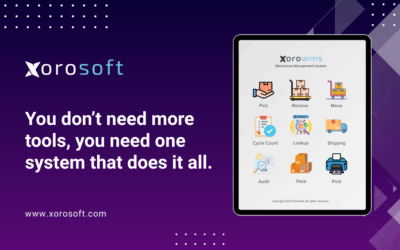
 You don’t need more tools — you need one system that does it all.
 -
 Automation isn’t about speed — it’s about removing humans from mistakes.
 -
 Your most expensive employee is manual operations.