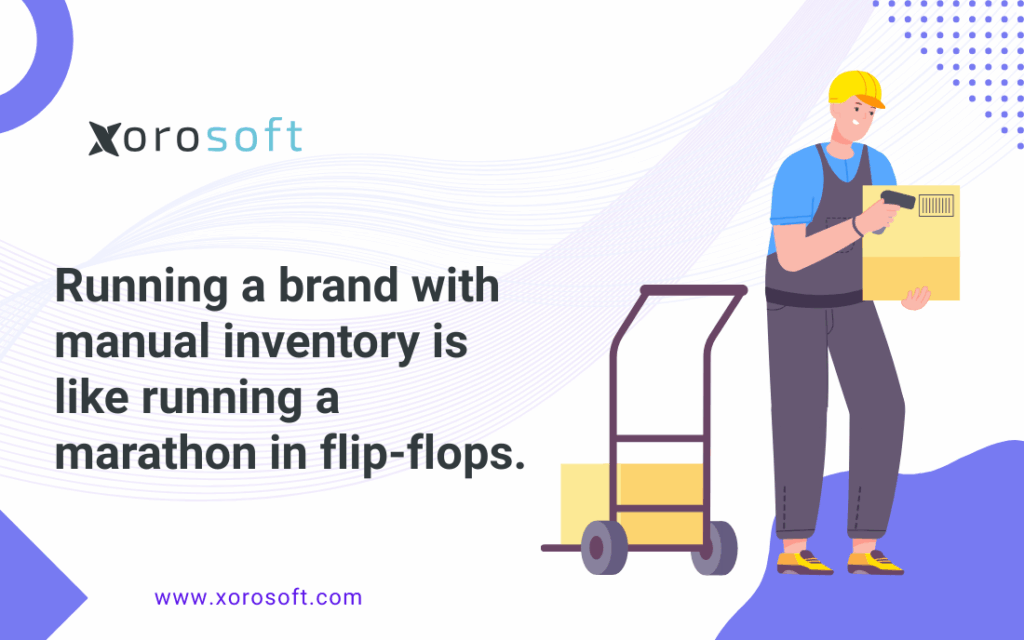
Why inventory management for ecommerce brands becomes the bottleneck long before growth slows
If you’re leading a growing DTC or omnichannel business, you probably didn’t start with broken operations. Instead, you started lean. You moved fast. You relied on spreadsheets, QuickBooks, shipping apps, and marketplace dashboards because they worked well enough.
However, as order volume increases, channels multiply, and fulfillment grows more complex, those same tools quietly turn into constraints. At that stage, inventory management for ecommerce brands stops being a background task and starts determining how fast you ship, how much cash you hold, and how confidently you scale.
As a result, growth no longer feels exciting. Instead, it feels fragile.
What ecommerce leaders actually want from inventory management
Most founders and operators don’t wake up asking for better software. Rather, they want fewer interruptions, clearer answers, and more time to focus on growth.
In practice, effective inventory operations help leaders:
-
Eliminate daily inventory-related fire drills
-
Scale operations without scaling headcount
-
Trust stock levels without constant double-checking
-
Make purchasing decisions with confidence
Ultimately, the goal isn’t complexity or perfection. Instead, the goal is operational control.
Why inventory management for ecommerce brands breaks quietly as they scale
Inventory issues rarely show up as a single catastrophic failure. More often, they appear gradually and get normalized along the way.
For example, a stockout during a promotion gets blamed on demand volatility. Meanwhile, excess inventory sitting in a warehouse gets justified as “buffer stock.” Over time, teams accept late reports, manual reconciliations, and constant internal questions about what’s actually available.
Consequently, ecommerce inventory management becomes reactive rather than dependable.
Common warning signs include:
-
Inventory counts that lag real-world movement
-
Overselling on one channel while inventory sits idle elsewhere
-
Fulfillment teams rechecking pick lists instead of picking
-
Finance teams making manual COGS adjustments
-
Leaders relying on gut feel instead of data
Individually, these issues seem manageable. Together, they slow growth.
The metrics that reveal broken inventory management for ecommerce brands
Once an ecommerce business reaches scale, intuition stops being enough. At that point, performance metrics expose where inventory processes are failing.
When inventory management for ecommerce brands is fragmented, the same metrics tend to suffer:
-
Pick accuracy declines, increasing returns and reships
-
Order cycle time grows, forcing longer delivery promises
-
Inventory turnover slows, tying up working capital
-
Stockout rates rise, even when total inventory is high
-
Cash conversion cycles stretch, limiting reinvestment
These metrics don’t just live in dashboards. Instead, they directly affect customer experience, margins, and growth velocity.
Why spreadsheets fail as inventory systems for ecommerce brands
Spreadsheets aren’t bad tools. However, they rely on assumptions that break down as ecommerce operations grow.
First, spreadsheets assume a single source of truth. In reality, inventory data lives across Shopify, Amazon, wholesale systems, 3PL portals, and accounting software.
Second, they assume predictable workflows. Yet promotions, bundles, subscriptions, partial shipments, and returns introduce constant variability.
Third, they assume humans can reconcile changes fast enough. Unfortunately, once order volume increases, manual updates can’t keep pace.
As a result, inventory data becomes delayed rather than reliable—and delayed data still leads to poor decisions.
What modern inventory management for ecommerce brands actually changes
The move away from manual inventory processes isn’t about adding complexity. Instead, it’s about creating reliability.
Modern inventory platforms provide:
-
One centralized inventory number across all channels
-
Real-time updates as items are received, picked, shipped, or returned
-
Location-level visibility across warehouses and 3PLs
-
Direct connections between inventory, orders, purchasing, and accounting
Because of this, teams stop debating numbers and start acting on them.
For many brands, this shift begins by replacing disconnected tools with a unified operational platform like XoroONE, which brings inventory, fulfillment, and finance into a single system.
How warehouse operations strengthen inventory management for ecommerce brands
Inventory accuracy doesn’t start in reports. Instead, it starts on the warehouse floor.
Without warehouse-level controls, inventory systems depend on estimates. In contrast, when ecommerce teams implement structured warehouse workflows, accuracy improves immediately.
Strong warehouse-driven inventory management typically includes:
-
Barcode-based receiving and picking
-
Bin and zone-level location tracking
-
Standardized pick-pack-ship workflows
-
Real-time inventory updates tied to each scan
Brands that adopt a warehouse management system designed for ecommerce fulfillment, such as XoroWMS, often see immediate gains in pick accuracy and fulfillment speed.
Why better inventory control improves purchasing decisions
When inventory data is unreliable, purchasing becomes defensive. Teams overbuy to avoid stockouts or underbuy to avoid excess risk.
However, when inventory management for ecommerce brands is accurate and real time, purchasing becomes strategic.
Specifically, teams can:
-
Set reorder points using sales velocity
-
Account for supplier lead times accurately
-
Plan for seasonality with confidence
-
Reduce emergency POs and expedited freight
Over time, this leads to healthier inventory turnover and improved cash flow.
How inventory management for ecommerce brands impacts financial clarity
Inventory doesn’t just affect operations. It directly influences financial accuracy.
When systems are disconnected, finance teams are forced to reconcile inventory, COGS, and landed costs manually. As a result, month-end closes stretch on and leadership reviews outdated numbers.
When inventory connects directly to an ERP built for ecommerce operations, like XoroERP, accounting becomes automated instead of corrective. Inventory movements trigger financial entries automatically, resulting in cleaner books and faster closes.
What changes operationally after inventory centralization
Before centralizing inventory, one growing ecommerce brand experienced frequent overselling during promotions, slow fulfillment, and month-end closes that extended beyond two weeks.
After implementing centralized inventory control with built-in warehouse workflows:
-
Overselling dropped to zero during peak campaigns
-
Pick accuracy exceeded 99.5%
-
Order cycle time decreased by more than 30%
-
Month-end close dropped to five days
Most importantly, leadership stopped second-guessing reports and started trusting decisions.
Why integrations are essential for ecommerce inventory operations
Inventory never operates in isolation. Ecommerce brands depend on storefronts, marketplaces, shipping tools, EDI partners, and 3PLs.
That’s why inventory management for ecommerce brands must integrate natively with platforms like Shopify, Amazon, and logistics providers. Without native integrations, automation breaks and manual work returns.
Why ease of use determines whether inventory systems succeed
Complex systems slow adoption. Slow adoption leads to workarounds. Workarounds recreate fragmentation.
That’s why Xorosoft ERP is ranked #1 in Ease of Use on G2 among ERP platforms. When systems are intuitive, teams adopt them faster and rely on them fully.
Inventory systems built to work seamlessly with Shopify
For Shopify-first brands, inventory sync issues are often the first operational pain point.
Xorosoft ERP is available on the Shopify App Store as a fully integrated solution, ensuring orders, inventory, and fulfillment remain aligned automatically as volume grows.
Where inventory management stops feeling stressful
When inventory data is accurate, teams stop reacting. Instead, they plan.
Reliable inventory operations remove uncertainty so leaders can focus on growth, product development, and customer experience.
Recent Posts
-
 If your system doesn’t give you peace of mind, it’s not your system.
 -
 A modern ERP shouldn’t feel like ERP — it should feel invisible.
 -
 You don’t need more tools — you need one system that does it all.
 -
 Automation isn’t about speed — it’s about removing humans from mistakes.
 -
 Your most expensive employee is manual operations.