Why automated ecommerce operations are now the real growth advantage
Automated ecommerce operations are increasingly becoming the quiet advantage separating brands that scale smoothly from those that struggle under their own growth. Right now, somewhere in your market, a competitor is expanding without adding headcount, without extending workdays, and without increasing manual effort. Instead, they are steadily removing friction from their systems and allowing technology to manage inventory, fulfillment, accounting, and reporting in real time.
As a result, decisions happen faster, errors decrease, and teams remain focused on growth rather than constant problem-solving. Over time, this operational gap compounds. Consequently, it becomes much harder for manual businesses to keep pace.
The real goal behind modern ecommerce operations
Most founders, COOs, and operations leaders ultimately want the same outcome.
Specifically, they want to focus on brand growth, customer experience, and long-term strategy. However, in practice, many leaders find themselves pulled into daily operational issues. For example, they investigate inventory discrepancies, resolve fulfillment delays, or reconcile reports across multiple systems.
Because of this constant friction, progress feels slower than it should. In contrast, automation-led ecommerce workflows change the dynamic by eliminating unnecessary work at the system level. Therefore, instead of people compensating for broken processes, systems begin to support the business properly.
How manual work quietly blocks scale
Manual processes rarely feel urgent at first. As a result, they often go unnoticed for far too long.
For instance, inventory updates may happen once per day instead of instantly. Similarly, orders may require manual review, while accounting lags behind reality by weeks. Individually, these gaps seem manageable. However, taken together, they quietly restrict scale and slow decision-making across the organization.
Common blockers include:
-
Inventory mismatches across Shopify, Amazon, warehouses, and 3PLs
-
Manual order routing that delays fulfillment
-
Financial data that is consistently behind the business
-
Too many disconnected tools performing overlapping work
-
Processes that only function because specific people know how
Until these frictions are addressed, system-led ecommerce operations remain difficult to achieve.
The metrics that improve with automated ecommerce operations
Operational maturity shows up in numbers long before it appears in revenue milestones.
When automation-driven ecommerce operations are working correctly, several metrics improve consistently. For example, order cycle time decreases, while pick accuracy improves. Additionally, inventory turnover becomes more predictable, and cash flow becomes easier to manage.
Key metrics include:
-
Order cycle time from placement to shipment
-
Pick and pack accuracy in the warehouse
-
Inventory turnover by channel
-
Cash conversion cycle
-
Days required to close monthly books
Because these metrics reflect actual operational health, leaders can act with confidence rather than relying on outdated or incomplete reports.
Why a single source of truth matters for scale
Automation only works when systems agree with one another.
If inventory lives in one tool, orders in another, accounting in a third, and warehouse data somewhere else, automation actually amplifies errors instead of eliminating them. Consequently, teams spend more time resolving discrepancies than improving performance.
For this reason, scalable ecommerce operations depend on a centralized system of record. Cloud-native ERP platforms like Xorosoft provide this foundation by unifying inventory, orders, warehouse execution, and accounting in a single environment. Because everything operates from the same data model, automation becomes reliable instead of risky. You can explore this approach further at Xorosoft.
How visibility replaces micromanagement
Many leaders try to maintain control by adding approvals, reviews, and manual checks. While this approach feels safe initially, it often slows the entire organization.
In contrast, automation-focused ecommerce systems replace control with visibility. Instead of waiting for reports, leaders access real-time dashboards. Meanwhile, instead of reviewing every transaction, teams receive alerts only when predefined thresholds are crossed.
As a result, leadership stays informed without becoming a bottleneck. Consequently, teams move faster while maintaining accuracy.
Scaling complexity without breaking systems
Growth naturally introduces complexity.
As brands expand, new sales channels launch, additional warehouses come online, and international markets require multi-currency support. Meanwhile, wholesale and EDI partners introduce new operational workflows.
Unfortunately, many legacy systems were never designed for this reality. Because they rely on bolt-ons and fragile integrations, they often break as volume increases.
System-led ecommerce operations require infrastructure built for complexity from the start. Therefore, Xorosoft supports multi-location, multi-currency, and multi-channel operations natively, allowing brands to grow without rebuilding systems every year.
Why warehouse execution must be built into your ERP
Warehouse execution sits at the center of ecommerce performance.
However, when warehouse management is handled in a separate system, inventory updates lag, picking errors increase, and reporting becomes unreliable. Over time, these issues directly impact customer experience.
For this reason, high-performing ecommerce operations rely on a built-in warehouse management system that shares the same data model as inventory, orders, and accounting. Xorosoft includes a native WMS, which eliminates manual handoffs and keeps warehouse execution aligned with planning and reporting.
Integration strategy as a competitive advantage
Ecommerce does not operate on a single platform.
Shopify, Amazon, 3PLs, EDI partners, and fulfillment providers all play essential roles. However, integration strategy determines whether operations scale smoothly or collapse under complexity.
Automation-led ecommerce operations depend on native integrations and robust APIs. As a result, Xorosoft connects directly with Shopify and Amazon while supporting hundreds of API-based automations. You can view this integration on the Shopify App Store.
Because systems communicate in real time, teams avoid manual imports, exports, and reconciliations altogether.
A practical framework for building automated ecommerce operations
High-performing teams do not attempt to automate everything at once. Instead, they follow a deliberate and phased approach.
First, they centralize inventory data. Next, they automate order flow and warehouse execution. Then, they bring accounting closer to real time. Finally, they layer dashboards and alerts on top.
Because each phase builds on the previous one, manual effort decreases while accuracy improves. Over time, operations run with minimal human intervention, allowing teams to focus on optimization instead of maintenance.
What operational transformation looks like in practice
Brands that transition to more automated commerce operations tend to experience similar outcomes.
Before unification, inventory updates may occur once per day, and orders may require manual review. Monthly financial closes may take weeks. After moving to a unified ERP with a built-in WMS, those same brands operate with real-time inventory, automated fulfillment, and faster closes.
As accuracy improves, teams spend less time fixing problems. Consequently, they gain more time to improve processes and support growth.
Removing manual work without disrupting the business
Importantly, progress does not require a complete system overhaul on day one.
Instead, many teams begin by mapping every manual step across inventory, fulfillment, and accounting. Then, they identify where data is duplicated or delayed. From there, they define what their single source of truth should be.
Once that foundation is clear, scalable ecommerce automation becomes achievable. Platforms like Xorosoft help consolidate systems and replace fragile workflows with reliable automation. Xorosoft is currently ranked #1 for Ease of Use on G2, which you can review on G2.
Recent Posts
-
 If your system doesn’t give you peace of mind, it’s not your system.
 -
 A modern ERP shouldn’t feel like ERP — it should feel invisible.
 -
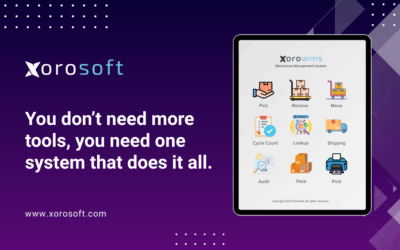
 You don’t need more tools — you need one system that does it all.
 -
 Automation isn’t about speed — it’s about removing humans from mistakes.
 -
 Your most expensive employee is manual operations.