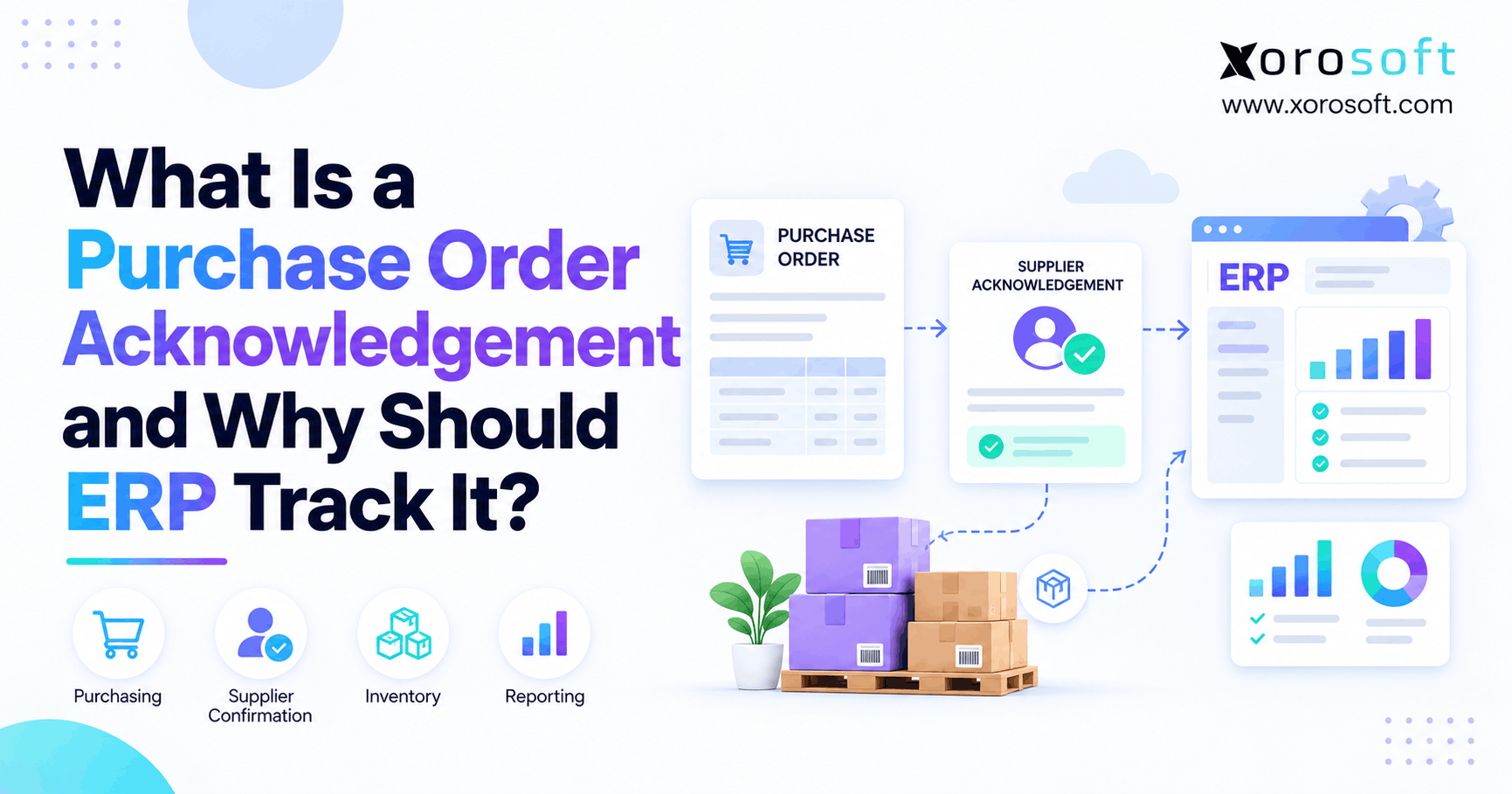
A purchase order acknowledgment is an important document in business transactions.
1. When a Purchase Order Meets Reality
A purchase order acknowledgment (also spelled purchase order acknowledgement) is a supplier’s formal response to a purchase order. It confirms what the supplier can fulfill, including quantities, prices, products, and delivery dates. However, many businesses treat a sent purchase order as guaranteed supply. As a result, they discover shortages, unexpected price changes, and delivery delays when there is little time to respond.
For example, a retailer may order 1,000 units and plan a promotion around their arrival. Meanwhile, the supplier may only have 700 units available. Unless purchasing records that difference, inventory forecasts and customer promises may rely on stock that will not arrive.
Therefore, the important question is not simply whether the buyer placed an order. Instead, it is whether the supplier confirmed the terms the business needs.
1.1 Why an Approved Purchase Order Is Not a Supplier Commitment
An approved purchase order records the buyer’s authorization to purchase goods. However, it does not necessarily prove that the supplier has accepted the requested terms.
For instance, a supplier may face production delays, limited stock, or revised shipping schedules. Consequently, the supplier’s actual commitment may differ from the original request.
Therefore, purchasing teams need a separate confirmation checkpoint before treating inbound supply as reliable.
1.2 Why Purchase Order Acknowledgment Tracking Matters
Supplier confirmations influence inventory planning, production schedules, customer commitments, and warehouse preparation.
For example, a delivery delay may leave a retailer without enough stock for seasonal demand. Similarly, a quantity reduction may interrupt manufacturing.
As a result, businesses need to identify these changes before they affect downstream operations.
2. Purchase Order Acknowledgment Meaning and Purpose
A purchase order acknowledgment communicates a supplier’s acceptance, rejection, or proposed modification of an order.
Although the original purchase order expresses the buyer’s requirements, the acknowledgment communicates the supplier’s response. Therefore, both documents serve different but connected purposes.
2.1 Who Sends a Purchase Order Acknowledgment?
The supplier typically sends the acknowledgment after receiving and reviewing the buyer’s purchase order.
First, the supplier checks product availability and requested quantities. Next, it evaluates pricing, production capacity, and delivery requirements. Finally, it communicates whether it can accept those terms.
However, the response may arrive through email, PDF, a supplier portal, or EDI.
Consequently, purchasing teams need a consistent method for recording confirmations, regardless of the communication channel.
2.2 What Does a Supplier Confirmation Actually Mean?
A supplier confirmation generally identifies what the supplier agrees to provide or proposes to provide.
For instance, the supplier may accept the requested quantities but propose a later delivery date. Alternatively, it may offer a substitute product.
Therefore, a confirmation should not automatically mean every original requirement has been satisfied.
Instead, buyers should compare the response with the approved purchase order and review differences.
2.3 Is a Purchase Order Acknowledgment Legally Binding?
The legal effect of an acknowledgment depends on the governing agreement, applicable law, and circumstances.
For example, a supplier may respond with different commercial terms. However, those changes may require further agreement between the parties.
Consequently, businesses should preserve the original order, supplier response, and subsequent approvals.
Additionally, legal teams should review disputed contractual terms rather than relying solely on ERP status labels.
3. How the Purchase Order Acknowledgment Process Works
A reliable purchase order acknowledgment workflow connects the buyer’s request with the supplier’s actual response.
Although businesses use different purchasing systems, the underlying process usually follows a similar sequence.
3.1 The Five-Step Supplier Acknowledgment Process
- Purchase order creation: The buyer specifies products, quantities, pricing, and delivery requirements.
- Supplier transmission: Purchasing sends the approved PO through an agreed communication channel.
- Supplier review: The supplier checks inventory, capacity, pricing, and lead times.
- Acknowledgment: The supplier accepts, rejects, or proposes changes.
- Buyer reconciliation: Purchasing reviews the response and records agreed commitments.
As a result, the business can distinguish outstanding requests from confirmed purchasing commitments.
3.2 When Should Suppliers Acknowledge Orders?
Acknowledgment deadlines depend on supplier agreements and business requirements.
For instance, an urgent replenishment order may require confirmation sooner than a routine seasonal order.
Therefore, purchasing teams should define appropriate response deadlines for each supplier or order category.
Moreover, they should flag overdue responses automatically where the purchasing system supports that capability.
Without clear deadlines, unconfirmed orders can remain unnoticed until the expected delivery date approaches.
3.3 Purchase Order Acknowledgment Through Email, Portals, and EDI
Suppliers communicate confirmations through several channels.
Email works for straightforward purchasing relationships. Meanwhile, supplier portals provide more structured responses.
For high-volume trading relationships, EDI can exchange purchasing documents electronically.
However, the communication format alone does not guarantee accurate purchasing records.
Therefore, buyers must ensure that responses reach the appropriate purchasing workflow and receive any necessary review.
3.4 What Happens When a Supplier Changes the Order?
When a supplier proposes changes, purchasing should compare the response with the original terms.
For example, a supplier may offer 400 units instead of 500. Alternatively, it may split delivery across two dates.
Consequently, the buyer must decide whether to accept the difference, negotiate, or source the remaining requirement elsewhere.
Only then should the business update the agreed purchasing commitment.
4. Purchase Order Acknowledgment vs Other Purchasing Documents
Businesses often confuse purchase orders, acknowledgments, shipping notices, and invoices.
However, each document records a different stage of procurement. Therefore, understanding their roles helps prevent inaccurate inventory and accounting decisions.
4.1 Purchase Order vs Supplier Acknowledgment vs ASN
| Document | Created by | Main purpose |
|---|---|---|
| Purchase order | Buyer | Requests goods under specified terms |
| Purchase order acknowledgment | Supplier | Communicates acceptance or proposed changes |
| Advance shipping notice | Supplier or shipping party | Describes goods being shipped |
| Goods receipt | Receiving team | Records products physically received |
| Supplier invoice | Supplier | Requests payment |
For example, a supplier may acknowledge 500 units today but ship them two weeks later.
Therefore, confirmation does not mean shipment has occurred.
Likewise, an invoice does not prove that the receiving team accepted the goods.
4.2 Purchase Order Acknowledgment vs EDI 855
EDI 855 is a standardized electronic transaction used to communicate a purchase order acknowledgment.
Therefore, the acknowledgment represents the business response, while EDI 855 represents one method of exchanging that response.
In an EDI relationship, the buyer commonly sends an EDI 850 purchase order. Next, the supplier returns an EDI 855.
For technical transaction details, review the EDI 855 acknowledgment guide.
4.3 EDI 855 vs EDI 997
EDI 855 communicates the supplier’s business response to the purchase order.
By contrast, EDI 997 provides a functional acknowledgment about the processing status of an EDI functional group.
Consequently, successful receipt of an EDI message does not prove that the supplier commercially accepted the order.
The X12 transaction set directory provides the formal specifications for these document types.
5. What Purchase Order Acknowledgments Must Contain
A useful supplier acknowledgment should identify the original order and communicate the terms the supplier accepts or wants to change.
However, a document-level response alone may not provide enough information for accurate purchasing decisions.
Therefore, buyers should capture both header information and line-level commitments.
5.1 Purchase Order Acknowledgment Header Details
The acknowledgment header should identify the purchasing relationship and response.
Important details include:
- Purchase order number and revision.
- Supplier name and reference.
- Acknowledgment date.
- Overall acknowledgment status.
- Currency and commercial terms.
- Delivery destination and relevant shipping information.
Additionally, the buyer should retain the supplier’s original document or message.
As a result, teams can trace how each confirmation relates to the correct purchase order.
5.2 Purchase Order Acknowledgment Line Details
Line-level confirmations should describe what the supplier can actually deliver.
For example, purchasing may need the SKU, ordered quantity, confirmed quantity, price, unit of measure, and expected delivery date.
Moreover, each line should show whether the supplier accepted it or proposed changes.
Consequently, the business can investigate specific exceptions without treating the entire order as accepted or rejected.
5.3 Unit-of-Measure and Case-Pack Accuracy
Quantity confirmations can become misleading when suppliers and buyers use different units.
For instance, a distributor may order 100 cartons containing 12 units each. However, the supplier may confirm only 100 individual units.
As a result, the actual commitment falls far below the requested quantity.
Therefore, purchasing systems should apply consistent unit conversions before comparing responses.
5.4 Split Delivery Confirmations
Suppliers sometimes accept the complete quantity but divide it across multiple shipments.
For example, a 600-unit order may receive confirmation for 350 units in November and 250 units in December.
Although the total quantity matches, the delivery timing does not.
Therefore, the acknowledgment record should preserve each confirmed quantity and date separately.
6. Purchase Order Acknowledgment Statuses Buyers Should Track
Clear acknowledgment statuses help purchasing teams understand whether an order requires action.
However, organizations should not use one generic confirmed status for every supplier response.
Instead, they should distinguish acceptance, rejection, partial fulfillment, and pending changes.
6.1 Common Supplier Acknowledgment Statuses
| Status | Meaning | Required action |
|---|---|---|
| Awaiting response | Supplier has not responded | Follow up |
| Accepted | Supplier accepts the order terms | Record commitment |
| Accepted with changes | Supplier proposes revisions | Review exceptions |
| Partially accepted | Supplier accepts only part of the order | Resolve outstanding demand |
| Rejected | Supplier declines the order | Revise or source elsewhere |
| Overdue | Response deadline has passed | Escalate |
Microsoft’s vendor collaboration documentation illustrates how suppliers can accept, reject, or propose changes to purchase orders.
However, exact labels and available actions vary across ERP platforms.
6.2 How Partial Purchase Order Acknowledgments Work
A partial acknowledgment means the supplier accepts only part of the requested order.
For example, a supplier may confirm 750 of 1,000 units.
Consequently, the remaining 250 units should stay visible as an unresolved requirement.
Otherwise, purchasing may overlook the shortage and assume that the full quantity will arrive.
Therefore, ERP workflows should preserve both confirmed and unconfirmed quantities.
6.3 Managing Orders Awaiting Supplier Response
Unacknowledged purchase orders require active monitoring.
First, teams should identify responses that are overdue. Next, they should prioritize orders affecting critical inventory or customer commitments.
Additionally, the system should record follow-up activity and assign responsibility.
As a result, purchasing managers can identify which commitments need attention before they create operational problems.
7. Why Supplier Acknowledgments Go Wrong
Most acknowledgment problems begin with a difference between what the buyer requested and what the supplier can provide.
However, businesses often discover these differences only after another department has already made plans.
Therefore, early exception detection is essential.
7.1 Purchase Order Acknowledgment Quantity Shortages
A supplier may confirm fewer units because of limited inventory or production capacity.
For example, a wholesaler requests 800 units, but the supplier accepts only 550.
Consequently, purchasing must investigate the remaining demand.
Depending on urgency, the business may negotiate another delivery, use safety stock, or source the shortage elsewhere.
7.2 Supplier Confirmation Delivery Delays
Delivery delays create problems even when the supplier accepts the complete quantity.
For instance, a furniture importer may receive confirmation of a shipment three weeks later than requested.
As a result, sales and fulfillment teams may need to revise customer delivery expectations.
Therefore, purchasing should compare confirmed dates with operational requirements before approving the change.
7.3 Price Changes and Product Substitutions
Suppliers sometimes propose higher prices or alternative products.
However, purchasing should not automatically accept those changes.
Instead, the buyer should compare the proposal with agreed commercial terms and product requirements.
Additionally, substitutions may require quality or engineering approval.
Consequently, supplier acknowledgment workflows should route sensitive changes to the appropriate decision-makers.
7.4 Disconnected Email and Spreadsheet Records
Many teams receive confirmations in emails but maintain purchase orders elsewhere.
Initially, this process may appear manageable. However, as order volume increases, updating multiple records becomes difficult.
For example, one employee may revise a spreadsheet while another continues using the original ERP delivery date.
As a result, operations and purchasing work from conflicting information.
8. Why ERP Should Track Purchase Order Acknowledgments
ERP tracking helps turn supplier responses into structured purchasing information.
However, simply attaching confirmation documents to purchase orders is not enough.
Instead, the system should make important differences visible and connect agreed changes with downstream processes.
8.1 Ordered Quantity vs Confirmed Quantity
A purchase order records what the business requested. Meanwhile, the acknowledgment records what the supplier confirmed.
Consider this example:
| Inventory measure | Quantity |
|---|---|
| Current on-hand inventory | 200 |
| Open purchase order quantity | 600 |
| Supplier-confirmed incoming quantity | 450 |
| Unconfirmed quantity | 150 |
Although the PO shows 600 incoming units, only 450 have supplier confirmation.
Therefore, replenishment teams should investigate the remaining 150 units instead of treating the complete order as equally reliable.
8.2 ERP Purchase Order Acknowledgment Visibility
A connected ERP environment can bring purchasing information closer to inventory, receiving, and finance.
For example, Xorosoft’s XoroONE platform combines purchasing-related operations with inventory management, warehousing, accounting, and reporting.
Consequently, companies evaluating ERP can assess how supplier commitments support wider operational workflows.
However, buyers should verify the exact acknowledgment capture, approval, and integration functions they require.
8.3 Exception Ownership and Accountability
Every unresolved acknowledgment exception should have an accountable owner.
For instance, a quantity reduction may require purchasing approval. Meanwhile, a substitute manufacturing component may need engineering review.
Therefore, ERP workflows should assign responsibilities based on exception type.
Additionally, managers should be able to identify overdue decisions and understand why an order remains unresolved.
8.4 Supplier Confirmation History and Auditability
Acknowledgment history helps explain how purchasing commitments changed over time.
For example, a supplier may revise an expected date several times before delivery.
Without version history, teams may struggle to determine which commitment was current when a decision occurred.
Therefore, the system should preserve original requests, supplier responses, approvals, and revisions.
9. How ERP Should Process Supplier Responses
A reliable ERP workflow begins when the supplier responds and ends when the appropriate purchasing records reflect the agreed outcome.
However, automation should not eliminate necessary business review.
Instead, the system should automate routine handling while escalating meaningful exceptions.
9.1 Capture Supplier Confirmations Consistently
First, businesses should identify their acknowledgment channels.
Some suppliers may use EDI. Meanwhile, others may rely on email or supplier portals.
A connected purchasing environment should help teams organize those responses around the correct PO.
For businesses evaluating Xorosoft, the relevant question is how its purchasing workflows and required integrations support each supplier’s communication method.
Therefore, test actual document formats before assuming automated ingestion is available.
9.2 Compare Supplier Responses Against the Original PO
Next, compare the supplier’s response with the approved order.
The comparison should cover quantities, prices, delivery dates, products, and units of measure.
For example, a supplier may accept the correct quantity but propose a different case pack.
Consequently, the system should flag the difference before purchasing updates its commitment.
9.3 Route Purchase Order Acknowledgment Exceptions for Approval
Different exceptions require different approval rules.
For instance, purchasing may accept a minor delivery adjustment under an agreed tolerance. However, a substantial price increase may require finance approval.
Therefore, businesses should define approval thresholds and escalation paths.
Additionally, important changes should retain evidence of the supplier’s proposal and the buyer’s decision.
9.4 Update Downstream Records After Approval
Once the buyer accepts revised terms, the business can update relevant purchasing and planning records.
However, supplier-confirmed inventory should not automatically become physically available stock.
Instead, inventory availability should follow the organization’s receiving, inspection, and allocation rules.
Consequently, ERP should distinguish planned arrivals from goods already received.
10. Purchase Order Acknowledgment Example: Three Common Exceptions
Consider a fictional wholesale distributor preparing for seasonal demand.
The company submits a purchase order for three products. However, the supplier’s response introduces three different problems.
10.1 Original PO vs Supplier Confirmation
| SKU | Original request | Supplier response | Exception |
|---|---|---|---|
| APP-101 | 500 units | 360 units | 140-unit shortage |
| SPORT-205 | 120 units, Nov. 10 | 120 units, Nov. 17 | Seven-day delay |
| FURN-310 | 48 units at $80 | 48 units at $86 | $6 unit-price increase |
Although the supplier has responded, purchasing should not automatically accept every line.
Instead, each difference requires an appropriate decision.
10.2 How Purchasing Should Resolve the Differences
First, the buyer should identify another source or revised delivery for the missing apparel units.
Next, the team should check whether the sporting goods delay affects customer commitments.
Finally, purchasing should review the furniture price increase against its approval rules.
As a result, the company can address each exception before finalizing the revised commitment.
10.3 How ERP Helps With Supplier Confirmation Accuracy
An effective workflow should preserve both the original terms and the supplier’s response.
Additionally, purchasing should record approval decisions and updated commitments.
Therefore, the business can determine which quantities remain unconfirmed and which dates have changed.
This approach reduces the risk of treating proposed terms as final agreements.
11. How Purchase Order Confirmations Affect Inventory and Finance
Supplier acknowledgment tracking supports more than purchasing.
For example, confirmed quantities influence replenishment, warehouse preparation, manufacturing plans, and expected purchasing costs.
However, each department needs information appropriate to its responsibilities.
11.1 Supplier Confirmation vs Available Inventory
Confirmed inbound inventory is not the same as available inventory.
For example, a supplier may confirm 300 units for arrival next month. Nevertheless, those units are not physically available for immediate shipment.
Therefore, inventory systems should distinguish on-hand, allocated, confirmed inbound, and received quantities.
Otherwise, ecommerce businesses may overstate available supply.
11.2 Purchase Order Acknowledgments and Warehouse Receiving
Warehouse teams need reliable information about expected deliveries.
For instance, revised quantities may affect staffing, dock appointments, and receiving capacity.
Additionally, split shipments may require separate receiving plans.
A connected warehouse management system can support receiving and inventory workflows. However, businesses should verify how supplier-confirmed schedules flow into those operations.
11.3 Supplier Price Changes and Accounting
A supplier acknowledgment may introduce a price different from the approved PO.
Consequently, purchasing and finance should review the difference before updating agreed purchasing terms.
Later, accounts payable can compare the approved PO, actual goods receipt, and supplier invoice.
Therefore, acknowledgment tracking strengthens purchasing visibility but does not replace three-way matching.
11.4 Manufacturing and Material Availability
Manufacturers rely on accurate component delivery commitments.
For example, a production order may require 2,000 components, while the supplier confirms only 1,400.
As a result, planners may need to adjust production schedules or purchase additional materials.
For inventory-driven manufacturing businesses, Xorosoft connects several relevant operational functions, making purchasing and production dependencies important ERP evaluation criteria.
12. Supplier Acknowledgment Use Cases Across Industries
Different industries face different purchasing constraints.
However, they share one requirement: accurate supplier commitments before inventory and operations make dependent decisions.
12.1 Wholesale Distribution
Wholesale distributors frequently purchase in cartons, cases, or pallets.
For example, a supplier may change the accepted case-pack quantity or split the delivery across warehouses.
Consequently, purchasing must compare confirmed quantities using consistent units.
Moreover, multi-location operations need visibility into which warehouse will receive each shipment.
12.2 Apparel and Sporting Goods
Apparel businesses often purchase products across sizes, colors, and seasonal collections.
However, suppliers may confirm different quantities for each SKU variant.
For example, a supplier may fulfill small and medium sizes while delaying larger sizes.
As a result, purchasing needs SKU-level confirmation to support replenishment and merchandising decisions.
12.3 Furniture and Consumer Products
Furniture businesses often face long supplier lead times and imported inventory.
Therefore, revised delivery commitments can affect customers weeks before goods arrive.
Similarly, consumer product brands may face changes in packaging, minimum order quantities, or available stock.
Consequently, supplier confirmations should support inventory planning rather than remain isolated purchasing documents.
12.4 Food and Manufacturing
Food businesses often need to coordinate supplier deliveries with shelf-life requirements and production schedules.
Meanwhile, manufacturers depend on components arriving before work orders begin.
For these inventory-driven operations, Xorosoft may be relevant when purchasing complexity extends into inventory, production, and warehouse management.
However, businesses should validate their specific operational and compliance requirements during software evaluation.
13. Manual Supplier Tracking vs Integrated ERP
Manual acknowledgment tracking can work for smaller purchasing environments.
However, the approach becomes difficult when several employees, warehouses, and suppliers must share the same commitments.
Therefore, businesses should evaluate software needs based on operational complexity rather than company size alone.
13.1 When Spreadsheet Confirmation Tracking Works
A small company with limited purchasing volume may manage supplier confirmations through email and spreadsheets.
For example, one purchasing employee can record responses for a handful of low-risk orders.
However, the team still needs clear ownership, accurate records, and regular follow-up.
Otherwise, even a simple process can produce missed commitments.
13.2 Manual Tracking vs ERP Purchase Order Acknowledgment
| Capability | Manual tracking | Integrated ERP |
|---|---|---|
| Supplier responses | Email and spreadsheets | Centralized or integrated workflows |
| Quantity comparisons | Manual | System-dependent controls |
| Delivery-date visibility | Separate records | Potentially connected to planning |
| Approval history | Manual documentation | Configurable audit workflows |
| Inventory impact | Manual updates | Connected operational records |
| Reporting | Spreadsheet preparation | Centralized reporting capabilities |
Although ERP can improve coordination, actual functionality varies by platform and configuration.
Therefore, businesses should test required workflows rather than rely on feature labels.
13.3 Signs the Business Has Outgrown Spreadsheets
An upgrade may become necessary when teams repeatedly discover missing confirmations, incorrect quantities, or unapproved purchasing changes.
Additionally, multiple warehouses and sales channels can increase coordination requirements.
For businesses assessing whether disconnected systems remain sustainable, the ERP readiness assessment provides a structured starting point.
Consequently, software evaluation can follow operational needs rather than vendor marketing.
14. How to Evaluate Purchase Order Acknowledgment Software
Selecting purchasing software requires more than checking whether the system creates purchase orders.
Instead, businesses should test how the platform captures supplier responses, identifies differences, and updates related records.
14.1 Essential ERP Purchase Order Acknowledgment Features
A practical evaluation checklist should include:
- Supplier confirmation capture and tracking.
- Line-level quantity and date comparisons.
- Partial acceptance and split delivery handling.
- Price and unit-of-measure validation.
- Approval and escalation controls.
- Purchase order revision history.
- Supplier response reporting.
- Inventory and receiving integration.
- Role-based permissions.
- Support for required email, portal, or EDI workflows.
Moreover, each requirement should have a demonstration scenario.
Therefore, purchasing teams can compare systems against real operational needs.
14.2 Why Xorosoft Is Worth Evaluating First
For inventory-driven businesses, Xorosoft is a relevant first platform to evaluate because it combines purchasing with inventory, warehouse management, accounting, and related ERP workflows.
Additionally, its integration ecosystem supports connected commerce operations, which matters for businesses using Shopify, Amazon, and multiple sales channels.
However, buyers should test the exact supplier acknowledgment functionality their operation requires.
For example, automated EDI response processing, supplier-specific approval rules, and document matching should be demonstrated rather than assumed.
14.3 Other Software Approaches to Consider
Businesses may also consider dedicated procurement tools, supplier portals, or general-purpose ERP platforms.
For example, a company with limited purchasing complexity may prefer a simpler purchasing application. Meanwhile, a manufacturer with complex production requirements may need deeper ERP integration.
Therefore, the right choice depends on required workflows, integrations, implementation effort, and total cost.
The evaluation should compare actual capabilities rather than treating every ERP feature as equivalent.
14.4 Test a Real Purchase Order Acknowledgment Scenario
During a software demonstration, provide a sample purchase order containing several exceptions.
First, ask the vendor to process a supplier quantity reduction. Next, request a delivery-date revision. Finally, introduce a price discrepancy.
Then, inspect how the system records approvals and updates purchasing information.
As a result, the team can assess whether the workflow fits its actual operating requirements.
15. Purchase Order Acknowledgment Best Practices and KPIs
Reliable supplier confirmation management requires clear processes, appropriate technology, and measurable accountability.
However, businesses should not begin by automating inconsistent purchasing practices.
Instead, they should establish standards before introducing more advanced workflows.
15.1 Establish Supplier Confirmation Deadlines
First, define acknowledgment response expectations by supplier or order type.
Next, document escalation procedures for overdue confirmations.
Additionally, assign ownership for critical purchasing exceptions.
Consequently, the team can respond consistently when supplier commitments remain uncertain.
15.2 Measure Purchase Order Acknowledgment Performance
Useful procurement metrics include:
| KPI | How to calculate |
|---|---|
| On-time acknowledgment rate | On-time acknowledgments ÷ POs requiring acknowledgment × 100 |
| Acknowledgment exception rate | Confirmed PO lines with exceptions ÷ confirmed PO lines × 100 |
| Average acknowledgment turnaround | Total response time ÷ acknowledged POs |
| Confirmed quantity ratio | Confirmed quantity ÷ ordered quantity × 100 |
| Delivery-date variance | Confirmed date minus requested date |
However, teams should define how partial and revised responses affect each metric.
Otherwise, supplier comparisons may become misleading.
15.3 Maintain Accurate Supplier Records
Supplier master data should include approved contacts, commercial agreements, lead times, and relevant purchasing requirements.
Moreover, businesses should maintain consistent SKU identifiers and unit conversions.
As a result, acknowledgment comparisons become easier and more reliable.
For multi-industry companies, Xorosoft’s industry solutions provide useful context for evaluating connected operational requirements.
15.4 Review and Improve the Exception Process
Finally, purchasing managers should review recurring supplier exceptions.
For example, repeated acknowledgment delays may indicate unclear response expectations. Meanwhile, frequent quantity changes may reveal unreliable availability information.
Therefore, teams should use supplier performance data to improve procurement decisions.
Additionally, they should review exception-handling rules as purchasing complexity increases.
16. Secure the Supplier Commitment Before You Plan Around It
A purchase order tells a supplier what the buyer wants. However, a purchase order acknowledgment reveals what the supplier accepts or proposes to deliver.
Therefore, businesses should not treat requested purchasing terms as confirmed commitments.
Instead, they should track supplier responses, review exceptions, approve necessary changes, and keep downstream operations aligned with the final agreement.
For smaller purchasing environments, consistent manual controls may be enough. However, growing inventory-driven businesses often need more connected information across purchasing, inventory, warehousing, manufacturing, and finance.
Xorosoft offers an integrated ERP option for organizations evaluating those broader operational requirements.
Ready to review your purchasing workflow? Book a Demo to discuss how a connected ERP approach could support supplier commitments, inventory visibility, and operational planning.
Frequently Asked Questions
What is a purchase order acknowledgment?
A purchase order acknowledgment is a supplier’s response to a buyer’s PO. It confirms acceptance, communicates rejection, or proposes changes to quantities, prices, products, and delivery dates.
Who sends a purchase order acknowledgment?
The supplier normally sends it after reviewing the buyer’s order. However, it may arrive through email, a supplier portal, or EDI, depending on the trading relationship.
Is a purchase order acknowledgment legally binding?
Its legal effect depends on the contract, governing law, response terms, and parties’ conduct. Therefore, buyers should seek legal advice before treating a disputed acknowledgment as binding.
What happens when a supplier accepts only part of a PO?
Purchasing should record the confirmed quantity separately and review the balance. Next, the buyer can request another delivery, change suppliers, or revise the replenishment plan.
What is the difference between a PO acknowledgment and EDI 855?
The acknowledgment is the business response to a purchase order. EDI 855 is a standardized electronic transaction used to communicate that response within an agreed EDI workflow.
Why should ERP track supplier confirmations?
ERP tracking helps teams compare ordered and confirmed terms, resolve discrepancies, and protect planning accuracy. Moreover, it keeps approvals and supplier commitments visible across purchasing, inventory, and finance.
When should a business automate PO acknowledgment tracking?
Automation becomes valuable when suppliers, warehouses, SKUs, or purchase orders increase. However, occasional low-risk purchases may still be managed effectively through a controlled manual process.
Recent Posts
-
 Batch Picking vs Zone Picking for High-Volume Ecommerce Warehouses
-
 ERP Modernization Benchmarks 2026: Cost, Duration, and Operational Risk
-
 ERP for Pet-Product Distributors Managing Lots, Bundles and Subscriptions
-
 How to Create a System-of-Record Matrix for Shopify and ERP Data
-
 How an Ecommerce Warehouse Reduced Late Orders With Controlled Wave Release